How to Choose the Right Engine Oil for Honda and When to Change It
Choosing the correct engine oil for a Honda is one of the most important and often misunderstood maintenance decisions owners make. The wrong viscosity, quality, or change interval can lead to increased wear, VTEC malfunctions, oil consumption, sludge, or even catastrophic engine damage. This in-depth guide covers every major Honda engine family currently on the road and gives precise, manufacturer-backed recommendations.
Honda’s Official Factory-Fill and Primary Recommendation: 0W-20 Synthetic
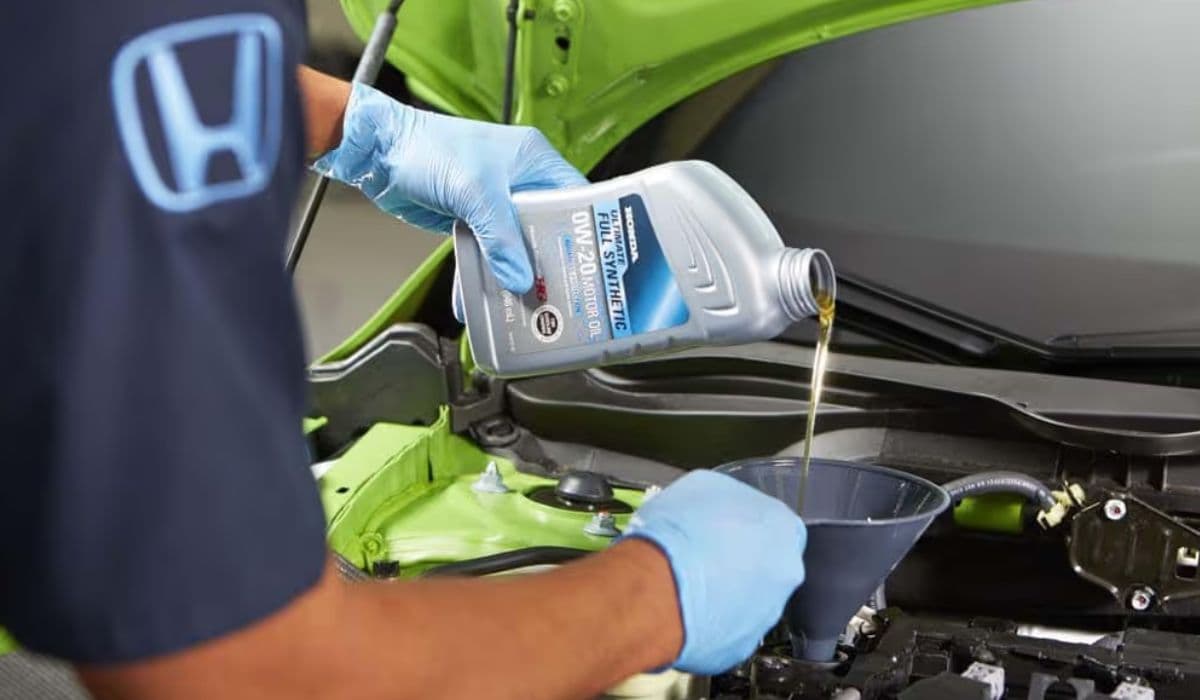
Since approximately 2011–2013 (depending on market and model), virtually every new gasoline Honda engine leaves the factory filled with genuine Honda 0W-20 synthetic blend or full synthetic oil (Honda Ultimate Full Synthetic 0W-20 in North America, Honda Type 2.0 in Japan/Europe).
The overwhelming majority of modern Honda engines require one of the following specifications:
- API SN/SP/SN Plus/SP 2020 or higher
- ILSAC GF-5 or GF-6A
- Honda HTO-06 (thermal oxidation test – very important for turbo engines)
Recommended viscosity: 0W-20
This applies to almost all engines from 2013 onward:
- K20C (Civic Type R, Accord 2.0T)
- L15B/L15BE/L15CA (1.5T Civic, CR-V, Accord)
- J35Y (Pilot, Odyssey, Ridgeline 3.5L V6)
- K24Z, K24W, K20Z (later naturally-aspirated)
- R20A, L13, L15A naturally-aspirated (Jazz/Fit, HR-V)
Using anything thicker than 0W-20 in these engines (even 5W-20 or 5W-30) will:
- Reduce fuel economy
- Potentially cause VTC (Variable Timing Control) actuator rattle on cold starts
- Trigger the Maintenance Minder to shorten intervals
- In turbo engines, increase risk of LSPI (Low-Speed Pre-Ignition)
Earth Dreams Naturally-Aspirated Engines (2013–2023) – Still 0W-20
All direct-injection Earth Dreams engines without turbo (K24W, R20A3, etc.) are designed around 0W-20. Honda has repeatedly stated in service bulletins that 0W-20 must be used to maintain proper operation of the VTC system and piston oil squirters.
Exception: Some 2022–2025 Civic Si and Integra 1.5T in certain markets allow 0W-20 or 5W-30 if 0W-20 is unavailable, but 0W-20 remains the primary recommendation.
Older Honda Engines – Different Viscosities Still Apply
B-series, F-series, H-series (1990s–early 2000s)
- Factory recommendation: 5W-30 or 10W-30 conventional or synthetic
- Most enthusiasts today run full synthetic 5W-30 or 5W-40
- VTEC models (B16, B18C, H22) are extremely sensitive to oil pressure and quality. Poor oil causes VTEC crossover failure and rocker arm wear
- Recommended brands: Mobil 1, Pennzoil Platinum, Amsoil Signature Series, Honda Genuine
D-series (D15, D16, D17) 1990–2005
- 5W-30 year-round in most climates
- 10W-30 acceptable in very hot climates
K-series pre-Earth Dreams (K20A, K24A 2001–2012)
- 2001–2006 (RSX Type-S, TSX, Civic Si): 5W-30 or 5W-40
- 2007–2011 Civic Si, TSX: Honda switched to 0W-30 or 5W-30 synthetic
- 2012–2015 Civic Si, ILX, 9th-gen Accord: 0W-20 introduced
J-series V6 (J30, J32, J35 1998–present)
- 1998–2008: 5W-30
- 2009–2017: 0W-20 (Earth Dreams J35Y)
- 2018+: still 0W-20
L-series (L13A, LEA) Hybrid i-VTEC
- Always 0W-20 full synthetic
- Extremely sensitive to oil level and quality – overfilling by even 0.3 qt can cause crankshaft windage issues
Turbocharged Honda Engines – Only Top-Tier 0W-20
The 1.5T (L15B7/L15BE/L15CA) and 2.0T (K20C1/K20C4) are particularly demanding:
- Must meet Honda HTO-06 spec (very few oils do)
- Must be API SP and ILSAC GF-6A
- LSPI protection is critical
Oils proven safe and used by Honda dealerships and Type R owners:
- Genuine Honda 0W-20, Mobil 1 Advanced Full Synthetic 0W-20, Pennzoil Platinum 0W-20, Idemitsu Zepro 0W-20 (OEM supplier in Japan), Valvoline Advanced 0W-20, Castrol EDGE 0W-20
Avoid cheap “meets API SP” house brands – many fail HTO-06.
Oil Change Intervals – Forget the Old 3,000-Mile Myth
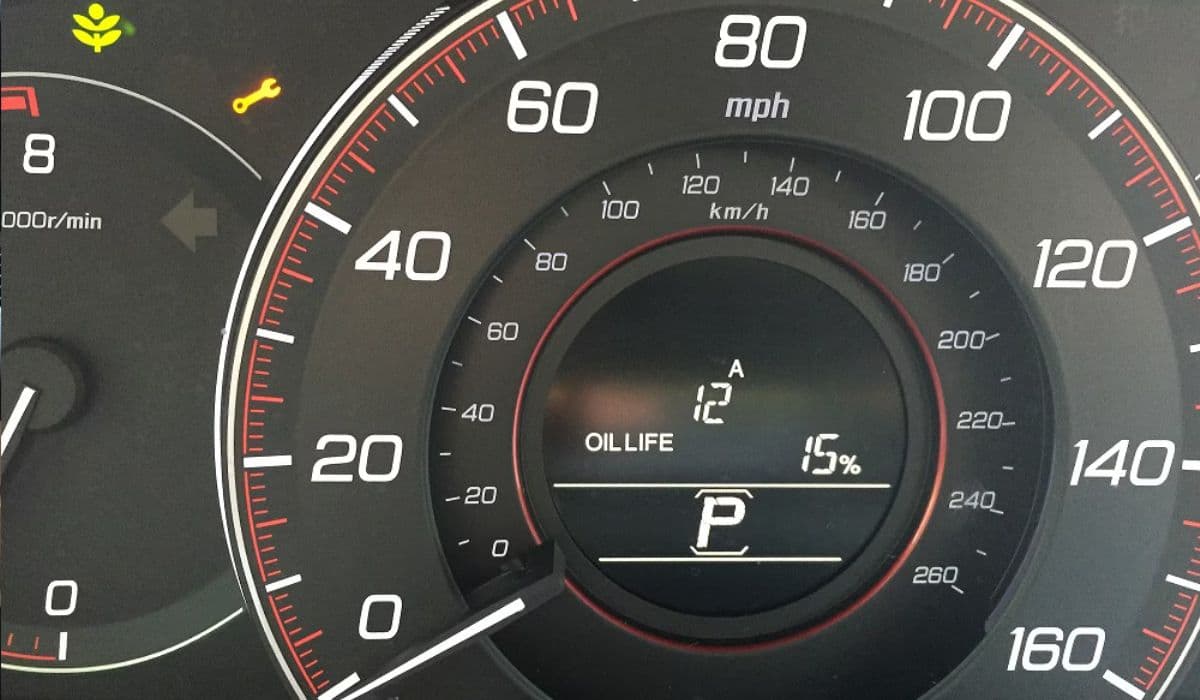
Honda Maintenance Minder system (2006+) calculates remaining oil life based on:
- Engine RPM
- Coolant and intake air temperature
- Driving style
- Trip length
Typical real-world intervals using 0W-20 synthetic:
- Normal driving: 7,000–10,000 miles or 1 year
- Severe conditions (short trips, extreme heat/cold, towing, track use): 4,000–6,000 miles
- Civic Type R, Accord 2.0T on track: many owners change every 3,000–5,000 miles
- Older non-Minder cars (pre-2006): 5,000–7,500 miles with synthetic, 3,000–5,000 with conventional
Never exceed 1 year even if the Minder shows 15–20% remaining – oxidation and fuel dilution still occur.
Special Cases and Common Mistakes
High-mileage Hondas (>150k miles)
Many owners switch to high-mileage 0W-20 or 5W-30 to reduce oil consumption. Acceptable, but monitor VTC rattle.
Cold climates (below –30°C / –22°F)
0W-20 flows better than any 5W-xx at extreme cold. Stick with 0W-20.
Modified or tracked cars
- Civic Type R with bolt-ons: 0W-30 or 0W-40 full synthetic (Mobil 1 FS European, Motul 300V) is common
- Swapped K24 or K20 in older chassis: 5W-40 or 0W-40 widely used
Using thicker oil to “quiet” VTC rattle
Temporary band-aid. Fix the VTC actuator or screen gasket instead.
Recommended Oil Brands by Engine Type (2025)
Engine Family | Primary Viscosity | Best Proven Oils |
|---|---|---|
L15 1.5T, K20C 2.0T | 0W-20 | Honda Genuine, Mobil 1 AFE, Pennzoil Platinum, Idemitsu Zepro |
K24W, J35 Earth Dreams | 0W-20 | Same as above + Valvoline Advanced |
K20A2/A3/Z3, B-series | 5W-30 / 5W-40 | Mobil 1 5W-30, Amsoil Signature, Pennzoil Ultra Platinum, Motul 300V |
Older J30/J35 V6 | 5W-30 | Mobil 1 High Mileage 5W-30, Castrol EDGE 5W-30 |
Hybrids (LFA, LEB) | 0W-20 | Only Honda Genuine or Idemitsu – very tight tolerances |
Final Practical Advice
1. Always check your owner’s manual or the driver’s-side door jamb sticker – the factory recommendation is law.
2. When in doubt, use genuine Honda 0W-20 or one of the proven aftermarket oils listed above.
3. Change the oil when the Maintenance Minder reaches 15% or once per year – whichever comes first.
4. VTEC engines live or die by clean, high-quality oil at the correct viscosity. Skimp here and you’ll pay later.
Follow these guidelines and your Honda will easily reach 200,000–300,000+ miles with the original engine and VTEC still screaming.