Audi driving dynamics enjoyable but tech overload distracts
Audi has long positioned itself as the brand that delivers progressive luxury wrapped in sporty precision. The driving experience remains one of the strongest arguments in its favor: composed chassis tuning, razor-sharp steering, and — in higher-performance models — explosive acceleration that still feels beautifully controlled. Yet an increasing number of owners and journalists report the same paradox — the moment-to-moment joy behind the wheel is frequently interrupted by an avalanche of digital interfaces, alerts, and touch-dependent controls. The cars remain deeply enjoyable to drive; the problem is that modern Audi cabins sometimes make it harder to stay in that enjoyable flow.
The Core Driving Pleasure That Still Excels
Audi chassis engineers continue to deliver some of the most satisfying dynamics in the premium segment. Several key elements stand out consistently:
Steering that weights up naturally with speed and provides genuine road-surface feedback rather than artificial numbness
Multi-link rear suspension (and in many cases virtual-rear-axle steering) that gives the car exceptional mid-corner adjustability
Quattro all-wheel drive systems that now offer variable torque split capable of sending almost pure rear bias in dynamic modes
Optional sport differentials that actively vector torque side-to-side, making the car rotate eagerly without waiting for understeer to build
Even entry-level models with front-wheel drive feel planted and responsive thanks to carefully tuned dampers and springs. Higher-output variants add adaptive air suspension or dynamic all-wheel steering, further widening the gap between Comfort and Dynamic modes. The result is a car that can shrink around the driver on a winding road yet remain relaxed during long highway slogs — a duality few competitors match so convincingly.
Where Technology Starts to Fight the Driver
The same brand that perfects quattro torque-vectoring and predictive active suspension often buries those mechanical virtues under layers of digital complexity. The central conflict arises from three main sources:
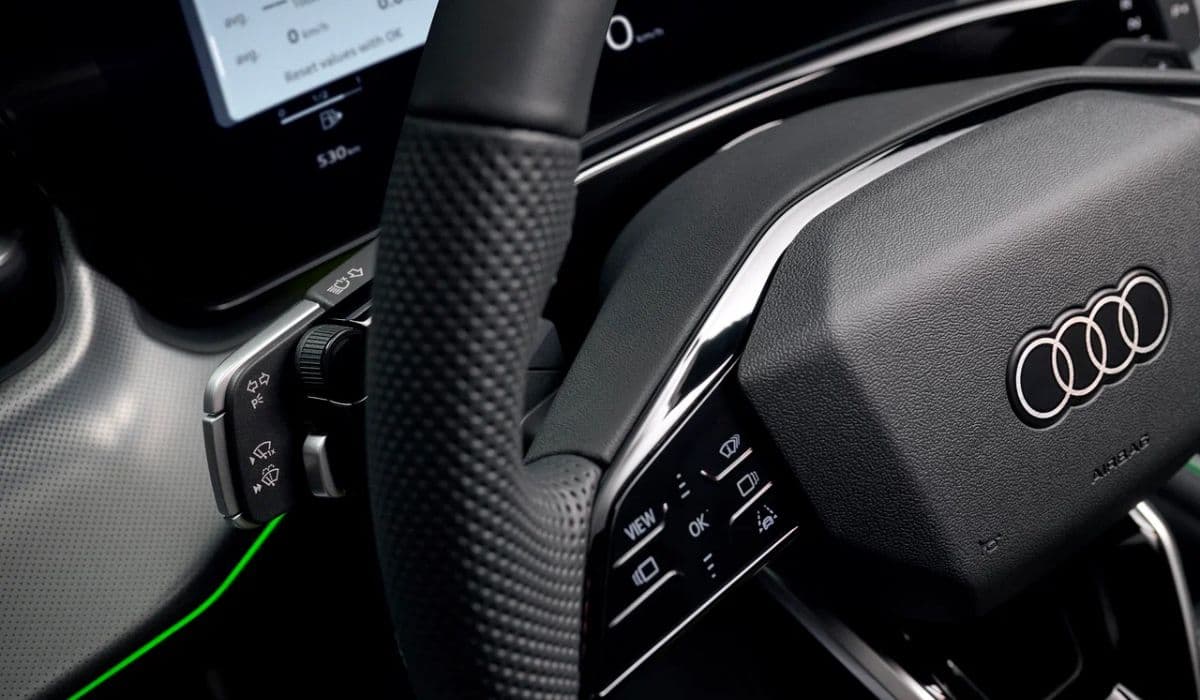
Screen-heavy cockpit architecture — Almost every function now routes through one or two giant touchscreens. Climate controls, seat heating, massage programs, ambient-lighting themes, and even the volume knob live inside menus.
Haptic-feedback-only controls — Physical buttons and rollers have largely disappeared. Adjusting temperature or fan speed requires eyes-off-road glances and precise presses on vibrating glass.
Proactive driver-assistance overload — Lane-centering, adaptive cruise with stop-and-go, emergency steering assist, and traffic-sign recognition can intervene simultaneously, each with its own warning chime or vibration.
The cumulative effect is mental saturation. A driver who has just enjoyed a perfectly balanced corner exit suddenly needs to acknowledge a “lane-departure warning silenced” pop-up, swipe to change radio stations, or cancel an unnecessary lane-change suggestion. Each interruption pulls attention away from the road and — more importantly — from the rewarding sensation of vehicle control.
Real-World Scenarios Where Distraction Peaks
Certain everyday and enthusiast situations reveal how sharply the tech can clash with driving enjoyment:
Tight mountain hairpins — You’re modulating throttle and brakes with precision when the MMI screen lights up with navigation instructions or a speed-limit icon just as apex approaches.
Wet motorway cruising — Adaptive cruise is holding a steady gap, yet the system repeatedly flashes “take over” alerts because it misreads spray as an obstacle or because hands-off time has elapsed.
Night city driving — You instinctively reach for a physical rotary controller to dim the instrument brightness, only to find you must first wake the main touchscreen, navigate to lighting settings, then slide a virtual bar.
Quick coffee-stop departure — Buckling up triggers seat-belt reminders, start-stop deactivation warnings, parking-assist pop-ups, and sometimes even a “check mirror adjustment” message — all while you’re trying to pull out of a narrow space.
In each case the hardware is doing an excellent job. The complaint is not with grip, balance or power delivery; it is with the cognitive tax required to operate everything else.
The Evolution of Audi’s Human-Machine Interface
Audi was an early pioneer of the virtual cockpit — a crisp, customizable digital instrument cluster that many drivers still praise for its clarity. Over time, however, the philosophy shifted from augmentation to replacement. Physical switchgear gave way to touch sliders, voice commands became primary input methods, and haptic touchpads replaced conventional controls.
While voice recognition has improved dramatically and gesture controls exist in some models, most drivers still prefer direct tactile feedback for frequent adjustments. The absence of a volume knob or dedicated climate buttons forces a higher mental workload during precisely the moments when attention should remain on the road.
Balancing Innovation With Driver-Centric Design
Audi faces the same challenge as the wider industry: how to integrate advanced driver-assistance systems (ADAS), over-the-air updates, and infotainment richness without sacrificing the purity of the driving experience. Several approaches could restore harmony:
Reintroducing a small cluster of physical climate and volume controls below the main screen
Allowing deeper customization of alert priority so drivers can suppress non-critical warnings in Dynamic mode
Refining intervention thresholds on steering and braking assists to reduce false positives
Offering a dedicated “Driver Focus” profile that minimizes visual changes and audible chimes
These changes would not require abandoning digital innovation — they would simply acknowledge that driving pleasure still depends heavily on intuitive, eyes-up interaction.
Why the Driving Dynamics Remain Worth Celebrating
Despite the frustrations, Audi’s mechanical package continues to impress. The combination of progressive steering, neutral-yet-playful handling, and quattro traction provides a level of confidence that encourages drivers to exploit the car’s capabilities rather than tiptoe around them. On a challenging back road the sensation of the car rotating cleanly on throttle, settling immediately on turn-in, and exiting with composed traction still feels special — often more special than the competition offers.
The electronics may occasionally fight for attention, but they rarely fight against the fundamental chassis tuning. When the screens go quiet and the assists are dialed back, an Audi still ranks among the most rewarding premium cars to place on an engaging piece of tarmac.
The tension between brilliant driving dynamics and intrusive technology defines the current Audi experience. The cars are engineered to feel alive and connected; the challenge now lies in designing interfaces that let drivers remain immersed in that connection instead of managing digital interruptions. Until that balance improves, the joy of Audi driving will continue to shine through — just with more effort than it ideally should require.