BMW i4/i5: EV range good but charging/software issues
The BMW i4 stands out as a compelling entry in the electric sedan segment, blending the brand's signature driving dynamics with zero-emission propulsion. Launched as part of BMW's expanding i-series lineup, the i4 Gran Coupe models cater to a range of preferences, from efficiency-focused drivers to performance enthusiasts. The base eDrive35 variant features a single rear-wheel-drive motor producing around 282 horsepower, paired with a 70.3 kWh battery that delivers an EPA-estimated range of up to 276 miles under optimal conditions. Stepping up to the eDrive40, drivers benefit from 335 horsepower and a larger 81.2 kWh battery, pushing the range to an impressive 318 miles on 18-inch wheels or 295 miles with 19-inch options. This model accelerates from 0 to 60 mph in about 5.5 seconds, offering a balance of speed and endurance.
For those seeking all-wheel-drive capability, the i4 xDrive40 combines dual motors for 396 horsepower and 443 lb-ft of torque, achieving 0-60 mph in 4.9 seconds while maintaining a solid range of 287 miles on standard wheels. At the top sits the M50, a high-performance trim with 536 horsepower from its dual-motor setup, sprinting to 60 mph in just 3.7 seconds but with a slightly reduced range of 232 to 278 miles depending on wheel size and driving conditions. These figures are influenced by factors like tire choice, ambient temperature, and driving style, but real-world testing often confirms ranges close to EPA estimates in moderate climates. The i4's adaptive suspension and precise steering enhance its appeal, making it feel more like a traditional BMW than a typical EV, though its 4,500-pound curb weight can impact handling on twisty roads.
Battery technology plays a crucial role in the i4's efficiency. Utilizing BMW's fifth-generation eDrive system, the vehicle incorporates high-voltage lithium-ion cells with advanced thermal management to optimize energy density and longevity. Regenerative braking, adjustable via drive modes, helps recapture energy during deceleration, potentially extending range by 10-15% in urban settings. However, owners in colder regions report a 20-30% drop in range due to battery preconditioning demands, highlighting the importance of garage storage or preconditioning features accessible through the My BMW app.
Delving into BMW i5 Capabilities
Building on the legacy of the iconic 5 Series, the BMW i5 electrifies the executive sedan category with sophisticated engineering and luxurious amenities. Available in eDrive40, xDrive40, and M60 trims, the i5 emphasizes refinement alongside electrification. The rear-wheel-drive eDrive40 leads with 335 horsepower and 295 lb-ft of torque from a single motor, drawing from an 84.3 kWh battery to achieve 271-295 miles of range. This setup provides a smooth 5.7-second 0-60 mph time, ideal for highway cruising where its air suspension absorbs imperfections effortlessly.
The xDrive40 adds all-wheel drive via dual motors, boosting output to 389 horsepower while offering 248-266 miles of range. It shaves the acceleration to 5.2 seconds, enhancing traction in adverse weather without significantly compromising efficiency. For ultimate performance, the M60 xDrive delivers 593 horsepower and 586 lb-ft of torque, rocketing to 60 mph in 3.7 seconds with a range of 239-253 miles. This model's adaptive M suspension and rear-axle steering provide agile handling despite the vehicle's nearly 5,000-pound weight, though aggressive driving can quickly deplete the battery.
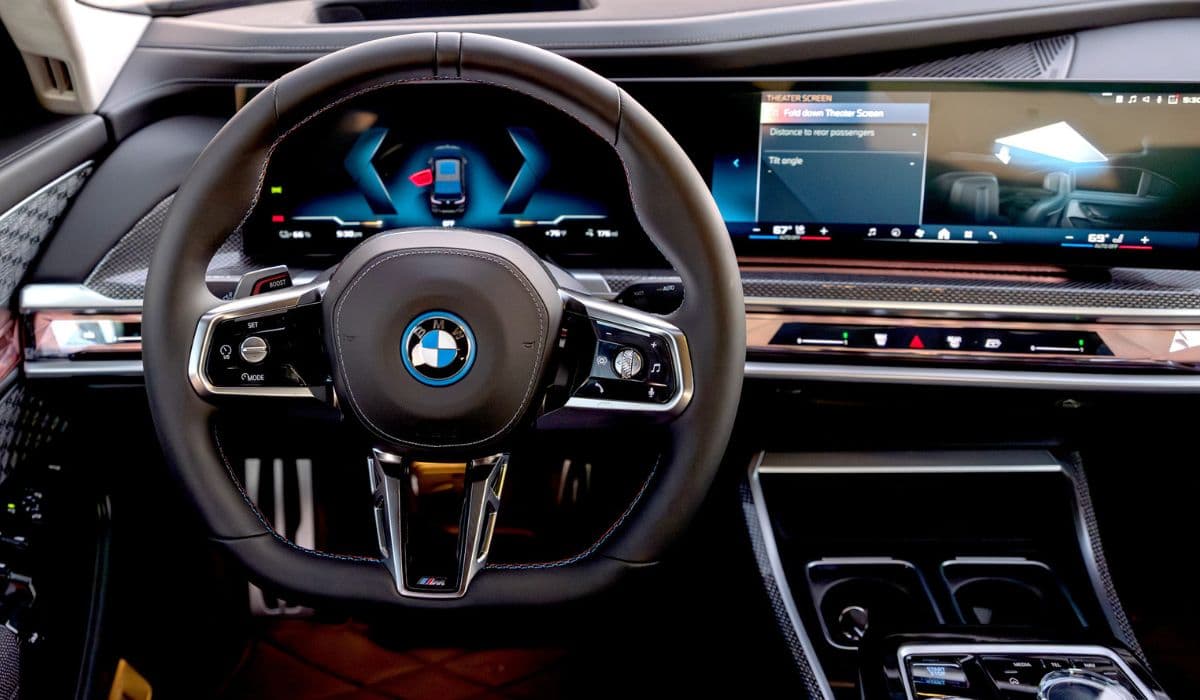
The i5's interior tech elevates the experience, featuring a curved display combining a 12.3-inch digital instrument cluster and a 14.9-inch touchscreen running iDrive 8.5. Voice-activated controls and gesture recognition add convenience, but the system's complexity can overwhelm new users. Range optimization tools, such as route planning that accounts for charging stops, integrate seamlessly with navigation, predicting energy needs based on topography and traffic data. In mixed driving, owners often achieve 3.2-3.5 miles per kWh, translating to real-world ranges that align closely with estimates when avoiding extreme speeds.
Strengths in Electric Vehicle Range
One of the standout attributes of both the BMW i4 and i5 is their competitive electric range, setting them apart in a market crowded with EVs promising long-distance capability. The i4 eDrive40's 318-mile maximum eclipses many rivals like the Tesla Model 3 Long Range (around 358 miles but with less premium feel) and the Polestar 2 (up to 320 miles), especially when considering BMW's focus on driving pleasure. Efficiency stems from aerodynamic designs—the i4's 0.24 Cd drag coefficient minimizes wind resistance—combined with lightweight materials like carbon-fiber-reinforced plastics in structural elements.
Similarly, the i5 eDrive40's 295-mile range positions it well against the Mercedes EQE (up to 305 miles) and Audi e-tron GT (around 249 miles), offering more interior space and cargo volume at 17 cubic feet. Both models support preconditioning, where the battery heats or cools via the app before departure, preserving range by reducing initial energy draw. In highway tests, the i4 maintains over 250 miles at 70 mph, while the i5's larger battery sustains similar performance with added passenger comfort. Regenerative settings, from mild to aggressive one-pedal driving, allow customization, with the i5's system recouping up to 20% more energy in stop-and-go traffic compared to base modes.
These ranges are bolstered by BMW's investment in battery chemistry, using nickel-manganese-cobalt cells for higher energy density. Warranty coverage extends to 8 years or 100,000 miles with a 70% capacity guarantee, providing peace of mind for long-term ownership. In warmer climates, ranges often exceed estimates, with some i4 owners reporting 330+ miles on conservative drives. This reliability in distance makes the i4 and i5 viable for cross-country trips, especially with access to expanding fast-charging networks.
Common Charging Challenges Faced by Owners
Despite strong range figures, charging remains a pain point for many BMW i4 and i5 drivers, with issues spanning hardware compatibility, speed inconsistencies, and unexpected interruptions. Level 2 home charging, typically via a 240V wallbox at 11 kW, takes about 8-10 hours for a full charge on both models, but owners frequently encounter "Charging Interrupted" errors. These can stem from faulty cables, grid fluctuations, or vehicle-side glitches, forcing manual restarts. For instance, some i4 users report charging halting at 70%, requiring unplugging and replugging to resume, a frustration amplified in cold weather where preconditioning delays add time.
DC fast charging, rated up to 195 kW for the i4 and 205 kW for the i5, promises 10-80% in 31 minutes under ideal conditions. However, real-world speeds often peak at 150-180 kW before tapering, and cold batteries limit initial rates to 50-60 kW for the first few minutes as the system heats up. A recurring complaint involves the vehicle's software imposing limits after multiple DC sessions—capping at 30 kW after four fast charges—to protect battery health, necessitating an AC charge reset. This "throttling" catches owners off guard during road trips, extending stops from 30 minutes to over an hour.
Compatibility with public networks like Electrify America or ChargePoint varies; some stations trigger errors due to communication mismatches, leading to failed sessions. i5 owners note slower rates on non-CCS plugs or older infrastructure, while home setups with brands like Ohme or JuiceBox sometimes underperform, delivering only 4-6 kW instead of 11 kW. Environmental factors exacerbate these: high temperatures cause derating to prevent overheating, and voltage drops in rural areas prolong times. BMW's app provides charging history and optimization tips, but inconsistent notifications about session failures leave users stranded without timely alerts.
Software Glitches Impacting User Experience
Software woes further complicate the ownership equation for the i4 and i5, with updates intended to enhance features often introducing new bugs. The iDrive 8.5 system, while intuitive for navigation and media, suffers from flickering screens and intermittent reboots, as reported in 2025 models. Over-the-air (OTA) updates like version 07/2025.51 aim to refine assisted driving and ambient lighting but have caused temporary failures, such as non-responsive gesture controls or erratic seatbelt adjustments.
A major recall in mid-2025 affected over 70,000 BMW EVs, including i4 and i5 variants, due to motor software risking power loss during operation. This stemmed from diagnostic errors misinterpreting minor faults as critical, leading to reduced performance modes. Post-update, some drivers experienced lingering issues like delayed CarPlay connectivity or reverse camera blackouts, requiring factory resets that erase personalized settings. The My BMW app, essential for remote preconditioning and charge monitoring, occasionally loses sync, displaying inaccurate battery levels or failing to unlock doors via digital key.
Navigation glitches include outdated maps despite OTA capabilities, with traffic data lagging in real-time scenarios. Assisted driving features, like lane-keeping and adaptive cruise, can deactivate unexpectedly after updates, citing "system unavailable" errors tied to sensor calibration. Voice commands misinterpret inputs, and integration with third-party apps like Spotify stutters during high-data usage. These problems, while addressable via dealer visits, disrupt daily usability, particularly for tech-reliant users expecting seamless experiences from a premium brand.
Potential Solutions and BMW's Response
BMW has actively addressed these hurdles through iterative improvements and owner support programs. For charging, the company recommends certified wallboxes and app-based scheduling to avoid peak grid hours, potentially resolving interruption issues. Software patches, deployed OTA, have fixed specific bugs—like the 70% charge halt in i4 models—by recalibrating battery management algorithms. Owners can check for updates via the vehicle's settings or app, with notifications prompting installations during low-usage periods.
Enhanced diagnostic tools in the 2025 lineup allow remote troubleshooting, where BMW technicians access vehicle data to preempt failures. Warranty extensions for battery and software components cover repairs, and complimentary roadside assistance includes towing to chargers. Community forums and dealer workshops educate on best practices, such as preconditioning in cold weather to boost DC speeds. BMW's partnership with charging networks offers discounted sessions, mitigating compatibility woes. Future models may incorporate faster 800V architecture for quicker charges, signaling ongoing evolution.
Comparing i4 and i5 in Real-World Scenarios
In everyday use, the i4 appeals to compact sedan enthusiasts with its agile footprint and lower entry price, starting around $57,900, making it suitable for urban commutes where its 318-mile range shines. The i5, priced from about $66,800, targets those needing executive space, with superior rear legroom and a quieter cabin ideal for family trips. Both excel in efficiency on highways, but the i5's larger battery handles longer distances better, though at the cost of slightly slower charging curves.
Performance-wise, the i4 M50's sportier tuning edges out the i5 eDrive40 in corners, while the i5 M60 dominates straight-line speed. Charging experiences mirror each other, with similar interruption rates, but i5 owners report fewer software flickers due to its updated display hardware. Ultimately, the i4 suits dynamic drivers, while the i5 prioritizes luxury, both navigating range strengths against shared tech challenges.