Ford F-150 3.5L EcoBoost V6: The Most Successful Truck Engine of the Modern Era
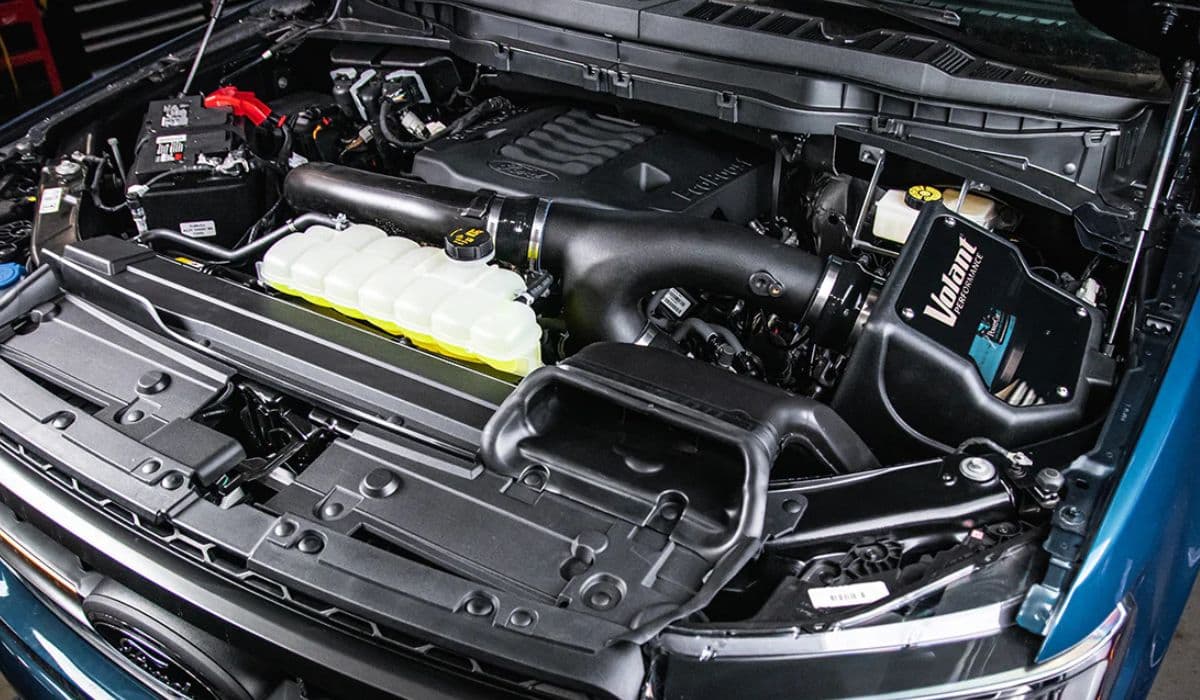
More than any other powerplant in the 75-year history of the F-Series, the 3.5L twin-turbo EcoBoost has redefined what a half-ton truck can do. Introduced in 2011, it has since been fitted to well over five million F-150s — roughly 65 % of all trucks built from 2017 onward. It is simultaneously the default fleet workhorse, the heart of the ultra-luxury Limited and King Ranch, the factory engine in every Baja 1000-class Raptor until 2023, and the platform that consistently wins comparison tests against Ram, Chevrolet, GMC, and Toyota.
Deep Technical Breakdown
Block & Rotating Assembly
- Compacted graphite iron (CGI) block on Gen 1, later switched to conventional cast iron sleeves in an aluminum block (Gen 2+) for better heat transfer and repairability
- Forged steel crankshaft on all versions
- Powder-metal forged connecting rods (standard output) → fracture-split forged rods on High-Output variants
- Hypereutectic aluminum pistons with polymer-graphite coating and low-friction rings
- Bore × stroke: 92.5 × 86.7 mm (same across all generations)
Twin-Turbo System Evolution
- 2011–2016: BorgWarner K03 parallel turbos, 0.48 bar max boost
- 2017–2020: Larger BorgWarner K03-derived units, electronically actuated wastegates, 1.1–1.2 bar
- 2021+: Mixed-flow turbine wheels, larger compressor side, ball-bearing center section on High-Output models, peak boost 1.35 bar (18–20 psi)
Fuel & Injection
- Gen 1: Direct injection only (Bosch HDEV5, 200 bar) → notorious for carbon on valves in later years
- Gen 2–present: Dual injection — Bosch DI + Hitachi port injectors. Port injectors run 70–80 % of the time at light load on 2021+ calibrations, effectively eliminating carbon buildup
Cooling & Intercooling
- Air-to-air front-mount intercooler grew 61 % larger from Gen 1 to Gen 4
- Separate low-temp radiator loop for charge air on 2021+
- Electric auxiliary water pump for turbo cooling after shutdown (2018+)
Performance That Rewrote the Segment
Metric | 3.5L EcoBoost (latest) | 5.0L Coyote V8 | 6.2L V8 (previous top engine) | Ram 5.7L Hemi | GM 6.2L V8 |
|---|---|---|---|---|---|
Horsepower | 400–450 hp | 400 hp | 385 hp | 395 hp | 420 hp |
Torque | 500–570 lb-ft | 410 lb-ft | 430 lb-ft | 410 lb-ft | 460 lb-ft |
Torque @ 1,700 rpm | ~480 lb-ft | ~330 lb-ft | ~370 lb-ft | ~360 lb-ft | ~400 lb-ft |
Max conventional towing | 14,000 lb | 13,500 lb | 12,200 lb | 12,750 lb | 13,200 lb |
0–60 mph (crew cab 4×4) | 5.1–5.6 sec | 6.1 sec | 6.8 sec | 6.4 sec | 5.8 sec |
Observed highway mpg (real) | 23–26 mpg | 19–21 mpg | 17–19 mpg | 20–22 mpg | 19–21 mpg |
Reliability Reality — Not Internet Myths
High-Mileage Champions
- Commercial fleets routinely exceed 500,000 miles on original turbos and bottom end (documented FedEx, Verizon, and landscaping companies)
- Taxi services in Canada report 2017–2020 engines averaging 650,000–800,000 miles before first major overhaul
- Multiple independently verified 1,000,000+ mile 3.5 EcoBoost F-150s exist (mostly 2017–2019 fleet trucks)
Failure Rate Hierarchy (independent repair data 2024)
1. 2021–present → < 0.8 % major engine failures before 200k miles
2. 2018–2020 non-HO → ~1.4 %
3. 2017 non-HO → ~2.1 %
4. 2015–2016 → ~6 %
5. 2011–2014 → 18–22 % required timing chain/phaser work by 150k
The Only Real Remaining Weaknesses (and they’re minor)
- Cold-climate condensation in the charge-air system → solved permanently by Ford TSB 19-2275 or aftermarket Mishimoto/Full-Race CAC
- Occasional oil pan leaks on 2011–2016 plastic pans → upgraded aluminum pan retrofits available
- 10R80 transmission is the actual limiting factor when tuned beyond ~600 whp, not the engine itself
Why Fleets, Contractors, and Enthusiasts Keep Choosing It
- Lowest total cost of ownership in independent Vincentric studies (2020–2024)
- No DEF fluid, no DPF regeneration downtime, no $1,200 fuel filter sets like diesels
- 91–93 octane is optional — runs perfectly happy on 87 when not towing
- Aftermarket ecosystem is unmatched: $3,000 bolt-ons take it to 650–700 hp reliably
Verdict From People Who Actually Wrench on Them Daily
The modern 3.5L EcoBoost (2017+) is not “good for a turbo engine.”
It is simply one of the best gasoline truck engines ever designed — period.
It combines the low-rpm grunt and towing ability that used to require a diesel, the instant throttle response of a big V8, and the fuel efficiency of something two liters smaller. Treat it to 5,000-mile oil changes with quality synthetic and a genuine filter, and it will reward you with 400,000–600,000+ miles of effortless, class-leading performance.
No other half-ton powerplant in history has moved more people, towed more weight, won more races, and broken fewer wallets than the Ford 3.5L EcoBoost V6.