Toyota's 5th Generation Hybrid Powertrain: Revolutionizing Efficiency and Performance
Toyota's hybrid legacy, spanning over 25 years since the Prius debuted in 1997, reaches a new pinnacle with the 5th generation hybrid powertrain. Introduced in production for models like the 2023 Corolla and Prius, this system has quickly expanded to the 2025 Camry, 2025 Corolla Cross Hybrid, and even the 2026 RAV4 Hybrid. Lighter, more compact, and smarter than ever, it delivers up to 232 horsepower while pushing combined fuel economy beyond 40 mpg in many applications. This isn't just an incremental update—it's a seamless fusion of gasoline and electric propulsion that makes every drive more engaging and every mile more sustainable.
Core Architecture: A Refined Synergy of Engine, Motors, and Transmission
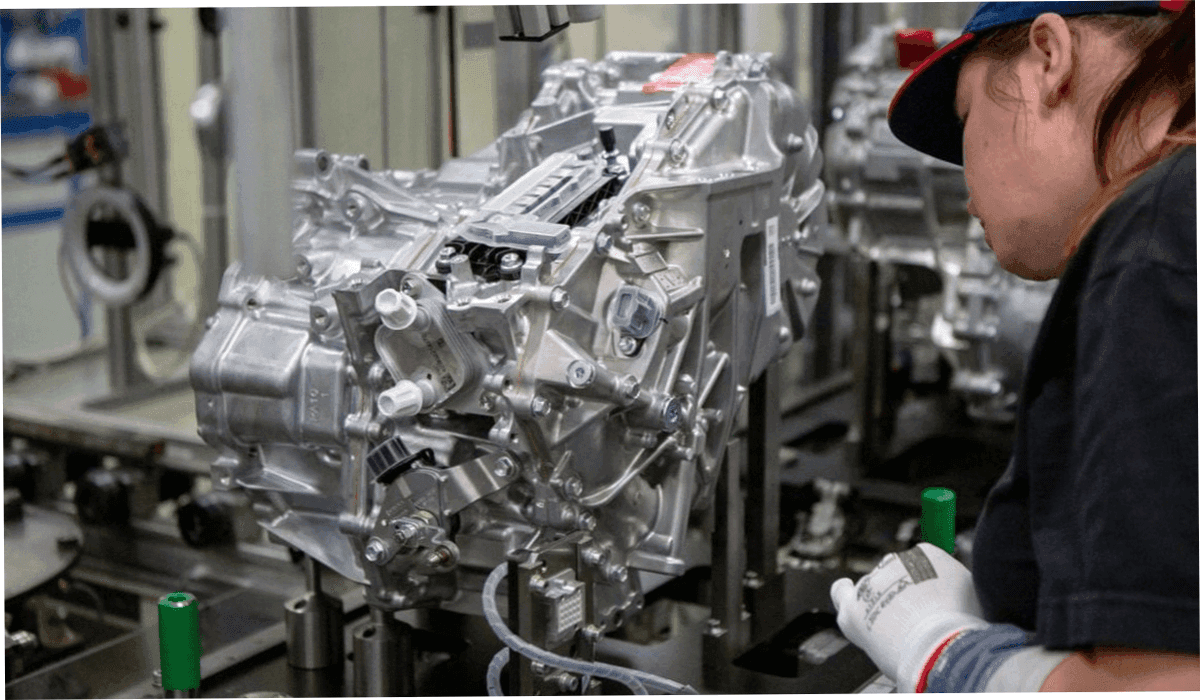
At its heart, the 5th generation system builds on Toyota's proven planetary gear setup but with significant refinements. It pairs a high-efficiency Dynamic Force gasoline engine—typically a 2.5-liter inline-four (A25A-FXS) for larger models—with two electric motor-generators (MG1 and MG2). MG1 acts as the starter and generator, while MG2 drives the wheels, all routed through a planetary-type continuously variable transmission (e-CVT) that eliminates traditional gear shifts for buttery-smooth acceleration.
For compact applications like the Prius, a 2.0-liter engine (M20A-FXS) takes center stage, emphasizing low-end torque. The system's modular design allows flexibility: front-wheel-drive setups dominate, but electronic on-demand all-wheel drive (eAWD) adds a rear motor for enhanced traction without compromising efficiency. This architecture weighs about 14% less than the 4th generation, thanks to a more compact transaxle and lithium-ion battery pack positioned low in the chassis for optimal balance.
Power Outputs: From Efficient Commuting to Punchy Performance
Power delivery varies by model, but the gains are universal. In the 2025 Camry, the 2.5-liter setup yields 225 net combined horsepower in FWD guise and 232 hp with AWD—a 15-20 hp bump over the prior gen—translating to 0-60 mph sprints in under 7 seconds. The 2025 Prius, with its 2.0-liter engine, hits 196 hp for a lively feel that belies its eco-credentials.
Smaller variants, like the 2025 Corolla Hybrid's 1.8-liter option, produce around 138 hp but prioritize refinement, with instantaneous electric torque filling in low-speed gaps. Across the board, the system shines in real-world scenarios: quicker throttle response during merges, synthesized engine sounds for auditory feedback, and seamless mode switching between EV, hybrid, and engine-dominant operation. Toyota engineers retuned the calibration for reduced noise, vibration, and harshness, making highway cruising whisper-quiet while corner exits feel eager.
Efficiency Gains: Smarter Batteries and Real-World MPG Leadership
Fuel economy is where the 5th gen truly excels, thanks to a high-capacity lithium-ion battery (up to 1.6 kWh) that's 14% lighter and more densely packed. The 2025 Camry LE FWD achieves an EPA-estimated 51 mpg combined, while the Corolla Cross Hybrid nets 42 mpg with standard AWD—a rarity in the segment. The 2026 RAV4 Hybrid pushes to 44 mpg combined, outpacing non-hybrids by wide margins.
Key enablers include an upgraded power control unit that optimizes energy flow, regenerative braking that captures more kinetic energy, and an intelligent energy management system monitoring throttle input, speed, and terrain in real-time. CO2 emissions drop by up to 10% compared to the 4th gen, with the 1.8-liter Corolla variant particularly low at under 100 g/km WLTP. In EV mode, many models offer short bursts up to 40 mph, ideal for urban stop-go, extending pure-electric driving without a plug.
Electric Motor Advancements: Compact Design Meets High Torque
The star of the show is the redesigned MG2 motor: smaller in footprint yet delivering up to 20% more torque density through advanced wound-rotor tech and higher-voltage operation (up to 650V in some configs). This allows for punchier acceleration without added bulk—critical for fitting into sedans like the Camry or crossovers like the RAV4.
Paired with a more efficient inverter, the motors reduce electrical losses by 15%, meaning less energy wasted as heat. Cooling improvements ensure sustained performance in hot climates or during aggressive drives. For AWD models, the rear motor adds vectoring-like control, distributing power side-to-side for sharper handling on slick surfaces.
Integration Across Models: From Prius to RAV4 and Beyond
Toyota's rollout strategy maximizes reach. The Prius pioneered the gen in 2023 with its 2.0-liter focus on aerodynamics and lightness. The 2025 Camry goes all-hybrid, ditching pure gas for this system, appealing to families seeking sedan efficiency. Compact crossovers like the Corolla Cross Hybrid incorporate it for 42 mpg with AWD standard, while the 2026 RAV4 Hybrid upgrades mid-cycle for 44 mpg and better trail capability.
Looking ahead, expect it in the 2026 Highlander Hybrid and possibly the next Tacoma i-Force Max mild-hybrid. Production hubs in Poland, the UK, and Japan ensure global supply, with over 1 million units built since 2022. This scalability keeps costs down— the 2025 Camry LE starts at $28,740, just $455 less than its hybrid predecessor.
Driving Dynamics: Responsive and Refined for Everyday Thrills
What sets the 5th gen apart is its driver focus. Engineers prioritized "fun-to-drive" tuning: the battery's higher discharge rate enables aggressive EV boost for passing, while the e-CVT's simulated shifts add tactility. Suspension pairings, like the Camry's retuned MacPherson struts, minimize body roll, and the low battery placement lowers the center of gravity by up to 0.6 inches.
Noise insulation improves with active sound control that amplifies pleasing engine notes while damping drone. In tests, the Camry feels lighter on its feet than the outgoing model, with AWD variants gripping like a sports sedan. It's not a hot hatch, but it erases the "boring hybrid" stereotype, blending Prius efficiency with Accord-like poise.
Environmental and Ownership Perks: Sustainable Power with Toyota Reliability
Sustainability threads through every aspect: recycled materials in the battery casing, reduced rare-earth usage in motors, and a lifecycle CO2 footprint 25% lower than gas counterparts. The battery warranty spans 10 years/150,000 miles, with degradation under 10% after 200,000 miles in real-world data.
Owners benefit from ToyotaCare—two years of complimentary maintenance and roadside aid—plus strong resale values (hybrids retain 70% after five years). Charging is seamless via regenerative systems, and over-the-air updates refine energy algorithms post-purchase.
The Broader Impact: Toyota's Blueprint for Electrified Mobility
The 5th generation isn't a stopgap—it's Toyota's bridge to full electrification, proving hybrids can deliver sports-car snap with Prius parsimony. As global regs tighten, this system underpins 40% of Toyota's 2025 lineup, outselling rivals like Hyundai's hybrids by 2:1 in the U.S. It challenges the EV-or-bust narrative, offering zero-compromise efficiency for the masses.
In an era of range anxiety and charging deserts, Toyota's 5th gen hybrid powertrain reminds us: the future of driving is here, one seamless watt at a time. Whether commuting or conquering commutes, it powers progress without compromise.
More from EV & Hybrid
Ultra-Fast EV Charging Revolution: 600+ kW Networks Reshaping Electric Mobility in 2025
20.11.2025 14:07
Tesla 4680 Second-Generation Batteries: Cybercell Breakthrough and 2025 Production Reality
20.11.2025 14:30