Used Prius: How to Buy Cheap and Confidently Drive Another 10 Years (Gen 2 & Gen 3)
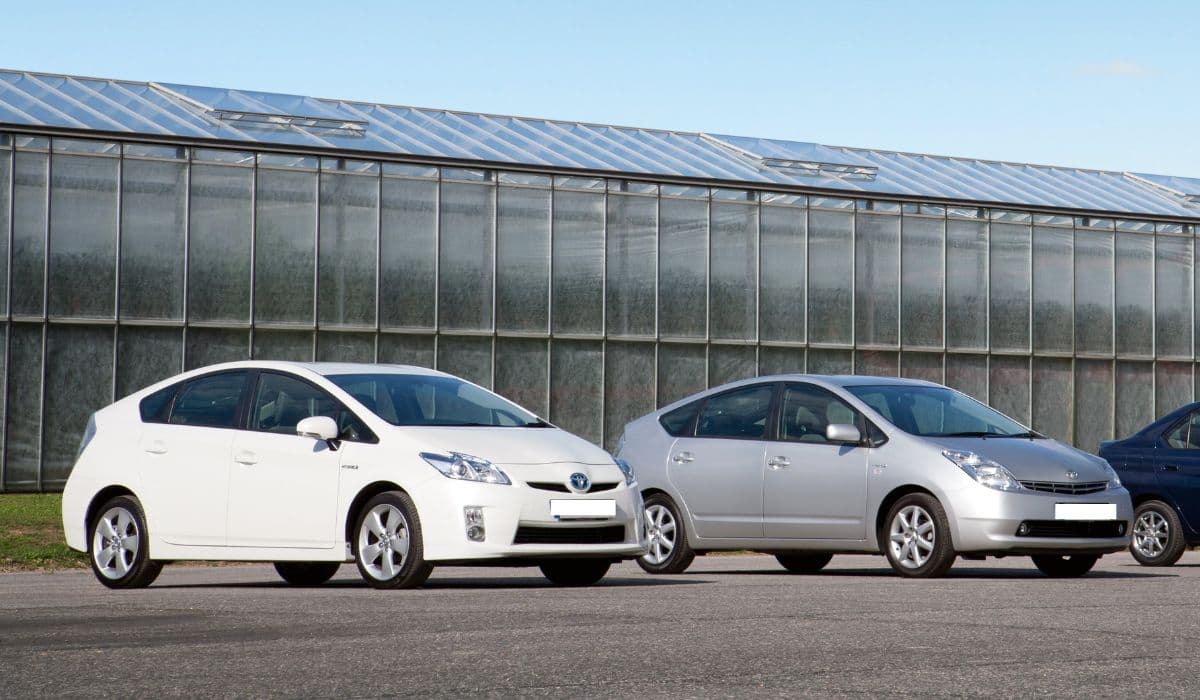
Toyota Prius second generation (2004–2009) and third generation (2009–2015) are still the smartest hybrid purchase in the true budget segment — you can find completely viable examples between $4000 and $6000 today. Cars that have already covered 250 000–400 000 km routinely serve another 8–12 years and easily add 300 000–400 000 km more if you know exactly what to inspect and where to service them.
Why Gen 2 and Gen 3 Remain Unbeatable in This Segment
The XW20 and XW30 platforms use the simplest and most repair-friendly hybrid system Toyota ever installed in a Prius. There is no fragile EGR cooler (Gen 4 problem), no widespread oil-burning issues from bad piston rings, and — most importantly — the traction battery is fully serviceable module-by-module at a fraction of replacement cost.
Real-world fuel economy:
City summer: 4.5–5.5 l/100 km
City winter with warm-up: 6–7 l/100 km
Highway 110–120 km/h: 5–5.5 l/100 km
At current fuel prices, the savings versus an equivalent gasoline Corolla pay for every hybrid-specific repair several times over within the first 5–7 years.
Best Years and Configurations to Hunt For
Second Generation (2004–2009)
Sweet spot: 2007–2009 facelift cars (MMC inverter, better headlights, refreshed interior)
Avoid 2004–mid 2006 cars with the old MFD inverter (known recall for sudden shutdowns; many still have the original part)
Packages #5–#7 usually come with rear camera, JBL audio, and smart key — nice bonuses for daily comfort
Third Generation (2009–2015)
- Sweet spot: 2012–2015 facelift (new front end, LED headlights, higher-quality interior materials)
- Avoid 2009–2011 with the first-generation touchscreen head unit (glitches and very expensive to replace)
- Post-2012 cars finally eliminated the minor oil consumption some early 2ZR-FXE engines had in cold climates
How to Check the Hybrid Battery Yourself in Literally 5 Minutes
All you need is a $12–$18 ELM327 Bluetooth adapter and a free app (Car Scanner, Hybrid Assistant, or Dr. Prius).
Step-by-step:
1. Ignition ON (no need to press READY)
2. Connect → Hybrid Battery → Block voltages
3. Look at the difference (delta) between the highest and lowest module:
- At rest: ≤ 0.06 V = excellent, ≤ 0.10 V = still fine
- Under load (hold brake + gas in Park, 2500–3000 rpm for 10 sec): ≤ 0.3 V = healthy
Anything over 0.8–1.0 V means the pack is tired and will need work soon.
Second quick check: total pack voltage at rest
- Healthy Gen 2: 280–290 V
- Healthy Gen 3: 205–210 V
If it’s noticeably lower, the battery is heavily degraded.
Instant Deal-Breakers You Must Walk Away From
- Milky oil or coolant in oil (blown head gasket)
- P0A80 + P3000 + a huge list of sub-codes (battery is dead, not repairable economically)
- Leaking or completely failed ABS actuator
- Burnt inverter transistors (mostly 2004–2006)
- Serious structural rust on sills, rear arches, or battery tray area (salt-belt cars)
Where Real Specialists Recondition Batteries for $500–800 Instead of $3000–4000
95 % of “dead” Prius batteries are perfectly revived by swapping just the few weak modules (1–6 out of 28 in Gen 2, or 1–6 pairs in Gen 3).
Proven shops that owners actually use in 2024–2025 (prices in the $500–800 range with 2–3 year warranties):
- California: Hybrid Pit, Green Tec Auto
- New York area: Prius Planet NYC, EcoHybrid Solutions
- Midwest: Hybrid Battery Repair Chicago, Wisconsin Hybrid
- Florida/Texas: multiple Green Tec locations
- Canada: Pak Auto Service (Toronto), Hybrid Paul (Vancouver)
The process is same-day: full diagnostic → replace only bad modules → deep balance → road test → warranty.
Realistic Ownership Costs the First 3–4 Years (Real Owner Numbers, 2023–2025 Purchases)
Typical spend after buying a $4000–6000 Prius:
Year 1: battery recondition $500–800, oil + filters, brake pads
Year 2: 12 V battery, shocks all around (KYB or OEM), coolant
Year 3: EGR cleaning, bushings, stabilizer links
Total for three years usually lands around $2000–2500 — roughly the same as maintaining any 15-year-old Camry, but with literally half the fuel bill.
Do These Four Things Immediately After Buying
1. Change engine oil + transaxle fluid (Toyota WS)
2. Clean EGR valve and intake manifold (mandatory every 150–180 k km anyway)
3. New spark plugs (Denso SK20R11 or NGK IFR6A11)
4. Clean and lubricate the battery cooling fan slider contacts (prevents false P0A80 codes when it gets hot)
Real Cars, Real Owners, 2024–2025
- 2008 Prius, California, bought $4200 @ 298 k miles → battery refreshed for $580 → now 356 k miles, still perfect
- 2010 Prius, New York, bought $4800 with P0A80 → full rebuild $720 + ABS repair → daily driver two years strong
- 2013 restyling, Florida, bought $5900 @ 265 k miles → zero hybrid repairs so far, 4.6 l/100 km city
Bottom line: Gen 2 and Gen 3 Prius are still the only hybrids on the market where buying a high-mileage example in the $4000–6000 range and driving it another full decade is not wishful thinking — it’s routine, as long as you check the battery properly before handing over the money and treat module replacement as normal maintenance rather than a disaster.