L15B7 vs L15BE Engine Differences: Civic Si vs Type R Deep Dive
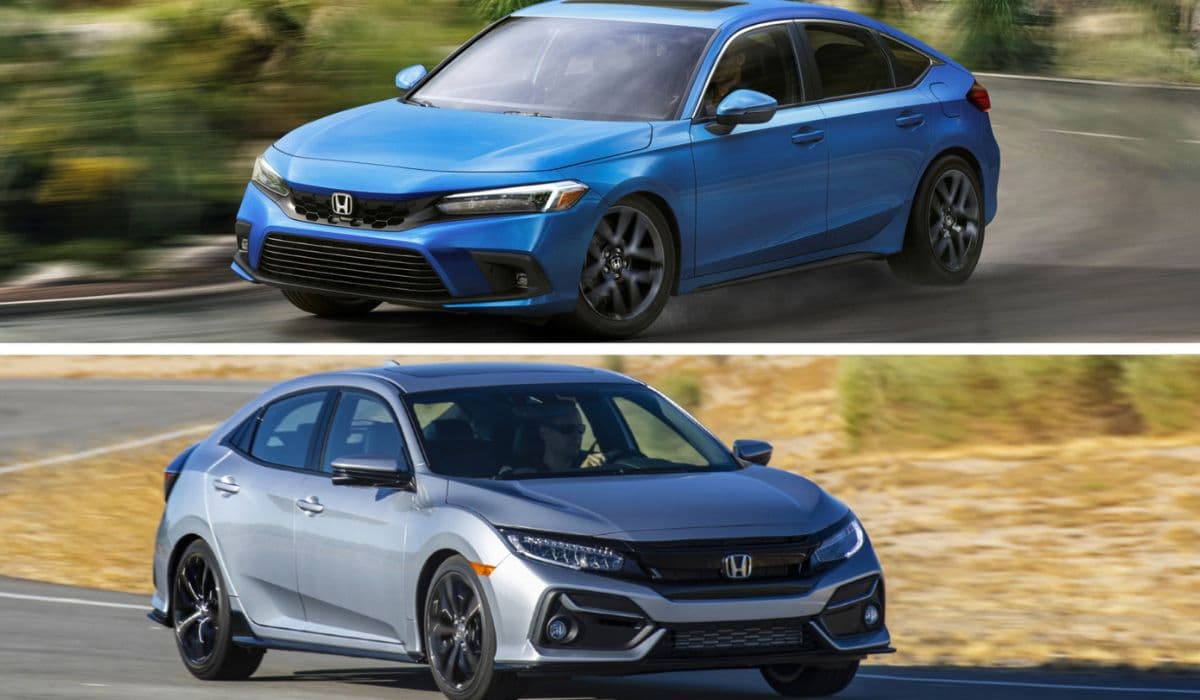
The Honda L15 series 1.5L turbocharged engines represent two distinct performance philosophies within the same family. While both the L15B7 (found in the Civic Si) and the L15BE (exclusive to the Civic Type R) share the same displacement, bore, stroke, and basic architecture, the differences in hardware, tuning, and thermal management transform them from a spirited daily driver powerplant into one of the most revered hot-hatch engines ever built.
Core Architecture and Shared Foundation
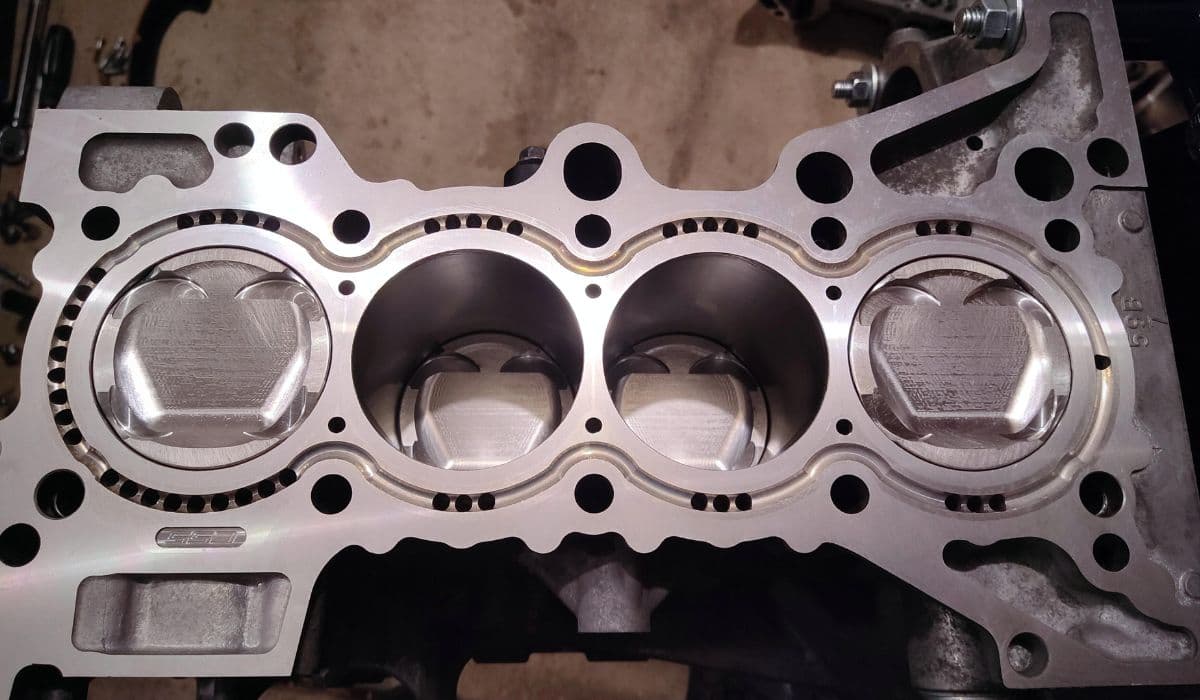
Both engines use an aluminum open-deck block with plasma-transferred wire arc spray-coated cylinder walls, a forged steel crankshaft, and a 9.8:1 static compression ratio on North American 91-octane fuel. The bore measures 73.0 mm and stroke 89.5 mm, resulting in exactly 1498 cc. Both feature dual overhead cams, four valves per cylinder, i-VTEC on the intake side, and Honda’s signature roller rocker arms. The turbocharger on both is a low-inertia monoscroll unit with electronic wastegate actuator. This common DNA allows Honda to produce both variants on highly similar production lines while achieving dramatically different outputs.
Turbocharger and Boost Pressure: The Biggest Divider
The most significant performance gap comes from turbo sizing and boost levels. The L15B7 uses a smaller Mitsubishi TD03 turbo (similar to part number 49373-07011) with a 42 mm compressor inducer and runs a conservative peak boost of approximately 16.5–18.5 psi depending on atmospheric conditions. The L15BE steps up to a larger Garrett MGT2260SZ turbo with a 46 mm compressor inducer and 52 mm turbine exducer, capable of sustaining 22.8–26.4 psi of boost in peak conditions. This larger turbo flows roughly 30–35% more air at high rpm, directly contributing to the Type R’s 306–315 hp versus the Si’s 200–205 hp.
Internal Strengthening: Where Type R Becomes Bulletproof
Honda didn’t just bolt on a bigger turbo. The L15BE receives extensive bottom-end reinforcement. The crankshaft is a fully counterweighted forged unit with larger cheek diameters and micro-polished journals. Connecting rods are upgraded to high-strength forged steel with larger bolts (from 8 mm to 9 mm). Pistons are cast aluminum with thicker crowns, enhanced pin boss reinforcement, and an anodized top ring land plus full-floating gudgeon pins. The piston cooling oil jets are larger and aimed more precisely. These changes allow the L15BE to reliably handle 700+ hp in tuned applications, while the L15B7 typically taps out around 350–400 hp before rod or piston failure.
Cylinder Head and Valvetrain Upgrades
The L15BE cylinder head is a completely different casting (PRC vs RAA stamp) with larger intake and exhaust ports, higher-flow intake manifold runners, and reshaped combustion chambers. Valve sizes increase from 29/25 mm (intake/exhaust) on the L15B7 to 31/27 mm on the L15BE. Valve springs are stiffer dual springs with oval-wire construction, and the camshafts feature more aggressive lift (10.6 mm intake, 10.1 mm exhaust vs 9.6/8.8 mm) and longer duration. The Type R also uses lightweight hollow-stem exhaust valves and sodium-filled exhaust valves for better heat dissipation.
Cooling System: Managing Triple the Heat
The L15BE generates substantially more heat, so Honda implemented a triple-radiator setup (main center radiator + two side stacked auxiliary radiators), a larger high-flow water pump, and a dedicated oil cooler with its own ducting. The L15B7 uses a single conventional radiator and smaller oil cooler. The Type R also has piston cooling oil jets with higher flow rate and a unique cylinder head water jacket design that directs more coolant around the exhaust ports.
Intake and Exhaust: Breathing Differences
The L15BE uses a larger 64 mm throttle body (vs 60 mm), a cast aluminum high-flow intake manifold with shorter, larger-diameter runners, and a 76 mm diameter intake pipe (vs 64 mm). The exhaust system is a completely different 3-inch diameter mandrel-bent system with minimal restriction, while the Si uses a 2.25–2.5-inch system with more catalytic converter volume for emissions compliance.
Engine Control and Tuning Philosophy
The L15BE runs a more aggressive ECU calibration with higher ignition advance at peak torque, richer air-fuel ratios under boost, and a more sophisticated knock control strategy that allows operation closer to the knock threshold. It also features a unique “+R” mode map that increases boost by approximately 3–4 psi and sharpens throttle response. The L15B7 calibration prioritizes smoothness, fuel economy, and emissions, and long-term reliability over peak power.
Oil System and Lubrication
The Type R uses a higher-capacity oil pan with improved baffling and a larger oil pickup. Oil pressure is higher across the rpm range thanks to a higher-relief-pressure oil pump. The L15BE also has a factory oil cooler thermostat that bypass for faster warm-up and more consistent operating temperature.
Peak Power and Torque Characteristics
Despite the same displacement, the L15BE produces 306–315 hp at 6500 rpm and 295–310 lb-ft from 2500–4500 rpm (FL5 Type R hits 315 hp/310 lb-ft). The L15B7 makes 200–205 hp at 6000 rpm and 192 lb-ft from 2100–5000 rpm. The power delivery feels entirely different: the Si has strong mid-range but signs off early, while the Type R pulls ferociously to the 7000 rpm redline with a pronounced top-end surge.
Real-World Reliability and Tuning Potential
Stock-for-stock, both engines are exceptionally reliable. However, the L15BE’s stronger internals and superior cooling make it far more resilient under track conditions and high boost. The aftermarket has pushed L15BE engines well past 600 whp on stock internals with only bolt-ons and E85, something impossible on the L15B7 without forged rods and pistons.
Driving Experience Translation
Behind the wheel, the L15B7 feels quick and responsive with excellent low-end torque for street driving. The L15BE feels explosive, with a dramatic surge above 4500 rpm and an addictive top-end rush that few front-wheel-drive cars can match. The difference isn’t just in peak numbers — it’s in how the power is delivered and how much more aggressively the car can be driven before heat soak or knock limit intervention.
More from Honda
Best Honda Civic Generation to Buy Used in 2025
08.12.2025 09:57
K20 vs K24 Engine – Which Is Better for Swap?
08.12.2025 10:02
1.5T vs 2.0 NA Engine in Honda Civic and Accord: Long-Term Ownership Reality
08.12.2025 07:07