idyCar logo

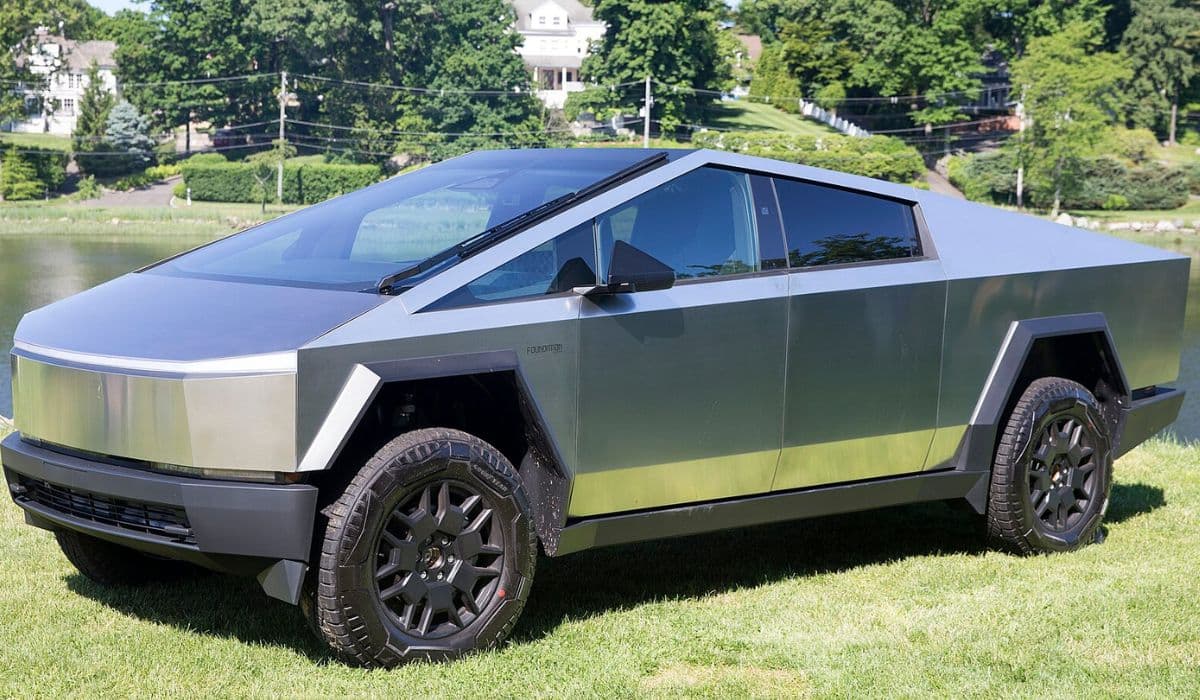
Tesla Cybertruck real-world towing review: Range drop and brake issues
Tesla17.12.2025 11:03
Tesla Cybertruck real-world towing review: Range drop and brake issues
Image credit: idyCar archives

The Tesla Cybertruck, launched as a revolutionary electric pickup, boasts impressive towing specs that set it apart in the EV market. Depending on the configuration, the Cybertruck can tow up to 11,000 pounds for the dual-motor all-wheel-drive model and a staggering 14,000 pounds for the tri-motor Cyberbeast variant. These figures position it competitively against traditional gas-powered trucks like the Ford F-150 or Ram 1500, but with the added benefit of instant torque from its electric powertrain. The vehicle's exoskeleton design, made from ultra-hard 30X cold-rolled stainless steel, contributes to its structural integrity, allowing it to handle heavy loads without compromising frame strength.

However, towing with an EV introduces unique challenges not seen in internal combustion engine vehicles. The Cybertruck's towing setup includes an integrated hitch receiver, rated for Class V towing, and advanced software features like Trailer Mode, which adjusts regenerative braking and stability controls. Owners can monitor trailer connections via the vehicle's massive 18.5-inch touchscreen, which displays real-time data on hitch status, brake controller integration, and even tire pressure for both the truck and trailer. Despite these innovations, real-world towing tests reveal limitations, particularly in range efficiency and braking dynamics, which we'll explore in depth.

Factors Contributing to Range Drop During Towing

One of the most discussed aspects of Cybertruck towing is the significant drop in driving range. Tesla advertises a base range of around 340 miles for the dual-motor model under ideal conditions without a load. But when hitched to a trailer, that figure can plummet by 40% to 70%, depending on variables like trailer weight, aerodynamics, terrain, and speed. In real-world scenarios, testers have reported achieving only 150-200 miles on a full charge while towing a 7,000-pound trailer at highway speeds of 65-70 mph.

Aerodynamics play a pivotal role here. The Cybertruck's angular, futuristic design offers a low drag coefficient of 0.34 when unloaded, but attaching a boxy trailer disrupts airflow, creating turbulence that increases energy consumption. Wind resistance alone can account for up to 30% of the range loss. Additionally, the added weight demands more power from the motors, especially on inclines. For instance, climbing a 6% grade with a 10,000-pound load can spike energy usage to over 3 kWh per mile, compared to the unloaded efficiency of about 2.5 kWh per mile.

Battery chemistry and thermal management further exacerbate range issues. The Cybertruck uses a 123 kWh battery pack with 4680 cells, which provide high energy density but heat up quickly under sustained high loads. Overheating triggers power throttling to protect the cells, reducing available torque and extending travel times. Real-world data from owners on forums like the Cybertruck Owners Club indicate that in hot climates, such as summer drives in Arizona, range can drop an extra 10-15% due to aggressive cooling system activation. Speed is another culprit; maintaining 75 mph with a trailer might yield only 120 miles of range, whereas dropping to 55 mph could extend it to 220 miles.

Brake Performance Challenges in Towing Scenarios

Braking with the Cybertruck while towing heavy loads uncovers several issues that differ from conventional trucks. The vehicle relies heavily on regenerative braking, which recaptures energy during deceleration and feeds it back to the battery. This system works seamlessly in light-duty driving, but under towing conditions, it can lead to inconsistent stopping power. Testers have noted that the regen braking feels less responsive when the trailer adds momentum, sometimes requiring harder pedal input to achieve the desired slowdown.

A key concern is brake fade during prolonged descents. On mountain roads, such as those in the Sierra Nevada, repeated braking with a 12,000-pound trailer can overheat the four-wheel disc brakes, reducing their effectiveness. Unlike diesel trucks with engine braking or exhaust brakes, the Cybertruck depends on its electric motors for compression-like braking, but this isn't always sufficient. Reports from early adopters highlight instances where the brakes felt spongy after 10-15 minutes of downhill towing, with stopping distances increasing by 20-30 feet compared to unloaded tests.

Integration with trailer brakes is another area of scrutiny. The Cybertruck's built-in trailer brake controller allows for adjustable gain settings, but software glitches in early firmware versions have caused erratic braking behavior. For example, some owners experienced trailer brakes locking up prematurely during low-speed maneuvers, leading to jerky stops. Tesla has addressed this through over-the-air updates, improving synchronization, but real-world variability persists, especially with non-standard trailers. The absence of air brakes, common in heavy-duty trucks, means reliance on electric-over-hydraulic systems, which can introduce latency in wet or icy conditions.

Insights from Real-World Towing Tests

Drawing from hands-on evaluations conducted by automotive journalists and Cybertruck owners in 2024 and 2025, several patterns emerge. In a test by Edmunds, a dual-motor Cybertruck towing a 6,500-pound Airstream trailer across 200 miles of mixed highway and urban roads averaged 1.8 miles per kWh, resulting in a 180-mile range—half of its EPA estimate. The test highlighted how headwinds amplified range drop, with a 15 mph crosswind reducing efficiency by an additional 15%.

Another review from InsideEVs involved towing a boat trailer weighing 9,000 pounds up a 7% incline for 10 miles. The Cybertruck's tri-motor setup delivered ample torque (over 1,000 lb-ft), accelerating from 0-60 mph in under 6 seconds even loaded, but battery drain was rapid, consuming 25% of the charge in that short distance. Brake tests on flat ground showed stopping from 60 mph in 150 feet, but with the trailer, it extended to 180 feet, underscoring the need for anticipatory driving.

Owner anecdotes add color to these stats. A contractor in Texas reported using the Cybertruck to tow construction equipment daily, noting that while the vehicle's adaptive suspension maintains ride height and stability, frequent charging stops—every 100-150 miles—disrupt workflows. In colder weather, like a Minnesota winter tow, range dropped further due to battery preconditioning demands, with one user logging only 130 miles while pulling a snowmobile trailer.

Strategies to Mitigate Range and Brake Problems

To counteract range drop, Cybertruck owners can employ several tactics. Route planning with apps like A Better Routeplanner (ABRP), which factors in towing weight and elevation, helps identify optimal charging stops along Tesla's Supercharger network. Maintaining tire pressures at the recommended 50-60 psi for loaded conditions reduces rolling resistance, potentially reclaiming 5-10% of lost range. Aerodynamic modifications, such as adding fairings to trailers or choosing low-profile designs, have shown promise in user modifications, with some reporting 20% efficiency gains.

For brake optimization, adjusting the regenerative braking strength via the touchscreen to a medium setting balances energy recapture with predictable stopping. Ensuring trailer brakes are properly calibrated—aiming for 60-70% gain—prevents over-reliance on the truck's brakes. Tesla's Autopilot features, including Trailer Assist, enhance stability by detecting sway and applying corrective braking, but drivers must remain vigilant, as the system isn't foolproof in high winds or uneven loads.

Upgrading to the range extender option, which adds an extra battery pack in the bed, can boost total capacity to over 470 miles unloaded, translating to 250-300 miles towing. However, this sacrifices bed space and adds weight, so it's ideal for long-haul users. Regular software updates from Tesla continue to refine towing algorithms, with recent patches improving brake modulation and energy forecasting accuracy.

Advanced Features Enhancing Towing Experience

Beyond basics, the Cybertruck integrates smart tech that elevates towing. The Vault bed, with its powered tonneau cover, secures gear while towing, and built-in 120V/240V outlets power tools or appliances at campsites. The vehicle's steer-by-wire system and four-wheel steering improve maneuverability, making tight turns with a trailer easier—crab walking mode allows lateral movement for precise parking.

Yet, these features don't fully offset the core issues. Power consumption monitoring via the app reveals how accessories like air conditioning spike usage by 10% during hot tows. The Cybertruck's off-road prowess, with 16 inches of ground clearance and adaptive air suspension, aids in uneven terrain towing, but mud or sand can further drain the battery due to increased traction demands.

In performance metrics, the Cybertruck outpaces rivals in acceleration but lags in sustained towing endurance. Compared to the Rivian R1T, which sees similar range drops but offers better brake cooling, or the Ford F-150 Lightning with its Pro Trailer Hitch Assist, the Cybertruck's strengths lie in its durability and tech ecosystem.

Future Improvements and Owner Expectations

Tesla's iterative approach suggests ongoing enhancements. Rumors of a 2026 update include better thermal management for batteries and brakes, potentially using advanced cooling fluids to minimize fade. Community feedback has driven features like enhanced trailer camera views, displaying blind spots on the center screen.

Owners anticipate more robust towing support, such as integrated weight distribution hitches or AI-driven efficiency modes that automatically adjust speed for optimal range. As the EV infrastructure expands, with more high-speed chargers, the practicality of Cybertruck towing will improve, making it a viable option for work and recreation.

More from Tesla

Back to Tesla