Reliability of the 10th Generation Honda Accord 2.0T with Detuned K20C1 Engine
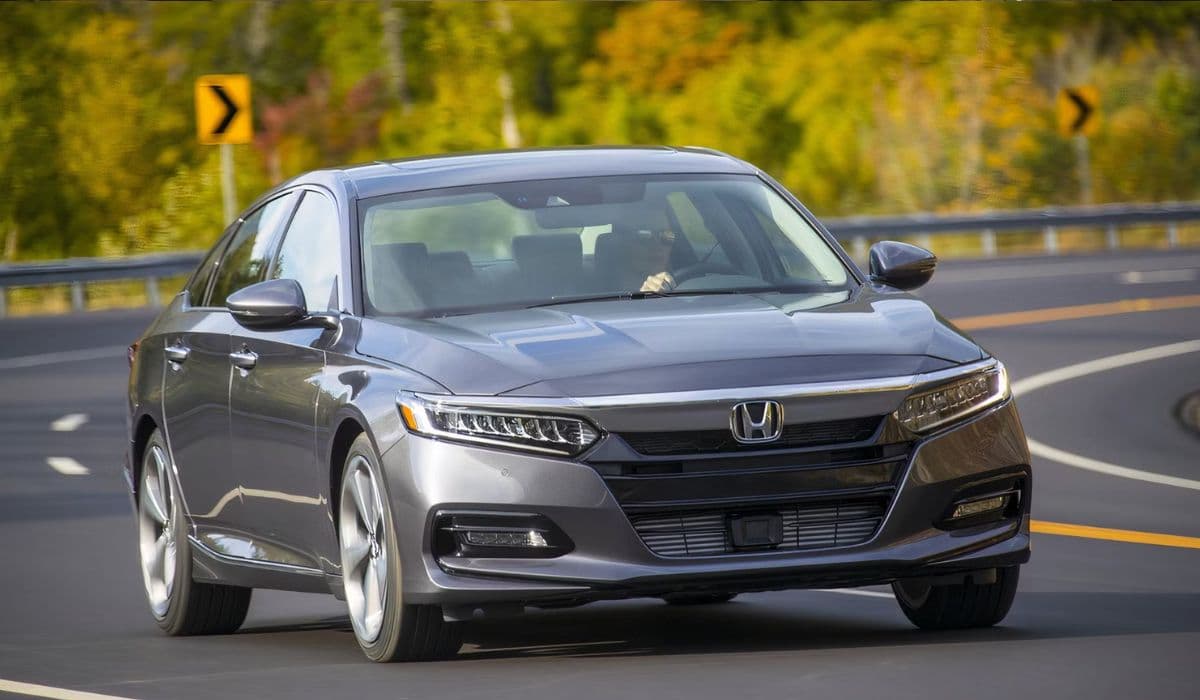
The 10th-generation Honda Accord (2018-2022) 2.0T stands out as one of the most interesting performance bargains in the midsize sedan segment. Under the hood sits a detuned version of the legendary K20C1 turbocharged 2.0-liter engine — the same block and head design that powered the Civic Type R to 306 hp and widespread praise for durability. In the Accord, Honda electronically limited output to 252 hp and 273 lb-ft of torque and paired it exclusively with a 10-speed automatic transmission. Many owners and prospective buyers want to know: does this conservative tuning make the engine significantly more reliable than its high-strung Type R sibling, and how does the powertrain hold up in real-world, long-term use?
Core Engine Design and Major Differences from the Civic Type R
The K20C1 in the Accord uses the same aluminum open-deck block, forged crankshaft, forged connecting rods, and sodium-filled exhaust valves as the Civic Type R. The pistons, however, have a lower compression ratio (9.8:1 vs 9.8:1 is actually identical on paper, but the Accord pistons are cast instead of forged and have slightly different ring lands and crown design). The turbocharger is considerably smaller — a Mitsubishi TD04-19T versus the larger Garrett MGT2260SZ in the Type R — which drastically reduces spool lag and heat load and peak boost pressure (around 16.5–18 psi in the Accord vs 23–26 psi in the Type R).
Oil jets for piston cooling are present, the oil pump is the same high-volume unit, and the head gasket is identical. The net result is an engine that operates well within its thermal and mechanical limits even when driven enthusiastically.
Common Reliability Concerns and Real-World Failure Rates
After hundreds of thousands of miles across owner forums (AccordX, DriveAccord, 10thCivic, Reddit r/Accord), Facebook groups, and data from CarComplaints and independent mechanics, several patterns emerge:
Turbocharger wastegate rattle is the most frequently reported issue, usually appearing between 40,000 and 80,000 miles. The rattle itself is largely cosmetic and does not affect performance or longevity, but Honda issued a service bulletin and later revised the wastegate actuator design. Actual turbo failures remain extremely rare unless the car has been heavily modified or suffered oil starvation.
Oil dilution from direct injection and frequent short trips has been documented, particularly in cold climates. Honda extended the warranty on rod bearings to 8 years/unlimited miles in certain VIN ranges because of isolated cases of bearing wear linked to fuel dilution. Most owners who perform 5,000–6,000-mile oil changes with full-synthetic 0W-20 report zero dilution issues even after 150,000+ miles.
Carbon buildup on intake valves is inevitable with direct injection, but the Accord 2.0T seems less affected than many competitors thanks to relatively high operating temperatures and Honda’s dual-port + direct injection system introduced in later production runs (roughly mid-2019 onward). Walnut blasting is still recommended around 100,000 miles as preventive maintenance.
High-pressure fuel pump (HPFP) failures were a notable problem in early 2018 models. Honda revised the pump design in 2019 and extended warranty coverage to 10 years/150,000 miles for affected VINs. Post-2019 cars have dramatically fewer HPFP concerns.
Transmission Behavior and Longevity
The ZF-designed 10-speed automatic has proven remarkably robust. Torque converter shudder was common in 2018–early 2019 cars and was solved with multiple TCM updates and a triple-flush of Honda DW-1 fluid. Once updated, the transmission routinely exceeds 200,000 miles without internal failure. Clutch pack wear is minimal thanks to the conservative torque rating.
Tuning Potential vs Stock Reliability
Because peak cylinder pressures and thermal loads are so much lower than in the Type R, the detuned Accord 2.0T has become a favorite platform for safe tuning. KTuner and Hondata Stage 1 maps (+70–90 whp) with no hardware changes routinely survive 100,000+ miles when using 93 octane and proper maintenance. Even Stage 2 setups (upgraded turbo, intercooler, downpipe) on the stock block regularly achieve 450–500 whp with no bottom-end failures when rod bolts are upgraded. This indirectly proves how overbuilt the factory calibration is.
Maintenance Schedule That Maximizes Longevity
Owners who follow this regimen consistently report virtually trouble-free ownership past 200,000 miles:
Oil changes every 5,000 miles or when the MM hits 30% (whichever comes first) using Honda Genuine 0W-20 or high-quality alternatives (Mobil 1, Pennzoil Ultra Platinum, Amsoil Signature Series)
Spark plugs (NGK ILZKAR8J8SY) every 60,000–80,000 miles instead of the factory 100,000-mile interval
Transmission fluid triple drain-and-fill every 30,000–40,000 miles with DW-1 only
Air filter replacement every 15,000 miles and cabin filter every year
Coolant replacement every 60,000 miles (Honda Type 2)
Valve adjustment check at 100,000 miles (usually still in spec)
Brake fluid flush every 3 years
Owner Experiences at High Mileage
As of late 2025, multiple documented examples exist of 10th-gen Accord 2.0Ts surpassing 250,000–300,000 miles on the original engine and transmission with only the wastegate rattle and one HPFP replacement (under warranty). Taxis and rideshare cars in particular have proven the powertrain can handle 400,000+ miles when fluids are religiously maintained, though interior and suspension components wear normally.
Cold-Climate Considerations
In regions with prolonged sub-zero temperatures, the factory block heater is highly recommended, and many owners add an oil catch can to reduce crankcase pressure and further minimize oil dilution. Battery and alternator life is shorter than in warmer climates, but the engine itself shows no unusual wear patterns.
Comparison to Competitors’ Turbo 2.0L Engines
Against the Toyota Camry TRD 301-hp 3.5L V6, Hyundai Sonata N-Line 2.5T, and Mazda6 Turbo, the Accord 2.0T has significantly fewer catastrophic engine failures reported. The Hyundai/Kia 2.5T in particular has a known rod-bearing issue under warranty claims, while Honda’s K20C1 platform has no equivalent widespread campaign beyond the early HPFP concern.
The detuned K20C1 in the 10th-generation Accord has proven to be one of the most reliable modern turbocharged four-cylinder engines on the market when maintained properly. Lower boost, milder cam profiles, and conservative factory tuning give it a wide safety margin that the Civic Type R deliberately sacrifices for ultimate performance. For buyers seeking a quick, comfortable daily driver that can realistically last 300,000+ miles with minimal drama, the Accord 2.0T remains an outstanding choice.
More from Honda
Best Honda Civic Generation to Buy Used in 2025
08.12.2025 09:57
L15B7 vs L15BE Engine Differences: Civic Si vs Type R Deep Dive
08.12.2025 10:12
K20 vs K24 Engine – Which Is Better for Swap?
08.12.2025 10:02
1.5T vs 2.0 NA Engine in Honda Civic and Accord: Long-Term Ownership Reality
08.12.2025 07:07