4th Gen Tacoma 2.4T i-Force Max vs 3.5 V6: Which Powertrain Is Actually Better?
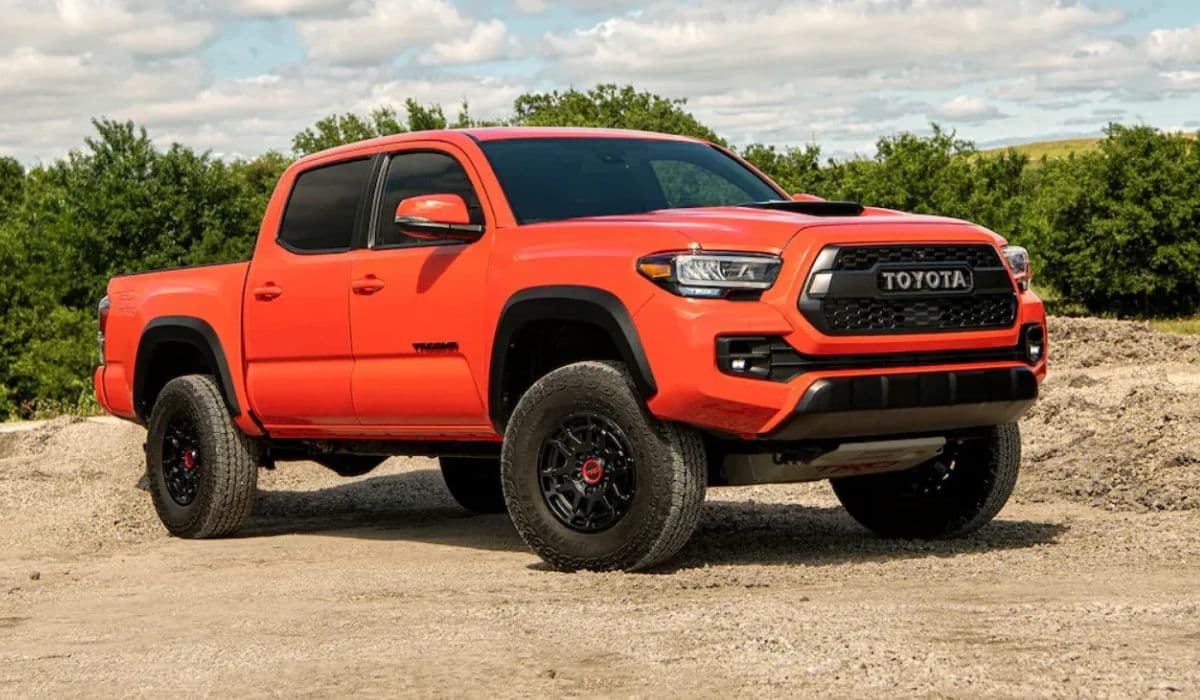
The arrival of the fourth-generation Toyota Tacoma brought the biggest powertrain shake-up in the truck’s nearly 30-year history. For the first time, the naturally aspirated 3.5-liter V6 (2GR-FKS) that powered the third generation is no longer the top dog. Instead, Toyota positioned the new turbocharged 2.4-liter inline-four with hybrid i-Force Max system as the range-topping option in TRD Pro and Trailhunter trims, while a non-hybrid version of the same 2.4T became the base engine across most of the lineup. This leaves buyers with a real choice: stick with the proven V6 or step into the turbo-hybrid era.
Engine Specifications Side by Side
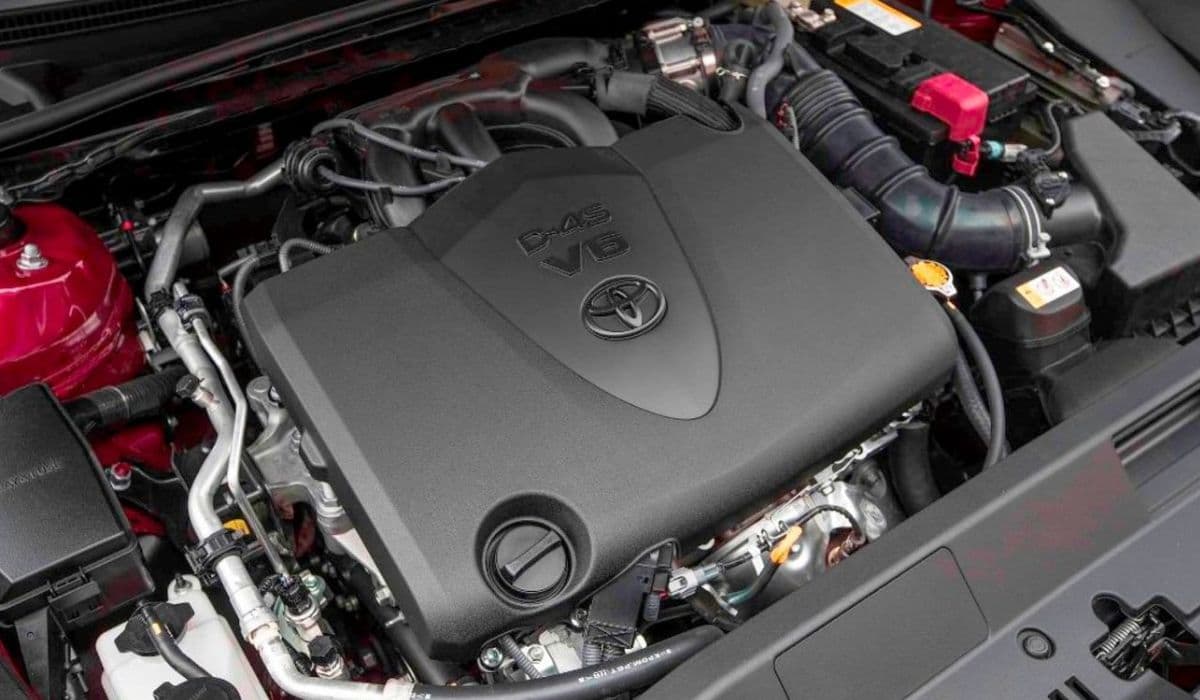
The outgoing 3.5-liter V6 is a direct-injected, Atkinson-cycle naturally aspirated engine producing 278 horsepower at 6,000 rpm and 265 lb-ft of torque at 4,600 rpm. It uses Toyota’s D-4S port-and-direct injection system, VVT-iW on the intake side, and traditional VVT-i on the exhaust.
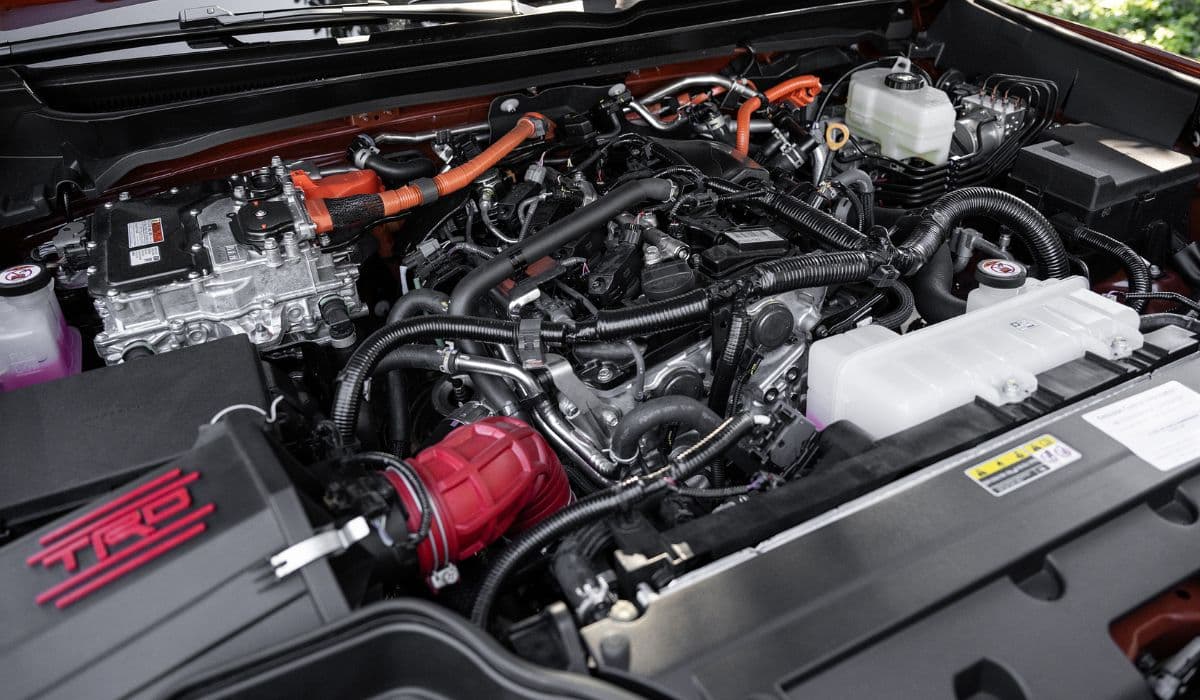
The new 2.4-liter turbocharged inline-four (T24A-FTS) in non-hybrid form delivers 278 horsepower at 6,000 rpm and 317 lb-ft of torque at just 1,700 rpm. When equipped with the i-Force Max hybrid system (standard on TRD Pro, Trailhunter, and optional on TRD Off-Road with the Premium package), the same engine is detuned slightly to 326 horsepower and a massive 465 lb-ft of torque thanks to a 48-hp electric motor integrated into the 8-speed automatic transmission and a 1.87-kWh NiMH battery pack mounted under the rear seats.
Real-World Power Delivery and Drivability
On paper the V6 looks outgunned, but the story changes behind the wheel. The 3.5 V6 is exceptionally smooth and linear, with almost no turbo lag because there is no turbo. Peak torque arrives relatively high in the rev range, so the engine needs to be worked hard and downshifts are frequent when towing or climbing steep grades. The 6-speed automatic, while reliable, feels dated compared to newer 8- and 10-speed units.
The non-hybrid 2.4T transforms the Tacoma’s personality. Torque comes alive from idle, making city driving and part-throttle acceleration dramatically better. The 8-speed automatic is quick and intelligent, rarely hunting for gears. Most owners report that the turbo four feels noticeably stronger than the old V6 in daily driving despite identical horsepower numbers.
The i-Force Max hybrid takes it to another level. The electric motor fills in the low-end completely, delivering instantaneous response off the line and making the truck feel almost V8-like up to 50 mph. The combined 465 lb-ft is available from just above idle all the way to 4,000 rpm. In Tow/Haul mode the hybrid system keeps the engine in its most efficient range and uses the electric motor to smooth out shifts and reduce lag during grade climbing.
Fuel Economy Reality Check
Toyota claims the 2.4T non-hybrid 4x4 models achieve up to 22 mpg combined versus the old V6’s 20 mpg. Real-world testing shows most owners averaging 19–21 mpg with the new turbo four, roughly 1–2 mpg better than the V6 under similar conditions.
The i-Force Max hybrid is rated at 22 mpg city / 24 mpg highway / 23 mpg combined in 4x4 configuration — impressive numbers for a body-on-frame midsize truck capable of towing 6,500 lbs. Independent tests and owner reports consistently show 22–25 mpg in mixed driving and many have recorded over 27 mpg on flat highway cruises at 65 mph. That’s Prius territory from a decade ago, now in a truck that can crawl rocks or tow a boat.
Towing and Payload Comparison
Maximum towing with the 3.5 V6 was 6,800 lbs in properly equipped 4x2 Double Cab configurations. Most 4x4 V6 models were rated at 6,400–6,500 lbs.
The non-hybrid 2.4T 4x4 tops out at 6,500 lbs, but the i-Force Max versions are actually rated lower at 6,000–6,400 lbs depending on trim because of the added 300+ lbs of hybrid hardware. Payload takes a similar hit: the hybrid TRD Pro has roughly 1,495 lbs of payload versus 1,685 lbs in a comparable 3rd-gen TRD Pro with the V6.
So if maximum towing or payload is your priority, a leftover or used 3rd-gen V6 truck actually wins on paper.
Off-Road Performance and Durability Concerns
The 3.5 V6 has a proven 10-year track record in extreme off-road racing, overlanding, and daily abuse with almost no widespread failures when properly maintained.
The new 2.4T engine is essentially the same block used in the Lexus NX350, RX350, and Highlander, but detuned and reinforced for truck duty. Early units have shown excellent reliability so far, though long-term data in severe off-road and towing conditions is still limited. The turbocharger is water-cooled and integrated into the exhaust manifold for faster warm-up and packaging, but some desert racers worry about sustained high-rpm boost in 120 °F heat.
The i-Force Max system adds complexity with the parallel hybrid setup, power control unit, and battery pack mounted low under the rear seat. The battery is sealed and designed for water fording up to 30 inches (same as the truck), but rock crawlers have already reported scraped battery skid plates on tough trails.
Transmission and Driveline Differences
Every 4th-gen Tacoma now uses an 8-speed automatic (Aisin AWR8L65) with a traditional torque converter — a huge upgrade over the old 6-speed. Shift quality is vastly improved, and the extra ratios keep the turbo engine in the boost sweet spot.
The i-Force Max uniquely places the electric motor between the engine and transmission, acting as both a starter and generator. There is no traditional alternator or starter motor, reducing weight and complexity in some areas while adding it in others.
All 4x4 models retain a two-speed transfer case, but higher trims now offer an electronically controlled part-time system with Auto mode (similar to Jeep’s Selec-Trac) instead of the old manual lever or push-button part-time only.
Sound and Character
This is subjective but worth mentioning. The 3.5 V6 has a refined, almost Lexus-like note under normal driving and a decent growl when revved. Many owners love its smoothness and lack of turbo whistle.
The 2.4T has a more industrial, raspy tone with noticeable turbo spool and blow-off valve chatter, especially in Sport mode. Toyota pipes in some artificial sound through the speakers, but most agree the real exhaust note is gruffer than the V6. The i-Force Max is eerily quiet at low speeds on electric power alone and surprisingly aggressive when the turbo kicks in.
Long-Term Ownership Costs
The V6 Tacomas have legendary resale and extremely low maintenance costs. Timing chain, water pump, and valve adjustments are virtually never needed before 200,000 miles.
The 2.4T adds a timing chain, turbocharger, intercooler plumbing, and more complex oil management. Turbo bearings are fed by engine oil and coolant, so strict adherence to 0W-20 synthetic and 10,000-mile oil changes is critical. Early reports show oil consumption is negligible, but long-term turbo life remains to be seen.
The hybrid system adds another layer: the traction battery is warrantied for 10 years/150,000 miles, and the power electronics are sealed for life. No belt-driven accessories mean less to replace over time.
Which One Should You Actually Buy?
If you want the smoothest, most proven, and potentially cheapest long-term ownership experience with slightly better max towing, hunt for a clean low-mileage 3rd-gen Tacoma with the 3.5 V6 — especially a 2023 model that already has the upgraded 8-speed transmission in some configurations.
If you drive mostly in town, value instant low-end response, and want the best fuel economy ever offered in a Tacoma, the non-hybrid 2.4T in SR5 or TRD Sport trim is the sweet spot for most buyers.
If you want the ultimate acceleration, best real-world towing manners on grades, and genuinely impressive mpg while still retaining serious off-road capability, the i-Force Max in a TRD Off-Road Premium or Trailhunter is arguably the most advanced midsize truck powertrain on the planet right now — at the cost of added weight, complexity, and a slightly lower official tow rating.
The old V6 is reliable and familiar. The new 2.4T world is quicker, more efficient, and more fun in almost every scenario. The choice ultimately comes down to whether you trust 20 years of V6 data or you’re ready to embrace the turbocharged future Toyota has bet on.