A25A-FKS 2.5 Dynamic Force Engine Long-Term Review: Real-World Durability and Ownership Experience
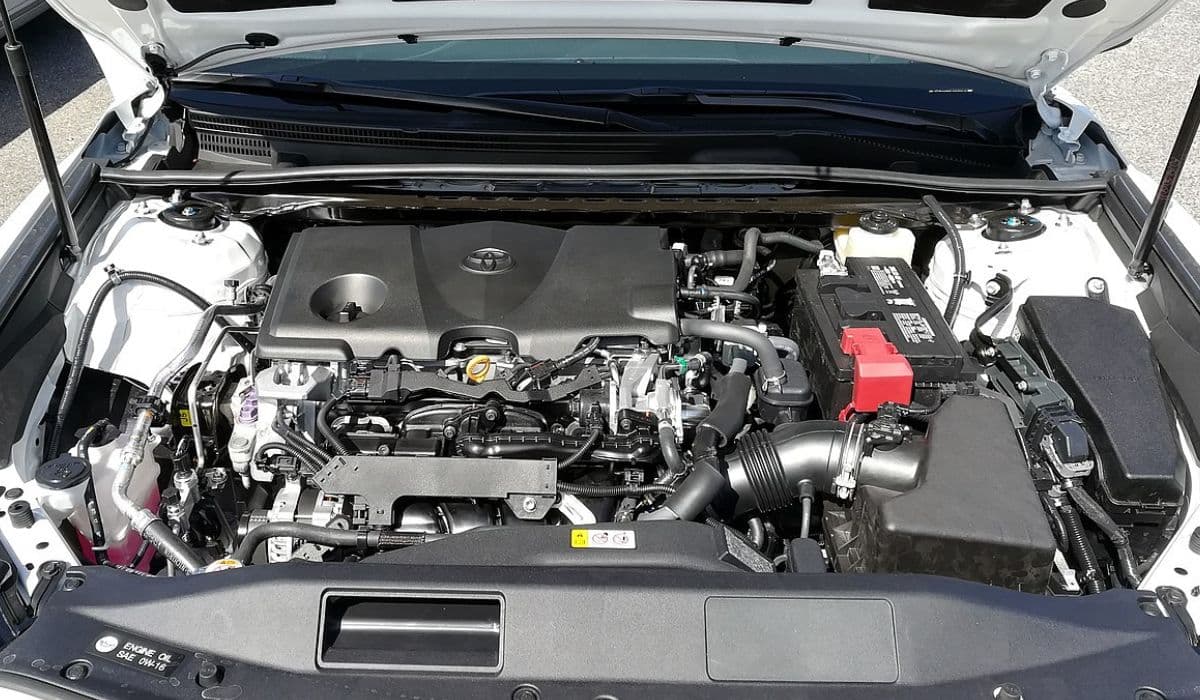
The A25A-FKS 2.5-liter Dynamic Force four-cylinder engine has become one of Toyota’s most widespread power units since its introduction, powering millions of Camry, RAV4, Avalon, Lexus ES 250, and several other models worldwide. Known for its combination of high thermal efficiency (40–41 %), direct + port injection (D-4S), VVT-iE electric variable valve timing on the intake side, and a remarkably high 13.0:1 compression ratio, the engine promised both performance and exceptional fuel economy on paper. This article focuses exclusively on long-term behavior after 100,000–300,000+ kilometers (60,000–180,000+ miles) of mixed-city, highway, and aggressive driving.
Thermal Efficiency and Real-World Fuel Consumption Over Time
The headline 40–41 % thermal efficiency is achieved primarily thanks to high-energy tumble flow, laser-clad valve seats, and a long-stroke design (87.5 × 103.4 mm). In the first 50,000 km most owners report fuel consumption very close to factory figures: 6.0–6.5 L/100 km (36–39 mpg US) in RAV4 AWD and 5.7–6.2 L/100 km (38–41 mpg) in Camry FWD on highways.
After 150,000–200,000 km the picture changes slightly but remains impressive. Carbon buildup on intake valves is minimal thanks to port injection washing the valves, unlike pure direct-injection engines. Owners who use Top Tier gasoline and change oil every 8,000–10,000 km rarely see consumption rise above 0.5–0.7 L/100 km even at 250,000 km. The few cases of increased consumption (up to 1.5 L/100 km worse) are almost always linked to neglected oil changes or chronic short trips in freezing conditions.
Oil Consumption and the “Toyota Oil Burning” Myth
Early batches of A25A-FKS (roughly 2017–2019 production) had slightly higher oil consumption — 0.3–0.6 L per 10,000 km — due to piston ring design and low-tension rings aimed at reducing friction. Toyota quietly revised the piston and ring package around 2020. Post-2020 engines almost never consume measurable oil between 10,000 km intervals when 0W-16 or 0W-20 synthetic oil is used.
Engines that do burn oil usually have one of three causes:
Stuck piston rings from severe carbon after 200,000+ km of exclusively short cold trips
Wrong oil viscosity (5W-30 or thicker instead of 0W-16/0W-20)
Aftermarket cold-air intakes that disrupt the designed tumble flow and increase oil carry-over
Properly maintained A25A-FKS engines routinely reach 400,000–500,000 km without opening the short block and without abnormal oil consumption.
High-Pressure Fuel Pump and Injector Longevity
The Denso high-pressure pump used in the A25A-FKS is the same basic design as in the previous 2AR-FXE but with higher operating pressure (up to 30 MPa). Camshaft-driven pumps in earlier Toyota DI engines were notorious for internal wear and metal particles. The A25A pump has a revised metallurgy and coating. Failures are now extremely rare before 300,000 km. When they do occur, symptoms include long cranking and P1235/P0087 codes.
Direct injectors themselves are very robust. Tip carbon buildup is moderate compared to Volkswagen or BMW DI engines because of the aggressive tumble and dual injection. Cleaning with walnut blasting is rarely needed before 250,000 km.
Timing Chain, VVT-iE Actuator, and Water Pump Durability
The A25A uses a narrow single-row timing chain with hydraulic tensioner. Chain stretch is almost unheard of before 350,000–400,000 km. The intake VVT-iE electric actuator (the first mass-produced electric cam phaser) proved surprisingly reliable. Early concerns about the electric motor durability were unfounded — replacement rate is below 0.5 % at 200,000 km.
The engine-driven water pump with plastic impeller lasts 150,000–220,000 km on average. Leaks appear first at the weep hole, giving plenty of warning. Coolant should be changed every 100,000 km or 5 years — Toyota Super Long Life pink coolant has excellent compatibility with the aluminum and seals.
Carbon Buildup on Intake Valves – Reality Check
Thanks to port injection operating in almost all conditions except full-load, valve cleaning intervals are dramatically longer than on GDI-only engines. Most mechanics report only light tan deposits even at 200,000 km. Aggressive driving and 91–93 octane fuel further reduce buildup. Walnut blasting, when eventually needed (300,000+ km), is straightforward because the intake manifold design allows easy port access.
Ignition Coils, Spark Plugs, and Misfire Issues
Toyota switched to long-life iridium plugs (Denso FC16HR-Q8) with 160,000 km replacement interval. In practice many owners change them at 100,000–120,000 km because of slight roughness. Coils are extremely reliable — failure rate below 1 % at 250,000 km. When misfires appear, 90 % of cases are plugs or low fuel pressure, not coils.
EGR System and Cooler Long-Term Behavior
The cooled EGR system is one of the keys to high efficiency. The EGR valve and stainless-steel cooler rarely clog before 250,000 km when good fuel is used. The most common EGR-related code (P0401) is caused by a sticky valve that can usually be cleaned rather than replaced.
Transmission Pairing and Engine Load Impact
In Camry and RAV4 the A25A is paired with the K120 Direct Shift 8-speed automatic or e-CVT in hybrids. Both transmissions are gentle on the engine. The few reported rod bearing failures (extremely rare) occurred in tuned RAV4s with the 8-speed running 20 psi boost on low-octane fuel. Stock engines show pristine bearings even at 400,000 km taxi service.
Cold-Weather Performance and Oil Dilution in Hybrid Variants
In AWD RAV4 Hybrid and Camry Hybrid, the Atkinson-cycle version of A25A-FXS runs extremely high EGR rates and late injection timing. In temperatures below –20 °C with very short trips, minor fuel dilution of oil can occur. Toyota addressed this with a 2021 ECU update that increases engine run time slightly. Using 0W-16 instead of 0W-20 further reduces dilution risk.
Typical Service Schedule for Maximum Longevity
Owners who follow this schedule almost never experience major issues:
Oil and filter every 8,000–10,000 km (0W-16 Toyota Genuine or Mobil 1 AFE)
Spark plugs every 120,000 km
Coolant every 100,000 km
Transmission fluid (WS) every 80,000–100,000 km
Air filter every 40,000 km, cabin filter every 20,000 km
Throttle body and MAF cleaning every 60,000 km
Real Owner Experiences at Extreme Mileage
Fleet Camrys in Middle East taxi service regularly surpass 600,000 km with only basic maintenance. North American RAV4 owners on forums report 300,000–400,000 miles with original clutch packs in e-CVT hybrids and no engine still on factory rings. The highest documented A25A-FKS is currently a 2020 Camry taxi in Azerbaijan with 780,000 km — still on original short block, head gasket, and chain.
The A25A-FKS has proven to be one of the most durable gasoline engines Toyota has ever built, combining cutting-edge efficiency technology with old-school bulletproof construction. With reasonable maintenance it easily outlasts the rest of the vehicle.
More from Toyota
How to Choose the Right Oil and When to Change It in Toyota and Lexus Vehicles
01.12.2025 17:59
How to Make a 2GR-FE (3.5 V6) Engine Live Past 400,000 Miles – Real-World Experience from Cars That Actually Did It
02.12.2025 08:16