Best Used SUV Under $25,000: Honda CR-V vs Toyota RAV4 vs Ford Explorer
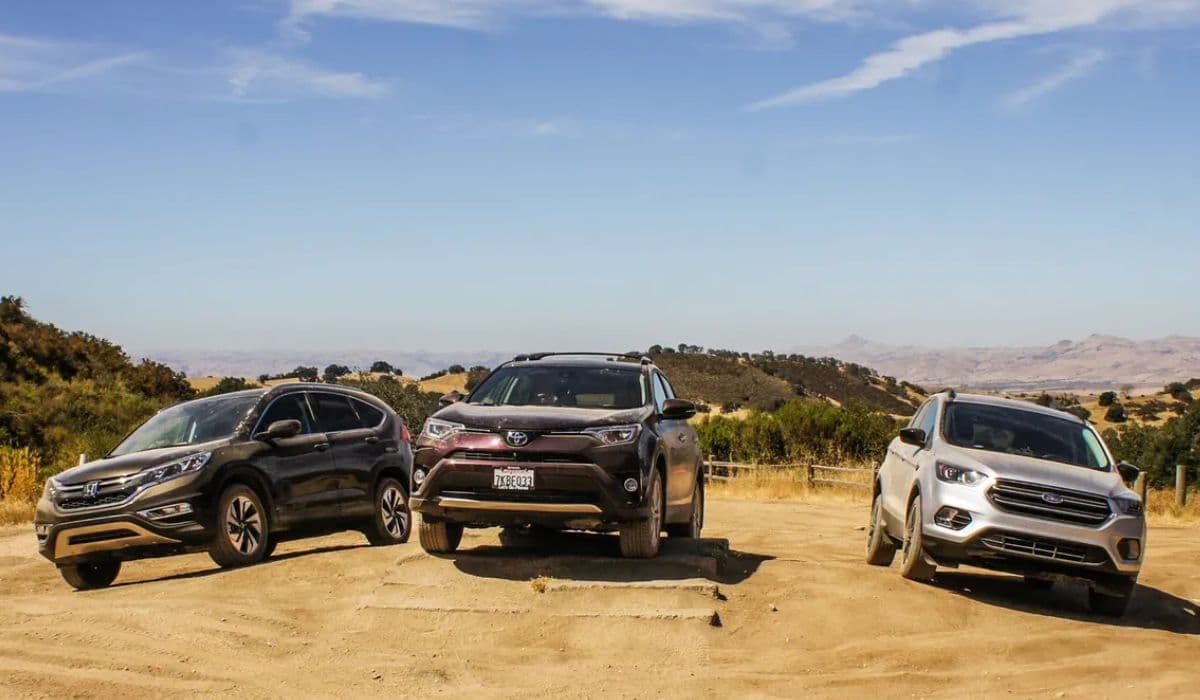
Finding a reliable, spacious, and feature-packed used SUV for under $25,000 is easier than ever thanks to strong depreciation on recent models. Three of the most popular and frequently cross-shopped options in this price range are the Honda CR-V, Toyota RAV4, and Ford Explorer. Each brings different strengths: the CR-V and RAV4 dominate the compact segment with legendary reliability and efficiency, while the Explorer plays in the midsize three-row category offering significantly more interior space and towing capability. Here’s an in-depth comparison to help you choose the smartest buy on the used market today.
Reliability and Long-Term Ownership Costs
When buying used, predicted reliability is often the deciding factor. According to Consumer Reports, J.D. Power, and iSeeCars long-term studies, the Honda CR-V and Toyota RAV4 consistently rank at the very top of the SUV segment.
The current-generation CR-V (2017–2022) and RAV4 (2019-present) regularly score 80+ out of 100 in J.D. Power dependability studies and 4–5 out of 5 in Consumer Reports predicted reliability. Both commonly surpass 250,000–300,000 miles with only basic maintenance. Common issues are extremely minor — occasional infotainment glitches or minor oil consumption on early 1.5T CR-V engines that Honda addressed under warranty.
The Ford Explorer (2020-present, 6th generation) has improved dramatically over the troubled 2011–2019 platform, but it still trails the Japanese duo. J.D. Power scores hover in the 75–79 range, and Consumer Reports gives it average or slightly below-average predicted reliability. Early 2020–2021 models suffered from rear toe-link recalls, cam phaser rattle on the 2.3L EcoBoost, and numerous electronics complaints. By 2022–2023, most issues were resolved, so later examples are safer bets.
Real-world repair costs reflect this: five-year ownership cost estimates from IntelliChoice and Vincentric show the RAV4 and CR-V costing $4,500–$6,000 less than a comparable Explorer over 75,000 miles, mostly due to fewer shop visits and cheaper parts.
Fuel Economy and Drivetrain Options
In daily driving costs, the compact Japanese SUVs again pull ahead.
A used 2021–2023 Honda CR-V 1.5T AWD returns 27–28 mpg city / 33–34 mpg highway in real-world testing (Fuelly.com data). The RAV4 AWD with the 2.5L naturally aspirated engine is nearly identical at 27/35 mpg, while the RAV4 Hybrid (very common on the used market under $25k) jumps to 38–40 mpg combined — often the single best reason buyers choose it.
The Explorer, even with the efficient 2.3L EcoBoost four-cylinder (300 hp), manages only 20–21 mpg city / 27–28 mpg highway with rear-wheel drive, dropping to 20/26 with 4WD. The optional 3.0L twin-turbo V6 (400 hp in ST and Platinum trims) falls to the high teens. If you don’t tow or need three rows, the Explorer’s thirst is hard to justify.
Interior Space and Practicality
This is where the Explorer fights back hard.
The CR-V and RAV4 are compact crossovers: 41–42 inches of rear legroom, about 37–39 cubic feet of cargo behind the second row (75–76 cu ft max). Both seat five comfortably, but adults in the back seat for long trips will feel the difference versus a midsize.
The Explorer is a true midsize three-row SUV built on a rear-wheel-drive-based platform. It offers 40.9 inches of second-row legroom and a usable third row with 32.2 inches of legroom — adults can survive back there for short to medium trips. Cargo capacity starts at 18.2 cu ft behind the third row, 47.9 behind the second, and 87.8 cu ft maximum — dramatically more versatile for families, sports equipment, or home-improvement runs.
Performance and Driving Dynamics
The CR-V and RAV4 prioritize comfort and efficiency over excitement. Both have adequate power (190 hp in CR-V 1.5T, 203 hp in RAV4 gas) and composed, if soft, suspensions. The RAV4 TRD Off-Road and CR-V with AWD handle light trails well, but neither is remotely sporty.
The Explorer is the driver’s choice here. The standard 2.3L EcoBoost makes 300 hp and 310 lb-ft, while the 3.0L ST version pushes 400 hp and hits 0-60 in about 5.2 seconds. The rear-biased AWD system (standard on most trims now) and available adaptive suspension give it legitimate handling prowess for a 4,700-pound SUV. Many reviewers call it the best-driving three-row in its class, easily outpacing the Kia Telluride or Hyundai Palisade in steering feel and body control.
Safety and Driver-Assistance Technology
All three come very well equipped in recent model years.
Every 2020+ Explorer, 2018+ CR-V, and 2019+ RAV4 includes automatic emergency braking, blind-spot monitoring, lane-keeping assist, and adaptive cruise control as standard (Honda Sensing, Toyota Safety Sense 2.5/3.0, Ford Co-Pilot360).
The CR-V and RAV4 routinely earn IIHS Top Safety Pick+ awards. The Explorer earns Top Safety Pick (not “plus”) because of merely “Acceptable” headlight performance on some trims, but crash scores are still excellent.
Infotainment and Features for the Money
Apple CarPlay and Android Auto are standard aёcross the board. The CR-V uses a 7- or 9-inch touchscreen with physical volume knob (huge usability win), the RAV4 has an 8- or 10.5-inch screen floating above the dash, and the Explorer rocks a portrait 10.1-inch or optional 12.3-inch digital gauge cluster setup.
Higher-trim used Explorers (XLT, Limited, ST, Platinum) frequently come loaded with leather, heated/ventilated seats, Bang & Olufsen audio, panoramic roof, and power-folding third row — luxury features that are rare on $23k–$25k CR-Vs or RAV4s unless you find a top-spec Touring or Limited Hybrid.
Towing and Off-Road Capability
CR-V and RAV4 are rated at 1,500 lbs — fine for a small trailer or jet skis.
The Explorer with the Class III tow package (standard on most trims) is rated 5,600 lbs when properly equipped with the 2.3L and tow package — enough for medium boats, campers, or car trailers. Add the ST’s 3.0L and you still get 5,600 lbs with far more confident passing power.
Resale Value and Market Availability
Both the CR-V and RAV4 hold value extremely well. A 2021 RAV4 XLE AWD with 50k miles still commands $24k–$26k private party, and CR-V EX-L models are similar. RAV4 Hybrids under $25k with under 60k miles are common and move very quickly.
Explorers depreciate faster. A 2021–2022 Explorer XLT 4WD with 40k–60k miles frequently sells for $22k–$25k, and loaded Limited or ST models from 2021 can sometimes be found right at $25k. You simply get more equipment and space for the same money.
Which One Should You Actually Buy?
If you want the lowest ownership cost, best fuel economy, and bulletproof reliability in a five-seat package, choose between the CR-V and RAV4. Go RAV4 Hybrid if you can find a clean one — the 38–41 mpg real-world average pays for itself quickly. Pick the CR-V if you prefer slightly plusher ride quality and a lower loading floor.
If you regularly carry six or seven people, need serious cargo room with all seats up, tow more than a bicycle rack, or simply enjoy driving, the Ford Explorer is the surprising value champion under $25k. Target 2022+ models to minimize early teething problems, and you’ll get a faster, roomier, more luxurious SUV for the same or less money than a loaded compact crossover.
All three are excellent used buys — your family size and priorities will decide the winner.
More from Honda
Honda 1.5T vs Toyota 2.0 Dynamic Force – Which is Better?
08.12.2025 18:17
Common 10-Speed Automatic Transmission Problems in Honda Accord 2018-2022
08.12.2025 10:56
Honda Sensing Problems in 2023-2025 Models: What Owners Really Experience
08.12.2025 11:00
2023+ Honda HR-V vs Previous Generation: In-Depth Engine and Powertrain Comparison
08.12.2025 11:03
11th Gen Honda Civic Type R (FL5) Engine Changes: A Deep Dive into the Evolution of the K20C1
08.12.2025 11:08