
Common 10-Speed Automatic Transmission Problems in Honda Accord 2018-2022
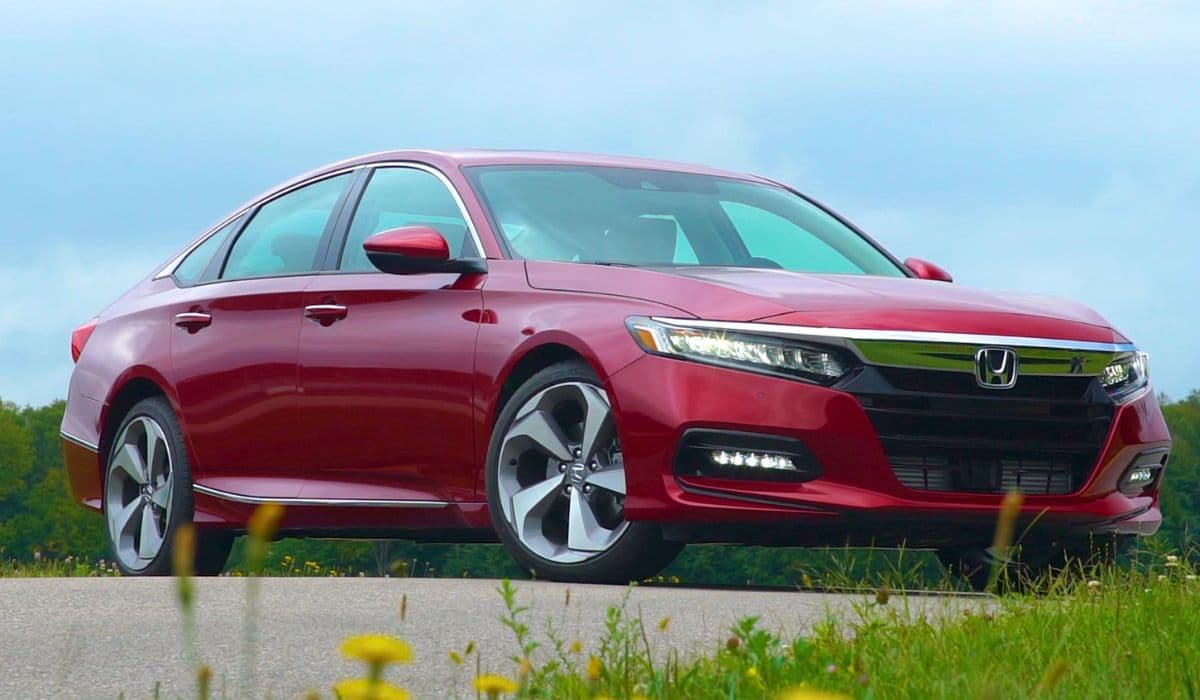
The 10-speed automatic transmission introduced in the tenth-generation Honda Accord (2018-2022) was a major engineering leap for the brand. Co-developed with General Motors and first seen in the Accord 2.0T models (and later in some 1.5T high-trim versions), it promised smoother shifts, better fuel economy, and quicker acceleration than the previous CVT and 6-speed units. However, thousands of owners have reported recurring and sometimes severe issues that have led to multiple technical service bulletins (TSBs), software updates, and in many cases complete transmission replacement under warranty.
Harsh or Delayed Shifting Between 1st-4th Gears
One of the most frequently reported complaints is harsh engagement or a noticeable “thud” when the transmission shifts from 1st to 2nd, 2nd to 3rd, or 3rd to 4th gear, especially when the car is cold or during light throttle application in city driving. Owners describe it as a jolt strong enough to spill coffee or make passengers think the car was rear-ended.
This behavior is usually caused by improper line pressure control in the valve body and inconsistent clutch pack application in the low-gear clutch assemblies. Honda released TSB 20-101 (and later updates) that includes a software recalibration of the Transmission Control Module (TCM) and in some cases replacement of the transmission fluid pressure switch assembly.
Torque Converter Shudder at 20-45 mph
A very distinctive vibration or shudder felt through the seat and floorboard at steady speeds between 20 and 45 mph (typically around 1200-1600 rpm in 8th, 9th, or 10th gear) has affected a large number of 2018-2020 Accords. The symptom feels almost identical to driving over light rumble strips.
The root cause is almost always torque converter clutch slippage due to degraded transmission fluid breaking down prematurely and contaminating the clutch material. Honda’s official fix under TSB 19-018 and subsequent revisions is a triple fluid flush using genuine Honda ATF-Type 3.1 (blue label) followed by a specific driving relearn procedure. Many owners report that the shudder returns within 10,000-20,000 miles if the updated fluid and software are not both applied.
Premature Transmission Fluid Degradation and Black Fluid
Unlike earlier Honda automatics that could easily go 60,000-80,000 miles on original fluid, the 10-speed unit is extremely sensitive to fluid condition. Numerous owners report the ATF turning dark brown or black and smelling burnt as early as 15,000-30,000 miles, even with normal driving.
This accelerated degradation leads to valve body sticking, solenoid fouling, and clutch glazing. Honda quietly changed the factory-fill fluid specification in late 2020 production and now recommends earlier fluid changes (some dealers suggest 30,000-mile intervals for severe conditions). Using anything other than genuine Honda ATF-Type 3.1 almost guarantees repeat problems.
Slipping or Flaring During 2-3 and 3-4 Upshifts
A smaller but growing subset of owners experience noticeable flare (rpm spike) or outright slip when the transmission attempts the 2-3 or 3-4 shift under moderate to hard acceleration. In some cases the check engine light comes on with codes P0734 (gear ratio incorrect 4th) or P0733.
These symptoms are frequently traced to worn 3rd and 4th gear clutch packs or a failing low/one-way clutch (sprag). Repairs typically require full transmission remanufacture or replacement because individual clutch packs are not serviceable separately in this unit.
Judder and Vibration When Downshifting into 2nd Gear
Particularly noticeable when slowing down for a stoplight or coasting in traffic, many drivers feel a severe judder or banging sensation as the transmission downshifts from 3rd to 2nd. This is most common in 2018-2019 models and is addressed in TSB 21-011 via a TCM software update that changes downshift timing and line pressure.
Complete Loss of Drive or Stuck in Gear
Although less common, there are documented cases (especially 2018-2019 2.0T models) where the transmission suddenly refuses to move or becomes stuck in 4th or 7th gear (limp mode). Diagnostic trouble codes often point to a failed Transmission Range Sensor (inhibitor switch) or internal wiring harness chafing against the case. Honda extended the warranty on the range sensor to 6 years/100,000 miles in some markets.
Early Failure of the Park Pawl Mechanism
A surprising number of owners have reported that the car rolls away in Park on even mild inclines, or that shifting into Park produces a loud grinding or ratcheting noise. The park pawl and actuator assembly inside the 10-speed is known to wear prematurely, especially if drivers shift into Park while still rolling slightly. Repairs require transmission removal.
Check Engine Light with Codes P0741 or P0740 – Torque Converter Clutch Solenoid Performance
Code P0741 (Torque Converter Clutch Stuck Off) is extremely common once the car reaches 40,000-70,000 miles. It is almost always accompanied by the shudder described earlier. While the initial fix is fluid exchange and software, many units eventually require torque converter replacement, which in this transmission means a complete remanufactured unit from Honda.
Fluid Leaks from Case Half Seal and Cooler Lines
External leaks are relatively rare, but when they occur they are usually at the case half seam (due to improper torque during assembly) or at the quick-connect fittings on the transmission cooler lines. These leaks can quickly lead to low fluid level, aeration, and catastrophic damage if not caught early.
Long-Term Reliability Outlook and Owner Experiences
Real-world data from owner forums, NHTSA complaints, and independent transmission shops shows that approximately 15-20% of 2018-2019 Accord 2.0T models have required major transmission repair or replacement before 80,000 miles. The failure rate dropped noticeably in 2020-2022 production after Honda implemented running production changes (improved torque converter lining, different clutch material, and updated valve body calibration).
Cars that have received all applicable TSB updates and are maintained with genuine ATF-Type 3.1 changed every 30,000-40,000 miles appear to have significantly better longevity. Many owners who experienced early problems report trouble-free operation past 150,000 miles after the updated transmission was installed under warranty.
The 10-speed Accord transmission remains a sore point in an otherwise excellent car, but Honda has been relatively proactive with extended warranties and goodwill replacements compared to some other manufacturers facing similar issues.
More from Honda
L15B7 vs L15BE Engine Differences: Civic Si vs Type R Deep Dive
08.12.2025 10:12
J35 V6 Reliability in 2018+ Honda Odyssey and Pilot: A Deep Dive into Real-World Performance
08.12.2025 10:52
Reliability of the 10th Generation Honda Accord 2.0T with Detuned K20C1 Engine
08.12.2025 07:16
1.5T vs 2.0 NA Engine in Honda Civic and Accord: Long-Term Ownership Reality
08.12.2025 07:07
11th Gen Honda Civic (2022+) vs 10th Gen Civic Reliability: Which Generation Holds Up Better Long-Term?
08.12.2025 07:04