General Motors takes $7.1 billion in charges as it scales back EV
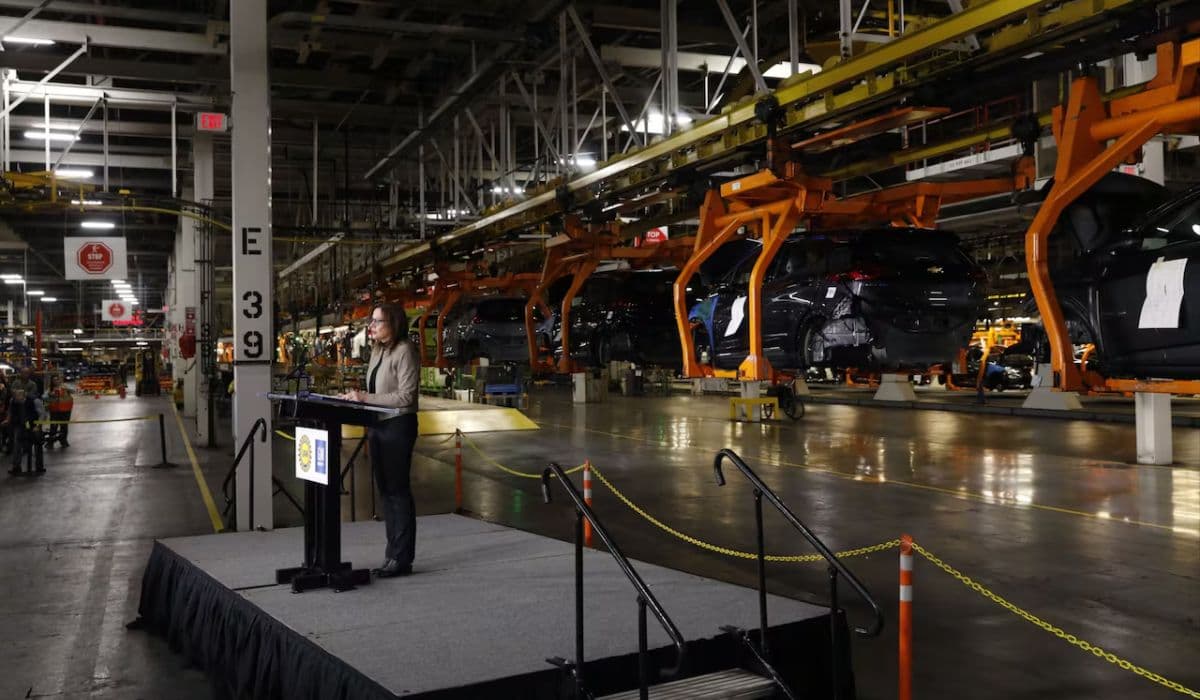
General Motors, one of the most iconic names in American automotive history, has announced a substantial financial adjustment: a $7.1 billion charge primarily driven by a strategic recalibration of its electric vehicle operations. This move reflects a broader reality facing legacy automakers — the complex intersection of policy shifts, consumer behavior, and massive capital commitments in the rapidly evolving mobility landscape.
What Exactly Are These Charges?
The $7.1 billion figure breaks down into two main categories, revealing the depth of the adjustment GM is making.
Approximately $6 billion relates directly to the scaling back of EV investments in North America. This includes about $1.8 billion in non-cash impairments on unused equipment and facilities originally built for aggressive EV expansion, plus roughly $4.2 billion in supplier settlements, contract termination fees, and related cash-impacting obligations.
The remaining $1.1 billion stems from restructuring activities in China, largely tied to its joint venture operations and associated supplier claims.
These charges will affect reported net earnings but leave the company's adjusted profitability metrics — a key focus for investors — largely intact. GM has indicated that additional EV-related costs may appear in the following period, though management expects them to be significantly smaller in scale.
The Drivers Behind the Strategic Pivot
Several converging factors prompted GM to dial back its once-ambitious all-electric roadmap.
First, the removal of key consumer incentives dramatically altered the affordability equation for many potential buyers. When federal support structures eased and emissions regulations became less stringent, the urgency for mainstream consumers to switch to EVs diminished noticeably.
Second, actual market demand proved softer than internal forecasts. After a period of strong initial interest, EV sales growth slowed across the industry, leading to excess capacity in battery production, assembly lines, and related infrastructure that GM had built in anticipation of much faster adoption.
Third, competitive dynamics played a role. While some markets (particularly in Asia) continue to show robust EV momentum, the North American landscape favors vehicles that deliver proven utility, range confidence, and lower upfront ownership complexity — areas where internal combustion and hybrid powertrains maintain a strong edge.
How GM Is Realigning Its Future Product Strategy
Rather than abandoning electrification entirely, General Motors is adopting a more measured, demand-responsive approach.
The company emphasizes that current retail EV offerings — including popular models from Chevrolet, GMC, and Cadillac — remain unaffected by these capacity adjustments. Production of existing battery-electric vehicles continues to meet current retail needs.
At the same time, GM is reallocating capital and manufacturing footprint toward higher-margin, high-demand segments where it enjoys clear leadership. Large pickup trucks and SUVs powered by internal combustion engines continue to generate substantial cash flow and market dominance.
Hybrids are gaining renewed attention as a pragmatic bridge technology — offering meaningful efficiency gains without the full infrastructure and range challenges of pure EVs. This balanced portfolio approach aims to preserve profitability while keeping electrification options open for future acceleration when conditions improve.
Industry-Wide Implications and Lessons Learned
GM's announcement follows a similar (and even larger) adjustment by a crosstown rival, underscoring that the challenges are structural rather than company-specific.
Automakers now face critical questions about capital discipline:
How aggressively should manufacturers commit tens of billions to new technologies when policy support can change rapidly?
What is the optimal pace for transitioning factory capacity without creating stranded assets?
How can supply-chain partnerships be structured to share risk more equitably during periods of market uncertainty?
These charges represent painful but necessary recognition of changed realities. By addressing overcapacity early, GM positions itself to maintain strong cash generation from core strengths while preserving flexibility for future EV growth.
Looking Ahead: A More Disciplined Path Forward
General Motors has repeatedly demonstrated resilience through decades of industry upheaval — from oil crises to technological disruptions. Today's recalibration appears to follow the same pattern: acknowledge market signals, protect financial health, and position for long-term relevance.
The $7.1 billion charge marks a costly but strategic inflection point — one that prioritizes sustainable profitability over unchecked ambition in electrification. As consumer preferences, technology costs, and regulatory environments continue to evolve, GM's ability to balance legacy strengths with targeted innovation will determine whether this adjustment becomes viewed as prudent foresight or merely a painful chapter in a longer transition story.
More from News

Chinese EVs Flooding North America? Xiaomi SU7, BYD & More Coming
07.01.2026 14:22
Ram TRX Returns with 777hp Supercharged V8 — Muscle Truck Wars Heat Up
07.01.2026 17:24
Why Ford Couldn’t Replicate Tesla’s EV Success
The electric F-150 impressed on paper but failed to meet the expectations set by Tesla
22.12.2025 18:47
Ford Shatters Recall Record — 12.9 Million Vehicles in 2025 Alone
08.01.2026 15:52
Hyundai & Kia Recall Over 1 Million Vehicles — What’s Actually Failing?
08.01.2026 15:40