Hyundai & Kia Recall Over 1 Million Vehicles — What’s Actually Failing?
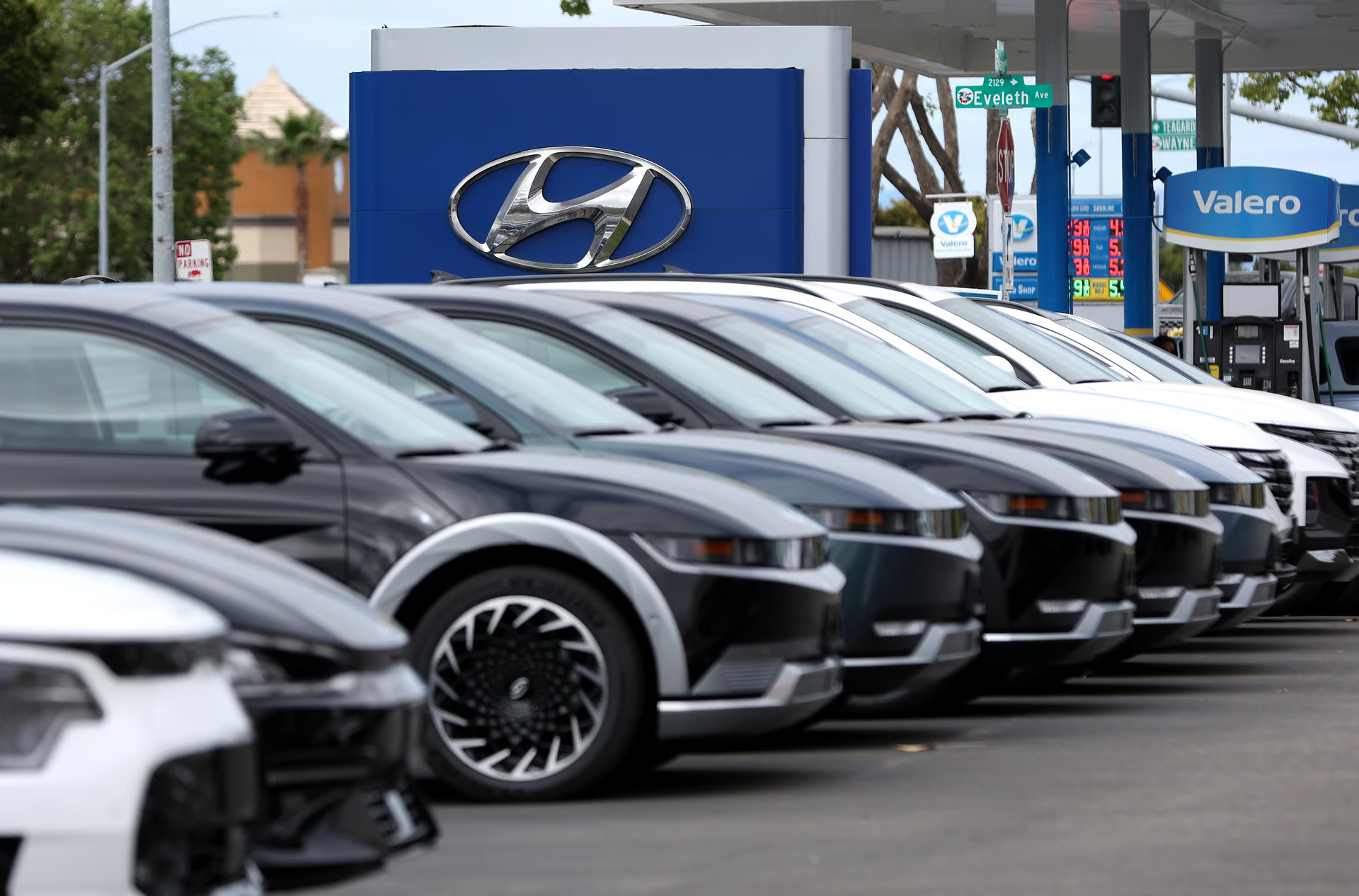
In 2025 Hyundai and Kia issued a wave of safety recalls that together impacted nearly 2 million vehicles in the United States. Hyundai crossed the 1-million mark with 21 separate campaigns, while Kia recorded 13 campaigns affecting just under a million units. These numbers are driven mainly by defects in very popular models rather than an unusually high failure rate per vehicle.
The most serious and widespread issues fall into two main categories: seat belt latch failures (mostly Hyundai) and fuel system pressure problems that can lead to leaks and potential fire risk (mostly Kia, with some Hyundai overlap).
Biggest Hyundai Recall — Palisade Seat Belt Trouble
The single largest campaign hit the Hyundai Palisade hard.
Roughly 568,000 units of the 2020–2025 Palisade were recalled because the front seat belt buckle assembly may not latch properly or may unlatch during a crash.
Dealers replace the buckle assembly free of charge. This one campaign alone was responsible for a huge chunk of Hyundai’s total recall volume in 2025.
Kia’s Main Headache — Fuel Tank Pressure Build-up
Kia’s most significant issue affects about 250,000 K5 sedans (2021–2024) equipped with the 1.6L turbo engine.
A defective purge control valve in the EVAP system allows excessive pressure to enter the fuel tank over time. This can cause the tank to deform, crack, leak fuel near hot exhaust parts, or — in extreme cases — create a fire hazard.
The same underlying defect also triggered a recall for over 85,000 Hyundai Sonata models (2020–2023), pushing the combined total for this problem past 335,000 vehicles.
Fix: free replacement of the valve, tank inspection (and replacement if needed), plus a software update.
Other Notable Problems in 2025
- Loose connecting rod bolts in some 2025–2026 Tucson and Santa Fe engines → possible engine noise, low oil pressure, or stall (full engine replacement in severe cases).
- Rearview camera image failures and instrument cluster blackouts on various models.
- Trailer wiring harness shorts that can cause electrical issues or small fire risk.
- HVAC blower motor wiring and starter motor terminal cover problems that could short during a collision.
Most of these defects are the result of shared platforms, engines and electronic systems between Hyundai and Kia — when one brand finds a problem, the other often follows quickly.
What Owners Should Do Right Now
1. Go to nhtsa.gov/recalls (or hyundaiusa.com/recalls, kia.com/recalls) and enter your VIN — don’t wait for a letter.
2. If your vehicle is affected, book a free dealer appointment as soon as possible.
3. For fuel system recalls, pay attention to any unusual fuel smell, tank bulging, or warning lights — don’t ignore them.
Hyundai and Kia continue to handle these matters proactively with free repairs, and most owners get the work done quickly once notified.
High recall numbers in 2025 are more a reflection of massive sales volumes than systemic quality collapse — but they do remind everyone how important it is to stay on top of recall notices.
More from News

Chinese EVs Flooding North America? Xiaomi SU7, BYD & More Coming
07.01.2026 14:22
Volkswagen Halts Imports of Its Electric Bus to the U.S. Next Year
Policy uncertainty, rising costs, and weaker demand force Volkswagen to pause its electric bus expansion
22.12.2025 18:03
Ram TRX Returns with 777hp Supercharged V8 — Muscle Truck Wars Heat Up
07.01.2026 17:24
Why Ford Couldn’t Replicate Tesla’s EV Success
The electric F-150 impressed on paper but failed to meet the expectations set by Tesla
22.12.2025 18:47
Trump Points to Japan’s ‘Cute’ Tiny Cars as a Solution to Soaring Vehicle Costs
14.12.2025 17:12