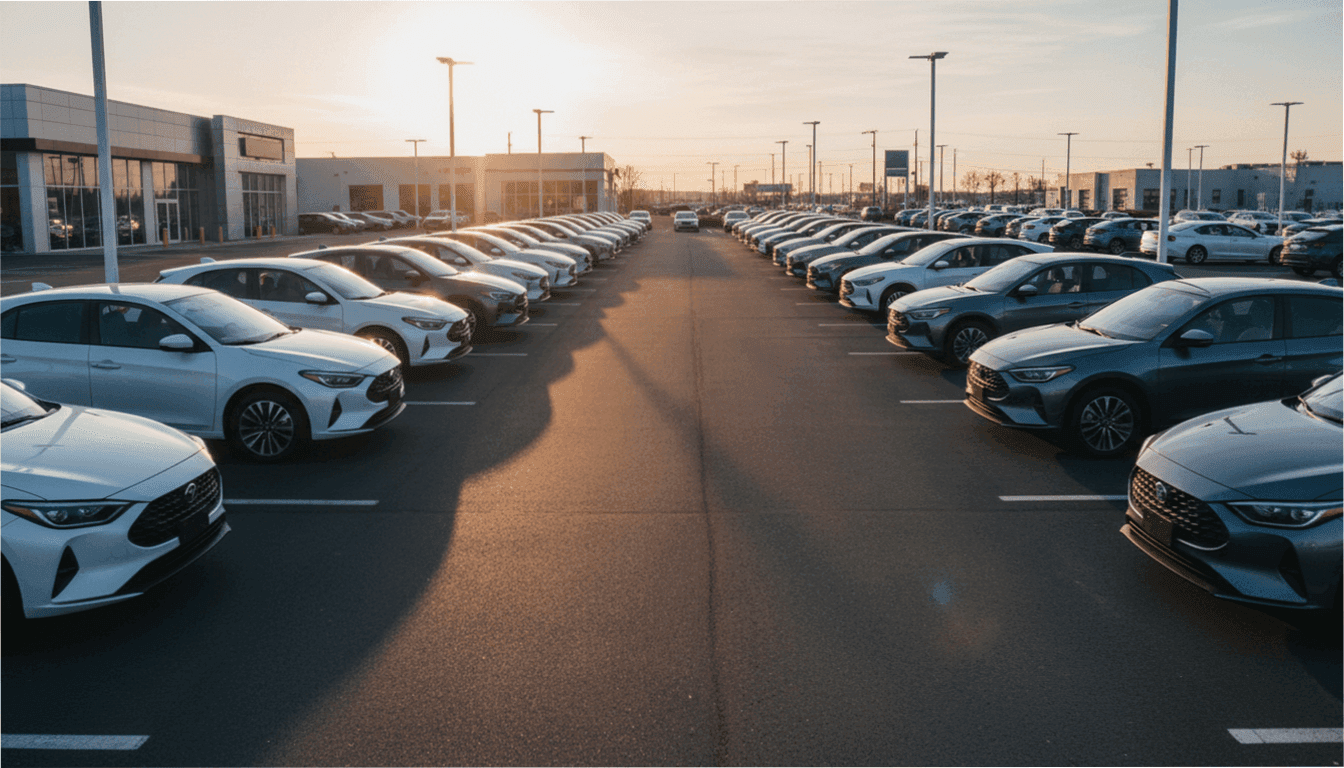
Trump Points to Japan’s ‘Cute’ Tiny Cars as a Solution to Soaring Vehicle Costs

During a recent trip to Japan focused on trade and economic cooperation, President Trump drew attention to an unusual — and surprisingly practical — idea for improving American vehicle affordability: Japan’s famously tiny “kei cars.”
These ultra-compact vehicles, which dominate Japan’s city streets, are dramatically smaller and cheaper than the typical U.S. car or SUV. And with American vehicle prices hitting all-time highs, the question is suddenly real: Could kei cars work in the United States?
What Exactly Are Kei Cars — and Why Do They Matter?
Kei cars (“light automobiles”) are a unique Japanese vehicle class defined by strict limits on:
length
width
engine size
power output
They are about 30% shorter than a Toyota Camry, roughly as wide as a Smart car, and designed to maximize city maneuverability and efficiency.
Popular models in Japan — such as the Nissan Roox, Honda N-BOX, and Suzuki Spacia — start just above $10,000, far below U.S. new-car prices, which now average over $48,000.
Despite their small size, they offer:
excellent interior space engineering
extremely low fuel consumption
lower taxes and insurance in Japan
simple, inexpensive maintenance
Japan sells well over a million kei cars annually, making them a core part of its transportation ecosystem.
Why Trump Highlighted Tiny Cars After His Japan Trip
According to comments following his visit, what stood out most was the sheer practicality of these vehicles for dense environments and everyday tasks. Trump described them as “cute,” but industry observers noted a deeper point: kei cars represent a radically different approach to cost, efficiency, and size.
In a market where affordability has become a national concern, kei cars present a stark contrast to America’s upward trend toward:
larger SUVs
expensive trucks
costly EVs
higher monthly payments
record-high insurance premiums
Kei cars, by comparison, deliver simple transportation at a price nearly everyone can afford.
Would Kei Cars Actually Work in the United States?
The idea is appealing — but the practical reality is complicated.
Safety Standards
Kei cars are designed around Japanese safety regulations, which differ significantly from U.S. crash standards. Reinforcing them for the U.S. could reduce the price advantage.
Consumer Preference
U.S. buyers overwhelmingly choose larger vehicles for comfort, family needs, and perceived safety.
Infrastructure Compatibility
America’s highways, long-distance travel patterns, and truck-heavy traffic could make kei cars less suited for certain regions.
Still, tiny vehicles aren’t entirely foreign to the U.S. Smart, Fiat, Mitsubishi, and several EV startups have tried compact models with mixed success.
Where They Could Make Sense in the U.S.
Despite obstacles, kei-style cars might find strong demand in:
dense urban areas
university towns
short-distance commuter zones
delivery fleets
retirement communities
low-speed city environments
rental and car-sharing fleets
EV microcar platforms
If manufactured locally with minor adjustments, kei cars could become the low-cost mobility category the U.S. market currently doesn’t have.
Why This Matters for the Auto Industry
Trump’s comments — even if partly offhand — highlight a real structural issue:
The U.S. lacks affordable new cars.
With average new-car transaction prices climbing each year, automakers are increasingly focused on crossovers, premium trims, and electrified models with higher margins. Entry-level vehicles are disappearing, and consumers are feeling the pressure.
Kei cars showcase what’s possible when an entire segment is designed for:
low cost
low weight
high efficiency
simple engineering
In many ways, they represent the opposite of current American market trends.
Trump’s unexpected enthusiasm for Japan’s tiny kei cars sparked a wider conversation about vehicle affordability in the U.S. Whether or not these mini-sized models could be adapted for American roads, they highlight a key truth: the U.S. desperately needs a new class of low-cost vehicles.
Kei cars may not be the final answer — but they clearly demonstrate how innovative design and strict size limits can produce cars that are inexpensive, efficient, and practical.
As automakers grapple with rising production costs, electrification, and shifting consumer expectations, the idea of “cute tiny cars” may be less surprising — and more necessary — than it sounds.
More from News
The Race to Build Electric Motors Without Chinese Rare Earths
02.12.2025 17:03
Why Tesla’s Latest Earnings Report Is a Warning Sign — And What It Means for the EV Market
02.12.2025 17:19
China’s Auto Sales Decline for a Second Month, but Exports Hit Record Highs
09.12.2025 16:05
BYD’s European Sales Surge as Chinese Automakers Expand Across the Continent
02.12.2025 17:11
Li Auto Posts First Quarterly Loss in Three Years as Sales Slow Sharply
02.12.2025 16:32