6R80 vs 10R80 Transmission – Key Differences and Real-World Truths
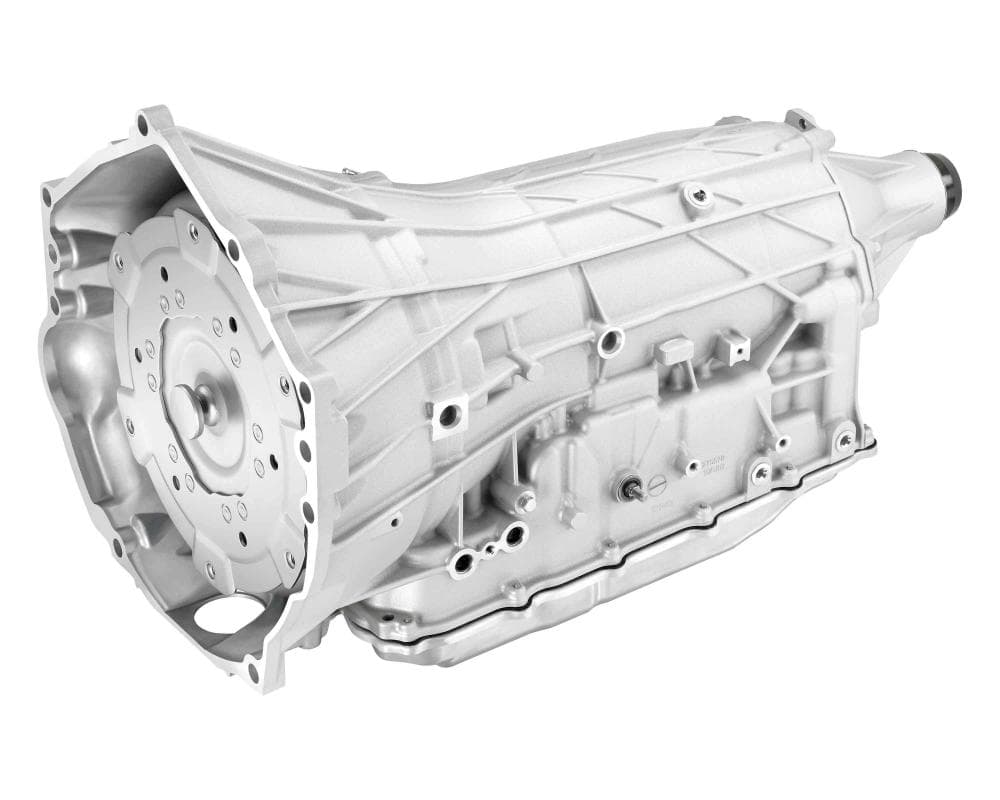
The 6R80 and 10R80 are Ford’s two heavy-hitters for the F-150 over the last fifteen-plus years. Both are built in the same Ohio plant, both use a conventional torque-converter automatic layout, and both have proven they can live behind high-horsepower engines when treated right. They are not, however, interchangeable or equally durable in the same applications.
Gear Count and Ratios – More Than Marketing
The 6R80 is a true six-speed with ratios of 4.17, 2.34, 1.52, 1.14, 0.87, and 0.69:1 plus a 3.40:1 reverse. First gear is deep enough to get a 7,000-pound truck moving with 3.73 or 4.10 axles, and sixth is a relaxed overdrive.
The 10R80 jumps to ten forward gears: 4.70, 2.99, 2.15, 1.77, 1.52, 1.27, 1.00, 0.85, 0.69, and 0.64:1. That ultra-deep 4.70 first gear gives incredible launch feel, while the double overdrive (0.69 and 0.64) drops engine rpm noticeably on the highway. Spread is wider, steps between gears are smaller, and the truck always seems to be in the perfect ratio.
Torque Capacity and Internal Hardware
The 6R80 was originally rated for roughly 590 lb-ft in stock form. Ford strengthened clutches, added a second intermediate one-way clutch, and beefed the pump on later units, pushing real-world capability closer to 650-700 lb-ft before hard parts start giving up.
The 10R80 was designed from the start for the Gen 2 3.5 EcoBoost (650+ lb-ft in the Raptor) and the 7.3L Godzilla V8. It uses larger shafts, wider gear sets, more clutch plates, and a stronger case around the direct clutch drum. Stock torque rating is over 800 lb-ft, and tuned 2021+ trucks making 900+ wheel horsepower routinely survive with just fluid changes.
Shifting Behavior and Driver Feel
The 6R80 shifts deliberately. You feel each gear change, especially 1-2 and 2-3 under throttle. Lockup is firm and early in normal driving, which is great for mileage but can feel busy around town. Many owners install a custom tune simply to soften the shifts and delay lockup.
The 10R80 is lightning fast and almost imperceptible in daily driving. Gear changes happen in 200-300 milliseconds, and the adaptive strategy learns your style quickly. It will skip five or six gears on light throttle and still be smooth. Downshifts for passing or towing are instant compared to the 6R80’s slight pause.
Fluid, Service, and Known Weaknesses
Both transmissions use Mercon LV fluid, but the 10R80 holds almost twice as much (13 quarts vs roughly 7.5 quarts in the 6R80). That extra volume helps with heat, but it also means a full service is more expensive.
The 6R80’s biggest gremlin is the molded lead frame in the valve body. When it fails, the transmission goes into limp mode. Ford revised the part multiple times; later units are far better, but the issue still pops up. Valve-body replacement is usually under $1,000.
The 10R80 has its own early teething problems: output shaft spline twist in high-torque tuned trucks, torque-converter clutch shudder (fixed with fluid swaps to the updated blue-label Mercon ULV), and occasional C/D clutch wave spring failures. Most of these were sorted out within the first few years of production.
Heat Management and Towing Reality
The 6R80 runs hotter under sustained load because it has fewer gears to keep the engine in its sweet spot and a smaller fluid volume. Towing 10,000 pounds up long grades often pushes fluid temps past 220 °F without an auxiliary cooler.
The 10R80 stays 20-40 °F cooler in identical conditions thanks to tighter ratios, more efficient converter lockup, and larger fluid capacity. Many owners report never seeing over 190 °F even when maxed out.
Tuning and Aftermarket Support
The 6R80 is fully solved. Custom tunes are cheap, reliable, and can add years of life by raising line pressure and optimizing shift points.
The 10R80 is still catching up. Early tunes had shift overlap and flare issues, but current calibrations from major companies are excellent. Aftermarket valve bodies and reinforced clutches are now available for 1,000+ hp builds.
Bottom Line – Which One Is Actually Better?
If you have a 2009-2014 F-150 with a 5.0 Coyote or 3.5 EcoBoost making stock or mild power, the 6R80 is perfectly adequate and cheaper to maintain long-term.
If you tow heavy, live in hills, run big tires, or simply want the smoothest, most modern shifting experience available in an F-150, the 10R80 is in a different league. It is stronger, cooler-running, and far more refined.
In short: the 6R80 is tough and proven. The 10R80 is simply tougher, smarter, and built for everything the modern F-150 throws at it.
More from Ford
2.7 EcoBoost vs 3.5 EcoBoost – Long-Term Reliability Reality
06.12.2025 09:24
7.3 Godzilla Engine Swap into Older F-150 – The Ultimate Guide
06.12.2025 09:09
10R80 Transmission Problems in 2021+ F-150 – What 9Actually Goes Wrong
06.12.2025 09:04
Best Year for 3rd Gen Ford F-150 (2009-2014)
06.12.2025 07:09
5.0 Coyote vs 3.5 EcoBoost – Which Is Actually More Reliable?
06.12.2025 05:56