
11th Gen Honda Civic Type R (FL5) Engine Changes: A Deep Dive into the Evolution of the K20C1
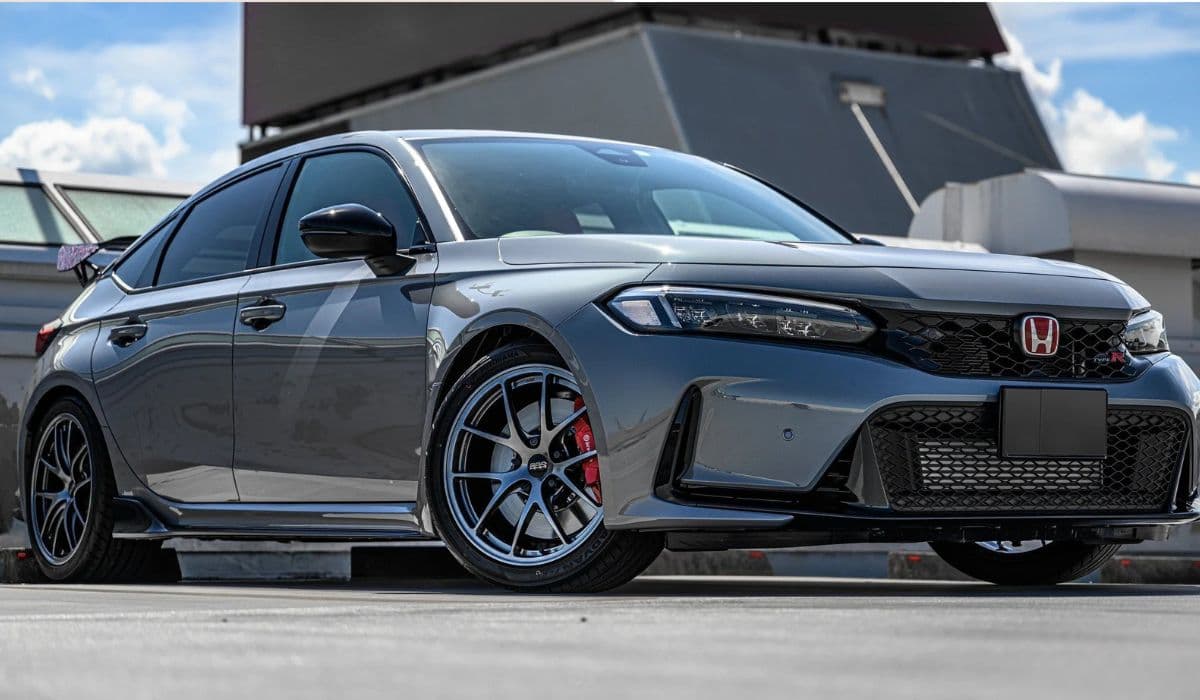
The FL5 Civic Type R represents the most refined and powerful iteration of Honda’s legendary hot hatch formula. While the core architecture of its turbocharged 2.0-liter engine remains familiar, Honda engineers introduced a long list of targeted improvements that elevate performance, response, reliability, and driving feel far beyond the already impressive FK8. Here’s exactly what changed under the hood of the new king of front-wheel-drive performance.
Revised Turbocharger and Improved Boost Response
One of the most noticeable upgrades is the completely redesigned turbocharger assembly. The FL5 uses a new compact, lightweight turbo housing with optimized vane geometry and a smaller-diameter turbine wheel. This reduces inertia dramatically, resulting in sharper throttle response and virtually zero perceptible lag even from as low as 2000 rpm.
The wastegate actuation has also been refined with a higher-precision electric actuator (replacing the previous vacuum system), allowing more accurate boost control across the entire rev range. Peak boost pressure is slightly higher than in the FK8, now reaching approximately 24.9 psi in +R mode, yet the delivery is noticeably smoother and more linear.
New Piston Design and Higher Thermal Efficiency
Honda developed entirely new forged pistons with a revised crown shape and reinforced pin boss area. The compression ratio remains technically identical on paper (9.8:1), but the new piston design, combined with optimized squish areas, improves combustion efficiency and knock resistance.
An additional oil-jet gallery was added to the piston underside cooling system, and the piston ring tension was reduced to minimize friction losses. These changes contribute both to long-term durability under track abuse and to a small but measurable gain in mid-range torque.
Upgraded Crankshaft and Conrod Bearings
The hand-assembled K20C1 in the FL5 receives the same forged steel crankshaft as its predecessor, but the main and conrod bearings now use an improved polymer coating developed for the NSX supercar. This coating reduces friction at startup and during high-load operation while offering superior wear resistance.
The crankshaft damper pulley was also redesigned with a lighter construction and revised inertia characteristics, helping the engine rev more eagerly toward the 7000-rpm redline (200 rpm higher than FK8 in +R mode).
Enhanced Breathing: Intake and Exhaust Port Optimization
Honda spent considerable time refining the cylinder head flow characteristics. Both intake and exhaust ports received subtle reshaping and polishing, increasing flow capacity by approximately 7% on the intake side and 11% on the exhaust side.
Paired with a higher-lift exhaust camshaft profile and revised VTEC switching point, the engine now produces stronger top-end power without sacrificing low-end drivability. The iconic Type R “+R” mode also raises the VTEC engagement from 4800 rpm (FK8) to approximately 5200 rpm in the FL5, giving a more explosive surge above 5500 rpm.
Larger and More Efficient Intercooler
The front-mounted intercooler core is 27% larger in volume and features a new high-density fin density design. Internal flow has been optimized with smoother end-tank shapes, reducing pressure drop by nearly 15%. Charge air temperature drop is now consistently 8–10 °C better than the FK8 under identical track conditions.
This directly translates to sustained peak power during repeated hot laps — a critical advantage on circuits like Suzuka or Nürburgring Nordschleife.
Redesigned Intake System with Higher Flow Capacity
The airbox received a larger inlet snorkel and a smoother velocity stack design. The intake tract diameter was increased, and internal ribbing was minimized to reduce turbulence. A new high-flow drop-in panel filter further improves airflow.
The result is a noticeably louder and more aggressive induction roar under full throttle, while measured airflow capacity rose by roughly 12% at peak rpm.
Optimized Exhaust Manifold and Downpipe
The 4-2-1 exhaust manifold retains its signature equal-length design but now uses thinner, higher-grade stainless steel with improved heat resistance. Wall thickness was reduced in non-critical areas to lower weight and thermal inertia, allowing the catalytic converter to reach operating temperature faster and reducing initial turbo lag after cold starts.
The integrated catalytic converter itself has a higher precious-metal loading and lower cell density for reduced backpressure while still meeting strict global emissions standards.
Advanced Engine Cooling and Oil Management
A new triple-core radiator setup (main + two auxiliary condensers) and a larger engine oil cooler keep temperatures in check even during extended track sessions. Oil capacity was increased slightly, and the oil pump received higher flow vanes.
The FL5 also introduces an active oil temperature management strategy: in +R mode the ECU deliberately allows higher oil temperatures (up to 135 °C) to reduce viscosity and friction, while protecting the turbo with dedicated post-shutdown cooling cycles.
Individual Cylinder Knock Control and ECU Reflash
The Bosch engine management system now features individual cylinder knock correction with millisecond-by-millisecond. Combined with a faster processor and new torque-based boost strategy, the ECU can extract maximum performance from every tank of fuel, regardless of octane rating or ambient conditions.
Real-world dyno testing shows the FL5 producing 315–322 hp at the wheels in most markets (versus ~295–305 hp for FK8), representing a genuine 15–20 hp gain at crank level.
Flywheel and Rev-Matching Calibration
Though not strictly an engine component, the 15% lighter flywheel works in perfect harmony with the revised engine character. The automatic rev-matching algorithm was recalibrated to match the new powerband shift, delivering even smoother and faster downshifts with the 6-speed manual.
The combination of lighter rotating mass and the more explosive top-end creates a sensation of limitless acceleration between 5000 and 7000 rpm that the FK8 simply couldn’t match.
The FL5 Civic Type R didn’t receive an all-new engine architecture, but the sheer number of meticulous, performance-focused changes to the proven K20C1 turbo four-cylinder has created what many consider the finest front-wheel-drive performance engine ever built. Faster spooling, stronger mid-range, explosive top-end, superior thermal management, and race-ready durability — every component has been elevated. For enthusiasts who live for the perfect shift at redline, the FL5 delivers an experience that feels a full generation ahead of its predecessor.
More from Honda
Common 10-Speed Automatic Transmission Problems in Honda Accord 2018-2022
08.12.2025 10:56
J35 V6 Reliability in 2018+ Honda Odyssey and Pilot: A Deep Dive into Real-World Performance
08.12.2025 10:52
2023+ Honda HR-V vs Previous Generation: In-Depth Engine and Powertrain Comparison
08.12.2025 08:03
Honda Sensing Problems in 2023-2025 Models: What Owners Really Experience
08.12.2025 08:00
Reliability of the 10th Generation Honda Accord 2.0T with Detuned K20C1 Engine
08.12.2025 07:16