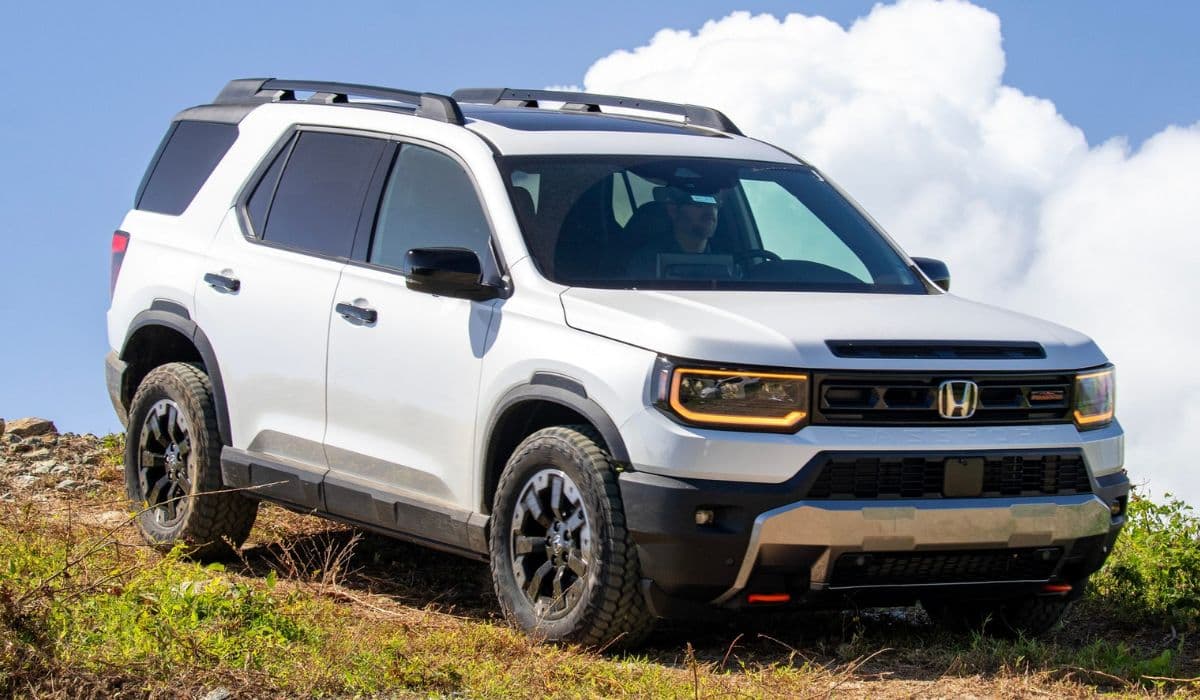
Smooth ride but firm suspension feedback Honda Pilot
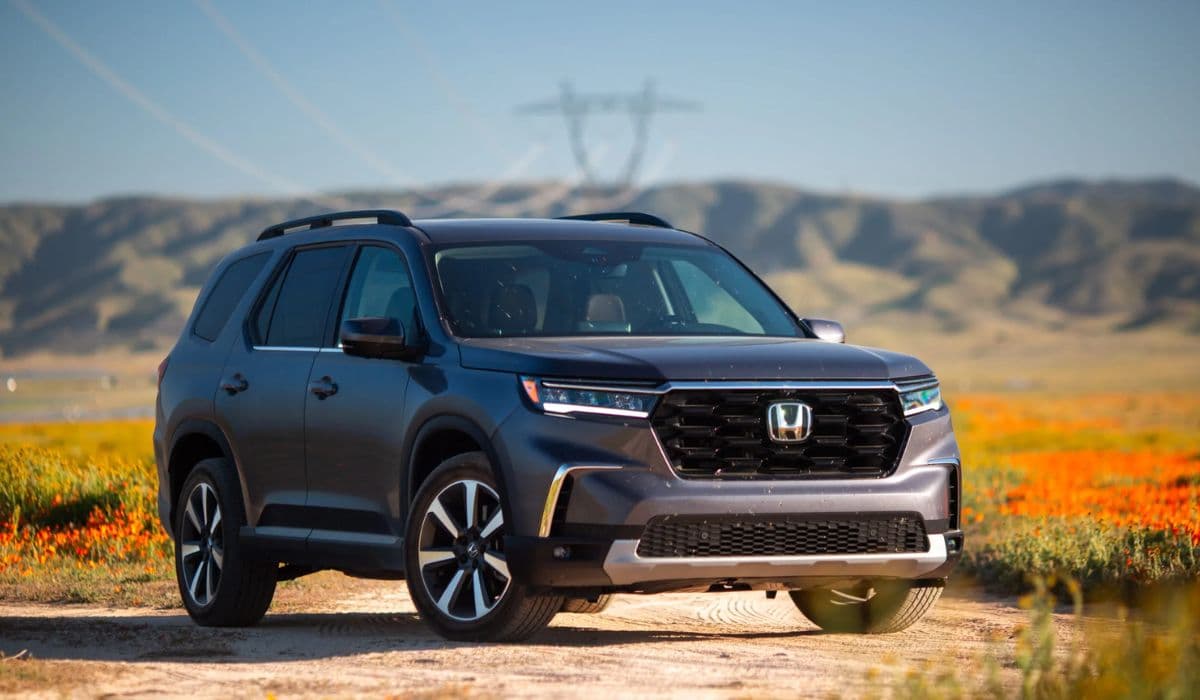
The Honda Pilot delivers one of the most balanced on-road personalities in the midsize three-row SUV segment. It glides over highway miles with impressive composure while maintaining a level of suspension feedback that keeps the driver engaged. This distinctive combination — smooth overall ride quality paired with deliberately firm responses — defines the Pilot's character and sets it apart from softer competitors.
Highway Comfort Meets Controlled Dynamics
On long-distance drives, the Pilot feels remarkably settled. The suspension effectively absorbs the constant, small imperfections of highway pavement, preventing them from becoming fatiguing over hundreds of miles. Expansion joints, gentle undulations, and worn concrete surfaces disappear under the vehicle with minimal disturbance to the cabin.
This smoothness comes from a well-calibrated setup that prioritizes composure without ever crossing into floaty territory. The chassis remains planted even at highway speeds, and body motions stay tightly controlled when encountering lane-change corrections or gentle curves. Drivers who value stability during extended travel will appreciate how little the Pilot requires in terms of steering or throttle adjustments.
The Firm Side of the Suspension Character
While the overall ride remains comfortable, the Pilot communicates clearly with the driver through its suspension tuning. Sharp-edged potholes, transverse cracks, and broken pavement send distinct feedback through the chassis rather than being completely isolated.
This firmness serves a purpose. It translates into reduced body roll during cornering, quicker turn-in response, and a more confident feeling when carrying speed through sweeping bends. The suspension quickly recovers after impacts, preventing the wallowing motion common in softer SUVs.
Many owners describe this as "European-inspired" control — the vehicle feels connected to the road instead of insulated from it. The trade-off is noticeable on very rough urban streets, where the Pilot transmits more of the road texture than vehicles tuned purely for plushness.
Independent Suspension Design in Action
The Pilot's four-wheel independent suspension forms the foundation of this balanced behavior.
Here are the key advantages it brings:
Each wheel reacts independently to road irregularities, maintaining better contact and traction
Sharp impacts on one side have minimal effect on the opposite wheel
Reduced dive under hard braking and squat during acceleration
More predictable handling when the road surface suddenly changes
This design contributes directly to the "firm yet smooth" signature. The suspension has enough compliance to handle long-wave undulations gracefully, while stiffer damping rates control short, harsh impacts efficiently.
Steering Feel and Driver Connection
The electric power steering system complements the suspension perfectly. It provides natural weighting that builds progressively with speed, offering good communication about what the front tires are doing.
In corners, the Pilot responds with precision uncommon in family-oriented three-row SUVs. The combination of firm damping, controlled roll, and accurate steering creates confidence-inspiring handling that encourages more enthusiastic driving on winding roads.
Real-World Ride Variations
The Pilot's ride character changes noticeably depending on conditions:
Smooth highways → exceptionally quiet and relaxed
Moderately imperfect suburban roads → comfortable with clear feedback
Severely potholed city streets → firm, occasionally jarring over the worst impacts
Winding backroads → controlled, flat, and surprisingly engaging
Tire and wheel choices also play a significant role. Models equipped with smaller-diameter wheels and taller sidewalls generally transmit less harshness over sharp edges, while larger wheels emphasize the sportier side of the suspension tuning.
Who Benefits Most from This Tuning Philosophy?
The Pilot's suspension calibration suits drivers who want a family hauler that doesn't feel like a compromise in driving enjoyment. It rewards those who appreciate:
Confident highway stability
Predictable handling in curves
Clear communication from the chassis
A vehicle that feels more like a large sedan than a traditional bulky SUV
If your daily routes include mostly well-maintained roads with occasional spirited driving, the Pilot's balance delivers lasting satisfaction. Drivers who prioritize maximum plushness over any road condition may find the feedback too present.
Why the Firm-Smooth Balance Works So Well
Honda engineers have created a suspension that adapts intelligently to different driving scenarios. It remains compliant enough for everyday comfort yet firm enough to control the vehicle's mass during more dynamic situations.
This thoughtful compromise results in an SUV that feels sophisticated rather than soft, engaging rather than numb. The Pilot proves that family transportation doesn't have to sacrifice driving satisfaction — it can deliver both space and a rewarding connection to the road.
More from Honda
Earth Dreams 1.5T Carbon Buildup Fix: Complete Guide to Solving Honda’s Direct Injection Problem
08.12.2025 11:49
Best Used SUV Under $25,000: Honda CR-V vs Toyota RAV4 vs Ford Explorer
08.12.2025 15:32
Honda 1.5T vs Toyota 2.0 Dynamic Force – Which is Better?
08.12.2025 15:17
11th Gen Honda Civic Type R (FL5) Engine Changes: A Deep Dive into the Evolution of the K20C1
08.12.2025 08:08
2023+ Honda HR-V vs Previous Generation: In-Depth Engine and Powertrain Comparison
08.12.2025 08:03