idyCar logo

Tesla suspension fixes: Cheap parts but frequent in Model Y
Tesla23.12.2025 12:22
Tesla suspension fixes: Cheap parts but frequent in Model Y
Image credit: idyCar archives

The Tesla Model Y, a compact electric crossover SUV, features an advanced suspension setup designed to balance performance, efficiency, and handling. At its core, the system includes independent double-wishbone front suspension and a multi-link rear suspension, both tuned for the vehicle's substantial weight—around 4,400 pounds due to its large battery pack. This setup incorporates coil springs, dampers, control arms, bushings, and ball joints, all working together to absorb road imperfections while maintaining stability during acceleration and cornering.

Unlike traditional gas-powered vehicles, the Model Y's suspension must handle the instant torque from its electric motors, which can stress components more aggressively. The front suspension, in particular, deals with regenerative braking forces that add unique loads. Tesla has iterated on this design over the years, with updates in 2021 and beyond aiming to improve durability, but early models from 2020 often show wear sooner. The system's electronic integration allows for over-the-air adjustments to ride height and damping in some variants, though most rely on passive components.

Key elements include upper and lower control arms, which pivot to allow wheel movement, and bushings that act as flexible joints to reduce vibrations. Ball joints connect these arms to the wheels, enabling smooth steering. When functioning well, this setup delivers a sporty feel, but degradation can lead to noticeable handling changes.

Common Suspension Problems in Model Y

Owners frequently report a range of suspension-related issues in the Tesla Model Y, particularly in models produced before 2023. One of the most prevalent complaints is unusual noises, such as clunking, knocking, or popping sounds when driving over bumps, potholes, or during turns. These often stem from worn ball joints in the front upper control arms, where the joint seizes or loosens, causing play in the system.

Squeaking or creaking from the suspension is another common grievance, especially in colder weather or after hitting rough patches. This is typically linked to tearing or degradation of bushings in the lateral links (front lower control arms) or compliance arms. The rubber material in these bushings can crack over time, allowing metal-on-metal contact or excessive movement. In severe cases, this leads to vibrations felt through the steering wheel or uneven tire wear, where the inner edges of tires bald prematurely despite regular alignments.

More serious problems include sudden failures, like control arm bolts loosening, which can cause the vehicle to pull to one side or wobble during cornering. Some drivers describe a "whompy wheels" sensation, where the suspension feels unstable mid-turn over uneven surfaces. Regenerative braking exacerbates these issues by adding reverse torque, accelerating wear on components not optimized for such forces. Data from owner forums and reports indicate these problems can surface as early as 20,000 to 50,000 miles, though higher-mileage vehicles (over 100,000 miles) show them more consistently.

Phantom vibrations or a rough ride quality are also noted, with the Model Y's firm tuning criticized for transmitting too much road feedback into the cabin. This isn't always a fault but can worsen with degraded parts. In rare instances, complete suspension collapses have been documented, though often tied to external damage like pothole impacts.

Reasons Behind Frequent Suspension Issues

The frequency of suspension problems in the Tesla Model Y can be attributed to several design and operational factors. First, the vehicle's heavy battery pack places extra stress on suspension components compared to lighter gasoline counterparts. This weight, combined with the electric powertrain's high torque output—up to 487 lb-ft in Performance models—accelerates wear on bushings and joints, as they endure rapid load shifts during acceleration, braking, and cornering.

Tesla's emphasis on performance handling means the suspension is tuned stiffer than many family SUVs, prioritizing agility over plush comfort. This setup, while excellent for spirited driving, makes it more susceptible to road imperfections, leading to faster degradation in real-world conditions like urban potholes or salted winter roads, which promote corrosion. Early production models, especially those from 2020-2021, used bushings with hollow designs that tear more easily under repeated flexing.

Environmental factors play a role too; in regions with poor road quality or extreme temperatures, components contract or expand, exacerbating noises and wear. Regenerative braking, a hallmark of EVs, adds unique stresses by using the motors to slow the vehicle, which can overload front suspension parts over time. Reports from investigations, such as those by regulatory bodies, highlight thousands of complaints about steering and suspension, pointing to potential design vulnerabilities in high-volume production.

Additionally, the Model Y's popularity means more units on the road, amplifying reported issues statistically. While Tesla's over-the-air updates can tweak software-related handling, hardware wear remains a physical limitation, often requiring mechanical intervention.

Cost-Effective Parts for Suspension Repairs

One silver lining for Model Y owners facing suspension woes is the affordability of replacement parts. Tesla's parts ecosystem, combined with a growing aftermarket, keeps costs low compared to luxury brands. For instance, a front upper control arm, often the culprit for clunking noises, retails for around $200 to $300 per side from official sources, with aftermarket options dipping to $150. Bushings, which are replaceable individually, cost as little as $20 to $50 each, though labor can add up if not doing it yourself.

Compliance arm bushings or lateral link kits are similarly budget-friendly, with full sets available for $100 to $200. Ball joints, integrated into control arms on some models, might require replacing the entire arm, but even then, prices hover under $400. For those seeking upgrades, aftermarket polyurethane bushings—more durable than stock rubber—run $50 to $100 and resist tearing better.

Full suspension refresh kits, including multiple arms and bushings, can be sourced for $500 to $800, far cheaper than comparable repairs on vehicles like BMW or Mercedes SUVs. Third-party suppliers offer compatible parts with warranties, ensuring reliability without breaking the bank. Shock absorbers and springs, if needed for ride improvement, start at $200 per corner, with complete coilover sets under $1,000. This accessibility makes fixes viable even out of warranty, where Tesla service might charge premiums.

Step-by-Step Guide to Diagnosing Suspension Problems

Diagnosing suspension issues in your Model Y starts with attentive driving. Begin by noting when symptoms occur: over bumps, during turns, or under braking? Clunking at low speeds often points to loose control arms, while vibrations at highway speeds suggest alignment or bushing wear.

Next, perform a visual inspection. Jack up the vehicle safely and check for play in wheels by shaking them side-to-side and top-to-bottom—excessive movement indicates worn ball joints or bushings. Look for tears in rubber bushings, cracks in arms, or fluid leaks from dampers. Measure tire tread depth across widths; uneven wear signals alignment problems tied to suspension faults.

Use Tesla's built-in diagnostics via the touchscreen: Access service mode to check for error codes related to steering or ride height. Road test with a passenger to pinpoint noises, and compare against known issues from owner communities. If noises persist, bounce each corner of the car; prolonged oscillation means weak shocks.

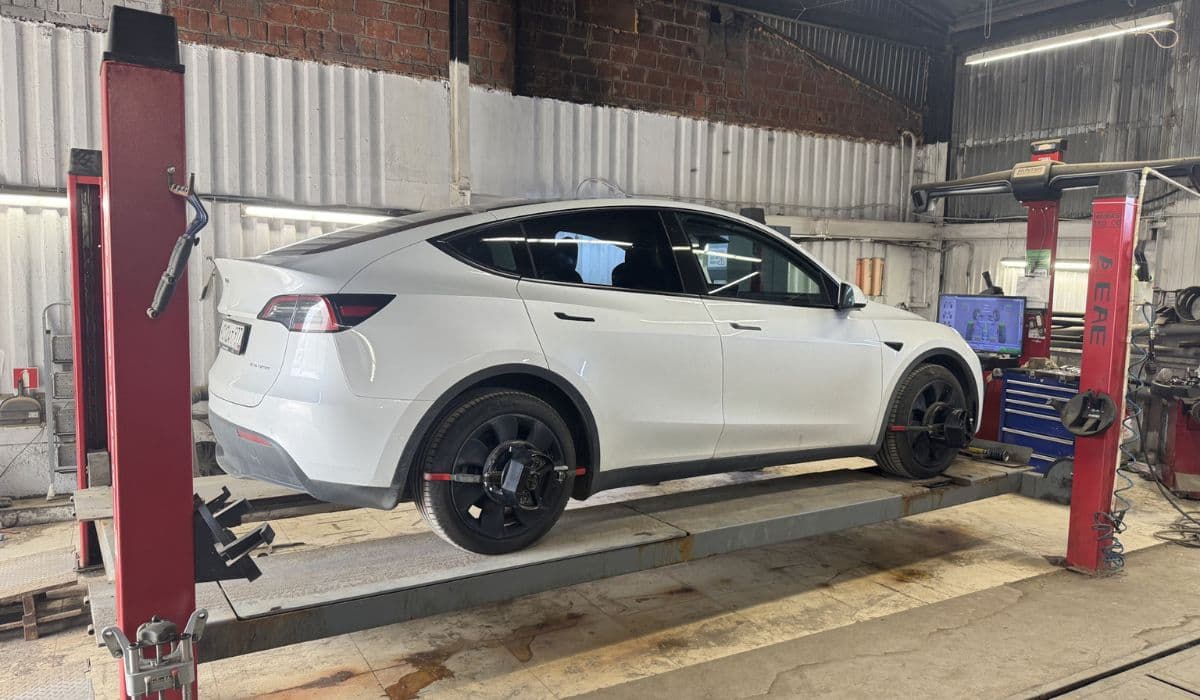
For advanced checks, measure ride height and camber with tools—deviations from specs (like 0.5 degrees negative camber) confirm wear. If unsure, a professional alignment at a shop can reveal hidden issues, often costing under $100.

Professional vs. DIY Repairs

Choosing between professional and DIY suspension repairs for the Model Y depends on your skill level and tools. Professional services, like those at Tesla centers or independent EV shops, ensure precision with specialized equipment, such as torque wrenches calibrated for the vehicle's aluminum components. They handle warranty claims efficiently and provide alignments post-repair, crucial for safety. Costs range from $500 to $1,500 for common fixes, including parts and labor, with quicker turnaround.

DIY appeals for cost savings—replacing a control arm might only need basic tools like jacks, sockets, and a pry bar, potentially under $300 total. Online tutorials detail steps: disconnect the battery, remove wheels, unbolt arms, and torque to specs (e.g., 130 Nm for upper arms). However, risks include improper torquing leading to failures or voiding warranties if not documented. The Model Y's high-voltage system adds safety concerns, requiring disconnection protocols.

For complex tasks like full bushing presses, professionals are recommended to avoid damaging subframes. Hybrid approaches work: DIY simple swaps and pro alignments. Always prioritize safety—suspension affects handling profoundly.

Upgrades to Improve Ride Quality

Enhancing the Model Y's suspension goes beyond fixes, with upgrades addressing inherent firmness. Aftermarket shock absorbers, like adjustable ones from brands offering tunable damping, soften the ride for $600 to $1,200 per set, allowing customization for daily commuting or towing.

Lowering springs or progressive-rate coils reduce body roll and improve aesthetics while maintaining comfort, costing $200 to $400. Pairing with upgraded bushings—polyurethane for longevity—minimizes noises and enhances responsiveness. For luxury, air suspension kits, though pricier at $2,000+, enable variable height for better ground clearance or aerodynamics.

Performance-oriented owners might opt for reinforced control arms with spherical bearings for sharper handling, around $300 each. These mods not only fix issues but extend component life under heavy use. Installation varies: bolt-on kits for easy swaps, but always realign afterward to prevent tire wear.

Maintenance Tips to Extend Suspension Life

Prolonging your Model Y's suspension involves proactive care. Regularly inspect components every 10,000 miles, checking for bushing tears or arm corrosion, especially in salty environments—apply protectants like rubber preservatives.

Maintain proper tire pressure (42 PSI cold) and rotate tires every 6,000 miles to even wear, reducing stress on arms. Avoid aggressive driving over potholes; use Tesla's chill mode to ease torque delivery. Schedule alignments annually or after impacts, as misalignments accelerate degradation.

Clean undercarriage seasonally to remove debris that causes seizing. For cold climates, lubricate exposed joints with silicone sprays. Monitor battery health—imbalances can affect weight distribution. Following Tesla's service intervals, like brake checks that overlap suspension inspections, catches issues early.

By integrating these habits, owners can mitigate frequent repairs, enjoying the Model Y's efficiency longer.

More from Tesla

Back to Tesla