6-Speed vs 8-Speed Automatic in 3rd Generation Toyota Tacoma: Which Transmission Is Actually Better?
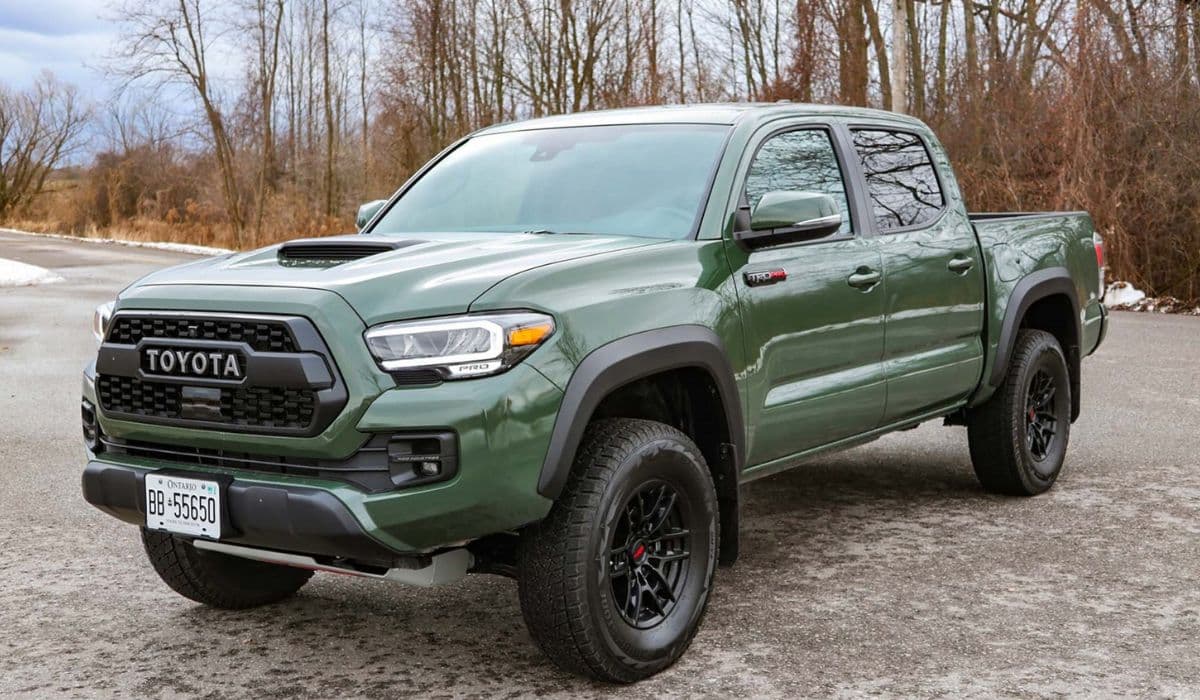
The third-generation Toyota Tacoma (2016–2023) offers buyers a rare choice in the midsize pickup segment: a 6-speed automatic or a newer 8-speed automatic transmission, both paired with the same 3.5L 2GR-FKS V6 engine. While the 4-cylinder models were stuck with the older 6-speed, V6 buyers could pick either until the 8-speed eventually became standard. This direct comparison on the identical platform makes the Tacoma one of the best real-world laboratories to see what two extra gears really do in a truck that is usually used for towing, off-roading, commuting, and everything in between.
Engine and Basic Specs Reminder
Both transmissions are bolted to the same 278 hp / 265 lb-ft 3.5-liter direct + port-injected V6. The engine calibration, torque converter, and final drive ratios in 4WD models (3.909:1) are identical regardless of transmission choice. The only major difference in hardware is the transmission itself: the AC60F 6-speed (carried over from the 2nd gen with minor updates) versus the newer Aisin TL-80SN 8-speed introduced mid-cycle.
Real-World Acceleration and Launch Feel
Despite identical horsepower, almost every owner and magazine test reports the 8-speed Tacoma feels noticeably quicker in daily driving, especially 0-40 mph. The much lower 1st gear and tighter spacing through the first four gears keep the V6 right in the 4000–5500 rpm sweet spot where it makes peak torque. Independent 0-60 mph tests show:
6-speed 4WD models: 7.4–7.7 seconds
8-speed 4WD models: 7.0–7.3 seconds
The gap is even larger when the bed is loaded or when towing near the 6400–6800 lb limit — the 8-speed simply has a gear for every situation.
Highway Fuel Economy and Cruising RPM
This is where the 8-speed pulls ahead dramatically. At 75 mph in 4WD:
6-speed turns ~2700–2800 rpm
8-speed turns ~2100–2200 rpm in 8th gear
Real-world owner data from Fuelly and Tacoma World long-term threads shows:
6-speed V6 4x4 averages 19.0–20.2 mpg lifetime 8-speed V6 4x4 averages 20.8–22.1 mpg lifetime (roughly 1.5–2.0 mpg better)
Many owners with 8-speed trucks report seeing 24–26 mpg on flat highway trips when driving 65–70 mph with a light foot.
Towing Performance and Grade Logic
Both transmissions have tow/haul mode and grade-braking logic, but the 8-speed is far superior when towing 5000+ lbs or climbing long grades. It holds gears longer, downshifts more intelligently, and almost never “hunts” between gears. The 6-speed is notorious for bouncing between 4th and 5th on moderate grades even with only 3500 lbs behind it, causing excessive heat and noise. The 8-speed has dedicated 4.30:1 low-range gearing effectively built into the main box, so it stays planted.
Transmission temps while towing a 6000 lb trailer up 6% grades for 10+ miles:
6-speed routinely hits 220–240 °F
8-speed rarely exceeds 200–210 °F with the same load
Off-Road and Low-Speed Control
Here the 6-speed actually has a slight edge for hardcore crawling. Its taller 1st gear (3.600 vs 4.796) combined with Crawl Control and rear locker means less throttle input is needed to creep over obstacles — the engine stays calmer. Many rock-crawling enthusiasts deliberately seek out 2016–2019 6-speed TRD Off-Road or Pro models for this reason. The 8-speed is still excellent (and benefits from multi-terrain select on later models), but you occasionally feel the taller 1st gear wanting to lunge if you’re not feather-light on the throttle.
Shift Quality and Refinement
The 8-speed is smoother, quieter, and far quicker to shift under all conditions. Cold 1-2 and 2-3 shifts in the 6-speed can be notoriously clunky, especially below 40 °F. The 8-speed cold shifts are almost imperceptible. Lock-up clutch engagement is also earlier and smoother in the 8-speed, reducing that “rubber band” feeling the 6-speed sometimes exhibits in stop-and-go traffic.
Long-Term Reliability and Common Issues
As of 2025, both units have proven extremely durable:
6-speed (AC60F)
Very few failures even at 250k+ miles
Occasional harsh 1-2 shift resolved with fluid change
Torque converter shudder in 2017–2018 models (TSB + fluid flush fixes most)
8-speed (TL-80SN)
Slightly higher incidence of torque converter shudder 2020–2021 (again fixed by TSB fluid exchange)
Extremely rare valve-body issues past 150k miles
No widespread failures reported yet
Fluid service interval is the same (technically “lifetime” but most owners change WS fluid every 60–80k miles regardless).
Resale Value Impact
On the used market, 2020+ 8-speed Tacomas command $1500–3000 more than comparable-mileage 2016–2019 6-speed models, all else being equal. The 8-speed is seen as the “one to get” for most buyers unless you specifically want a 6-speed for crawling.
City Driving and Stop-and-Go Traffic
The 8-speed wins again. Tighter low gears + faster shifts = less lag when rolling from stoplight to stoplight. The 6-speed can feel sluggish below 15 mph because 1st gear is so tall and 2nd comes so quickly that the transmission is constantly deciding whether to stay in 1st or grab 2nd.
If you tow heavy, spend a lot of time on the highway, care about fuel economy, or just want the newest tech → get the 8-speed without hesitation.
If you are a dedicated rock crawler who rarely sees pavement above 40 mph and loves early 3rd-gens → a clean 2016–2019 6-speed TRD Pro or Off-Road can still be the perfect truck.
For 95% of Tacoma buyers, the 8-speed is objectively the better transmission in every measurable way — quicker, smoother, more efficient, cooler under tow, and now worth more on trade-in.
More from Toyota
2UZ-FE 4.7 V8 vs 3UR-FE 5.7 V8 Reliability: In-Depth Real-World Comparison
08.12.2025 13:24
RAV4 Prime vs Hybrid Battery Differences: A Deep Technical Comparison
08.12.2025 13:28
2024+ Toyota Land Cruiser 2.4T Hybrid Real-World MPG: What Owners Actually Get
08.12.2025 13:31
8AR-FTS 2.0T Problems in Older Models
08.12.2025 13:38
Toyota 2.4 Turbo (T24A-FTS) Oil Consumption 2025
08.12.2025 13:47