RAV4 Prime vs Hybrid Battery Differences: A Deep Technical Comparison
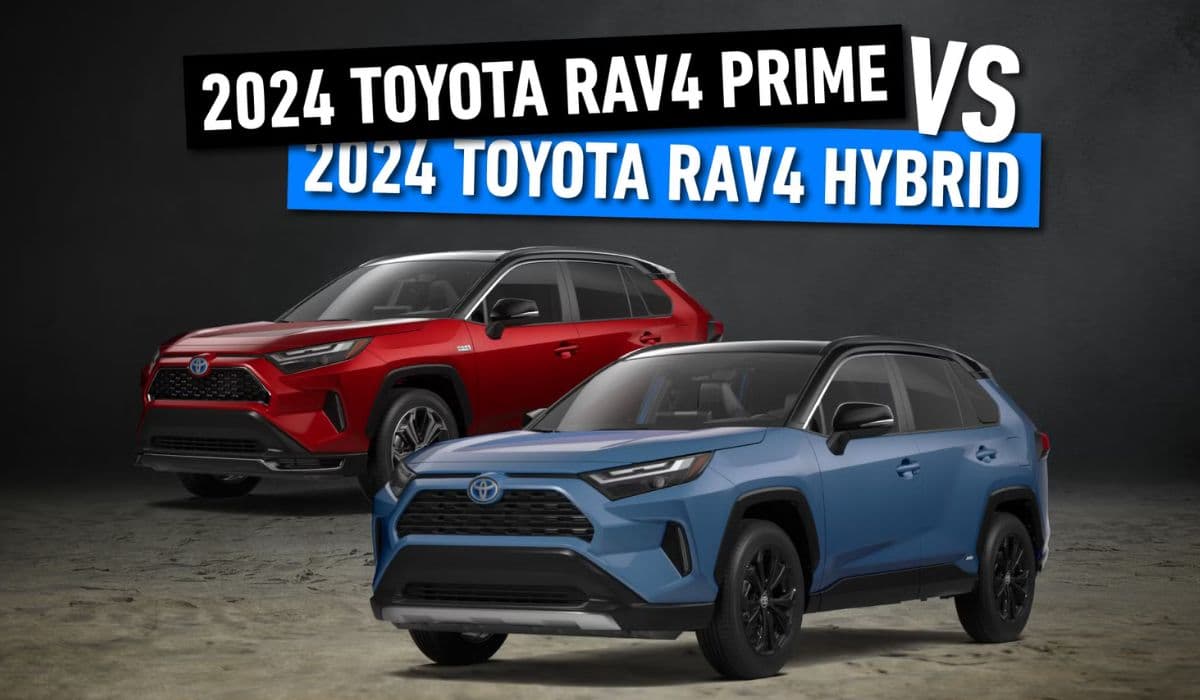
Toyota RAV4 offers two electrified versions that share the same platform but use dramatically different battery systems: the standard RAV4 Hybrid with its nickel-metal hydride (NiMH) hybrid battery and the RAV4 Prime (known as RAV4 Plug-in Hybrid) with a much larger lithium-ion battery pack. While both deliver excellent fuel economy and smooth AWD performance, the battery technology, capacity, charging capability, electric-only range, and long-term behavior are worlds apart.
Battery Chemistry and Basic Construction
The regular RAV4 Hybrid uses a sealed nickel-metal hydride (NiMH) battery pack consisting of 204 prismatic cells arranged in 34 modules of 6 cells each. Nominal voltage is 244.8 V, and the usable capacity is approximately 1.6 kWh (total capacity around 1.87 kWh). The pack is air-cooled through a dedicated cabin-air intake and a dedicated blower.
The RAV4 Prime, in contrast, is equipped with a lithium-ion battery using lithium-nickel-manganese-cobalt-oxide (NMC) chemistry with a graphite anode. It contains 96 pouch cells in a 16S6P configuration, delivering a nominal voltage of 355 V and a total energy capacity of 18.1 kWh (approximately 14–15 kWh usable to preserve longevity). The pack is actively liquid-cooled with its own dedicated coolant loop and radiator.
Energy Capacity and Electric-Only Range Impact
The most obvious consequence of the capacity difference is electric-only range. The standard Hybrid can drive on battery power alone for about 0.6–1 mile at low speeds before the gasoline engine starts, acting primarily as a power buffer and regenerative brake energy storage.
The Prime, thanks to its 18.1 kWh pack, achieves an EPA-rated 42 miles of electric-only range (real-world 38–46 miles depending on temperature and driving style). This makes the Prime capable of completing most daily commutes without using any gasoline when charged regularly.
Charging Capabilities and Infrastructure Needs
The RAV4 Hybrid has no plug and cannot be charged from an external source. The NiMH pack is maintained exclusively through regenerative braking and engine-driven generator output.
The RAV4 Prime includes an onboard 6.6 kW charger (upgraded from the original 3.3 kW in early units). Using a Level 2 240 V/32 A charging station, a full charge takes approximately 2.5 hours. On a standard 120 V outlet with the included cable, it requires about 12 hours. The charge port is located on the right-rear fender and uses a J1772 connector (CCS adapter available for DC fast charging in some markets, but Toyota does not officially support it).
Power Output and Performance Difference
Higher voltage and larger capacity translate directly into stronger electric motor performance. The Prime’s rear electric motor is significantly more powerful (134 kW vs 88 kW in the Hybrid), and the combined system output reaches 302 hp compared to 219 hp in the standard Hybrid. This results in 0–60 mph times of about 5.5–5.7 seconds for the Prime versus 7.8 seconds for the Hybrid.
Thermal Management Systems Compared
Temperature control is critical for battery longevity and performance. The Hybrid’s air-cooling system is simple and reliable but limits peak regenerative braking power in very hot climates and can lead to slight capacity fade over extreme heat cycles.
The Prime’s liquid-cooling system with dedicated radiator, pump, and coolant reservoir keeps the lithium-ion cells within a tight 20–40 °C window even during aggressive driving or fast charging. Cabin preconditioning while plugged in can also heat or cool the battery for optimal efficiency before departure.
Weight and Packaging Differences
Despite being almost ten times larger in capacity, the Prime’s lithium-ion pack weighs only about 120 kg more than the Hybrid’s NiMH pack (approximately 295 kg vs 175 kg). Toyota achieved this through pouch-cell design and an aluminum casing mounted lower and further rearward, actually improving weight distribution slightly (57/43 front/rear in Prime vs 58/42 in Hybrid).
Warranty and Expected Longevity
Both versions carry Toyota’s 10-year/150,000-mile hybrid battery warranty (extended to 10 years/240,000 km in CARB states), but real-world data shows differences. NiMH packs from the previous-generation RAV4 Hybrid routinely exceed 250,000–300,000 miles with 70–80 % remaining capacity. Early Prius Prime lithium-ion packs (similar chemistry) are showing even slower degradation, often retaining 90 %+ after 100,000 miles when regularly plugged in and not stored at 100 % charge.
Battery Degradation Behavior and Management Strategy
Toyota uses very conservative buffer zones. The Hybrid rarely lets the NiMH pack drop below 40 % or rise above 80 % state of charge. The Prime’s usable window is roughly 15 %–85 % in EV mode, but the system intelligently shifts to Hybrid mode before reaching the lower buffer to protect the cells. The Prime also features a “Battery Care Mode” in some markets that limits charge to 80 % for users who want maximum longevity over maximum range.
Cost of Battery Replacement (Current Aftermarket Data)
A replacement NiMH pack for the standard Hybrid currently costs dealers around $3,800–$4,200 plus labor (many independent shops rebuild individual modules for $1,200–$1,800). A new lithium-ion pack for the Prime is quoted at approximately $11,000–$12,500 from Toyota, though third-party rebuilders are beginning to offer refurbished packs for $6,000–$8,000 as the first high-mileage units appear.
Recycling and Environmental Considerations
Both packs are 95 %+ recyclable. Toyota has operated a closed-loop NiMH recycling program for over 20 years and has extended the same infrastructure to lithium-ion cells. The Prime’s larger pack contains more cobalt and lithium, but its ability to displace far more gasoline over its lifetime generally yields a lower total lifecycle CO2 footprint despite higher upfront mineral demand.
Which Battery System Suits Your Driving Pattern?
If you drive less than 40 miles per day or less and have access to charging, the Prime’s large lithium-ion battery can eliminate gasoline use on most days while still offering unlimited hybrid range for longer trips. Drivers who rarely or never plug in, or who regularly travel beyond 200 miles in a single day, will see almost no benefit from the Prime’s expensive battery and are better served by the simpler, cheaper-to-replace NiMH system in the standard Hybrid.
Both battery technologies are extremely reliable, but they are engineered for completely different use cases within the same vehicle platform.
More from Toyota
4th Gen Tacoma 2.4T i-Force Max vs 3.5 V6: Which Powertrain Is Actually Better?
08.12.2025 13:05
8-Speed vs 10-Speed Transmission Toyota Reliability: In-Depth Real-World Comparison
08.12.2025 13:15
Common 3rd Generation Toyota Tundra 3.4L Twin-Turbo V6 (V35A-FTS) Engine Problems 2022–2025 Models
08.12.2025 13:18
2UZ-FE 4.7 V8 vs 3UR-FE 5.7 V8 Reliability: In-Depth Real-World Comparison
08.12.2025 13:24
5th Gen 4Runner Engine Options and Long-Term Reliability: The Definitive Guide
08.12.2025 13:09