How to replace cabin air filter (Tesla Model 3/Y quick DIY)
Maintaining fresh air inside your Tesla Model 3 or Model Y goes beyond just hitting the recirculate button. The cabin air filter plays a crucial role in trapping dust, pollen, and pollutants, ensuring every drive feels clean and comfortable. Replacing it yourself is a straightforward task that takes under 30 minutes, empowers you as an owner, and keeps your HVAC system performing at its best. This quick DIY guide walks you through the process step by step, with tips to make it even smoother.
Why Replacing the Cabin Air Filter Matters
The cabin air filter in Tesla Model 3 and Model Y vehicles acts as the first line of defense against external contaminants. Over time, it accumulates debris, which can lead to reduced airflow, strange odors from the vents, or even strain on the blower motor. A clogged filter might make your climate control work harder, subtly affecting efficiency.
Regular replacement restores strong ventilation, eliminates musty smells—often caused by moisture buildup—and improves overall air quality. Many owners notice a dramatic difference in freshness, especially after driving in polluted urban areas or during pollen-heavy seasons. Doing it yourself not only saves time but also gives you insight into your vehicle's inner workings.
Tools and Preparation Tips
This job requires minimal tools, making it accessible for most owners. Preparation ensures everything goes smoothly.
A T20 Torx screwdriver (or 6mm hex if your model has a hybrid fastener)
Plastic trim removal tools to avoid scratching panels
Gloves to keep your hands clean
A flashlight or phone light for better visibility
New cabin air filters (two are needed, as the system uses an upper and lower pair)
Before starting, park in a well-lit area and turn off the HVAC system completely via the touchscreen. Move the passenger seat fully back and remove any floor mats for easier access. For newer models with tab-style covers, no screwdriver may be needed at all.
Pro tip: Inspect your old filters once removed—you'll be surprised how much debris they capture, reinforcing why this maintenance is worthwhile.
Accessing the Cabin Filter Housing
The cabin filter is located behind the passenger-side footwell in both Model 3 and Model Y. Access varies slightly depending on your vehicle's build, but the core process is similar.
Start by removing the lower under-dash panel. Gently pry off the side panel on the center console using trim tools, then pull away the magnetic or clipped footwell cover. Be careful around wiring harnesses—nothing needs disconnecting here.
Next, locate the filter cover on the HVAC module. Depending on the model:
Older versions may have a T20 screw at the top or bottom—remove it carefully.
Newer builds often use simple squeeze tabs at the bottom for tool-free release.
Tilt the cover outward and set it aside. Avoid tugging on any attached cables. With the housing exposed, you're ready for removal.
This step highlights Tesla's thoughtful design: while not as instant as some traditional cars, it's engineered for owner-friendly maintenance without special equipment.
Removing the Old Filters
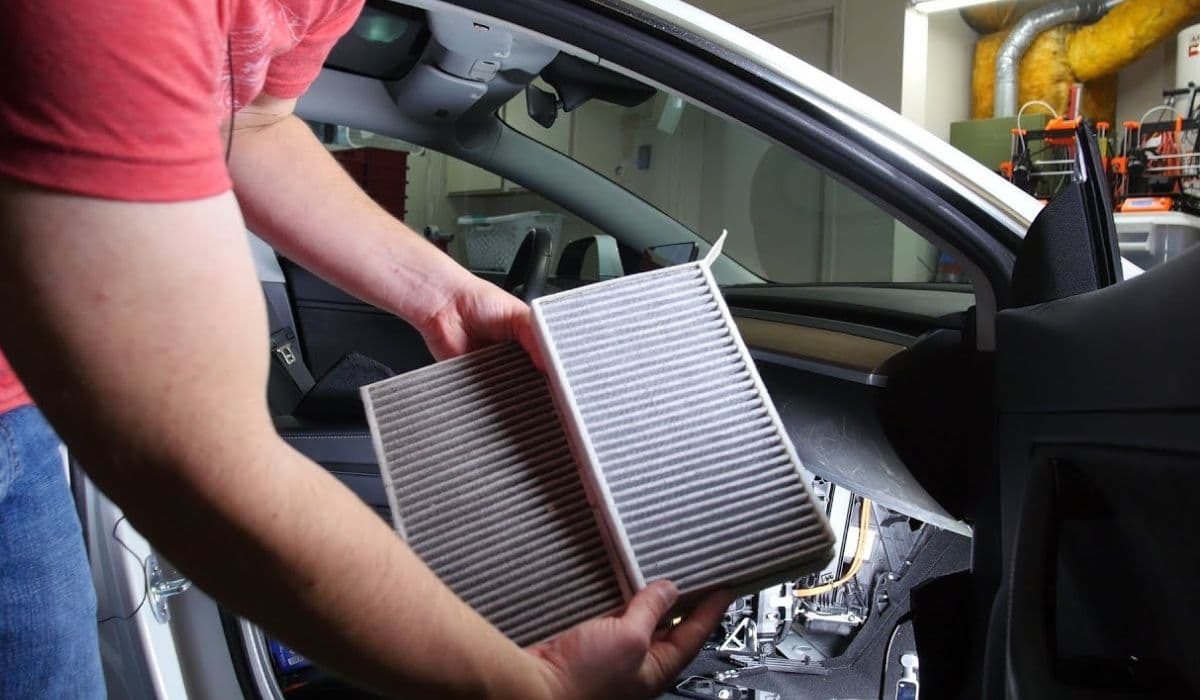
Tesla's dual-filter setup includes an upper and lower element for enhanced filtration.
Fold the pull tabs outward (up for the top filter, down for the bottom).
Grip the tab on the upper filter and slide it straight out.
For the lower one, pull upward first, then out.
The filters may be dusty or discolored—that's normal. Shake off loose debris outdoors and dispose of them properly. Take a moment to peek inside the housing; if you spot buildup, a quick vacuum with a narrow attachment can help.
Common mistake to avoid: Forcing the filters. They slide out smoothly when aligned correctly. Patience here prevents bending the tabs or damaging the housing.
Installing the New Cabin Air Filters
Fresh filters bring immediate benefits, but proper orientation is key for optimal performance.
Check the airflow arrows on the new filters—they must point toward the rear of the vehicle (into the HVAC system).
Insert the lower filter first: Slide it in, then lower into place.
Add the upper filter by pushing it straight in until seated.
Ensure both are fully engaged without gaps. The tabs should sit naturally for easy future removal.
Many owners upgrade to activated carbon or enhanced variants for better odor control, but standard replacements work excellently too. The snug fit ensures efficient airflow from day one.
Reassembly and Final Checks
Putting everything back is the reverse of removal, and it goes quickly.
Reposition the filter cover: Engage the top notch first, then secure the bottom tabs or screw (torque gently if applicable).
Reinstall the footwell and side panels—clips snap in with firm pressure.
Restore any displaced mats or adjustments.
Turn on the HVAC and test at high fan speed. You should feel stronger, cleaner airflow immediately. If your software supports it, reset the filter maintenance reminder through the service menu for accurate tracking.
One bonus step many enthusiasts add: Running the fan on high with windows open briefly circulates fresh air through the system.
This simple DIY not only refreshes your Tesla's interior but also builds confidence in handling basic upkeep. With practice, you'll complete it in under 15 minutes, enjoying crisp, pollutant-free air on every journey.
More from Tesla
How to fix FSD visualization lag after Tesla 2025.14 update
16.12.2025 07:02
How to replace Tesla Model 3/Y rear bumper clips (easy DIY)
16.12.2025 05:46
How to fix phantom drain overnight Tesla
16.12.2025 04:50
How to replace octopus coolant leak (Tesla Model 3 2017–2020)
16.12.2025 03:21
How to replace torn rear seat bolsters Tesla
16.12.2025 03:09