idyCar logo

How to replace half-shafts Tesla
Tesla22.12.2025 10:04
How to replace half-shafts Tesla
Image credit: idyCar archives

Half-shafts, also known as CV axles, play a crucial role in transferring power from the drive unit to the wheels in Tesla vehicles. Replacing them can restore smooth performance and eliminate issues like vibrations or clicking noises. This guide provides detailed steps tailored to Tesla models such as the Model 3, Model S, Model X, and Model Y, focusing on both front and rear drive units in dual-motor configurations.

Understanding Half-Shafts in Tesla Vehicles

In Tesla's electric drivetrain, half-shafts connect the front or rear drive units to the wheel hubs, allowing for flexible movement while transmitting torque efficiently. Unlike traditional internal combustion engine vehicles, Tesla's half-shafts handle high instantaneous torque from electric motors, which can lead to accelerated wear. Common symptoms of failing half-shafts include shuddering during hard acceleration, audible clicking when turning, or grease leaks from the CV boots. These issues are more prevalent in older models or those with high mileage, often exacerbated by the vehicle's suspension geometry, which can create steep angles on the shafts. For instance, in the Model S and Model X, negative camber settings contribute to uneven tire wear and half-shaft stress. Recognizing these signs early prevents further damage to the drive unit or hubs. Tesla's design incorporates snap-rings to secure the inner joints, and the shafts are splined for precise fitment. Always verify compatibility with your specific model year, as updates like those in refreshed versions may include reinforced components to mitigate known weaknesses.

Essential Tools and Materials for the Job

Gathering the right tools ensures a smooth replacement process without unnecessary interruptions. Start with basic items like a floor jack and jack stands rated for your Tesla's weight—around 4,000 to 5,000 pounds depending on the model—or preferably a two-post lift for better access. You'll need a torque wrench capable of up to 245 Nm for axle nuts, along with sockets in sizes like 32mm or 35mm for the axle nuts, 15mm combination wrench for suspension bolts, and Torx T50 sockets for caliper attachments. An impact driver or cordless ratchet speeds up bolt removal, while a dead blow hammer or slide hammer with axle remover cables is essential for dislodging the shaft from the drive unit without damaging seals. For the CV joints, prepare pry bars, wire ties for securing brake lines, and cut-resistant gloves to handle sharp edges. Materials include new half-shafts (OEM or aftermarket with matching spline counts), fresh axle nuts and washers (discard old ones), high-temperature grease for boots, and thread locker for bolts. Don't forget output seal installation tools if seals are damaged, and anti-seize compound to prevent future corrosion. For electric-specific needs, have insulating gloves and a multimeter to confirm high-voltage disconnection. Organizing these in advance minimizes downtime and reduces the risk of incomplete jobs.

Critical Safety Precautions Before Starting

Working on electric vehicles like Teslas demands heightened awareness due to high-voltage systems. First, disable the high-voltage battery by entering Service Mode via the touchscreen or using Tesla's diagnostic tools—this isolates the drive units and prevents accidental motor activation. Wear personal protective equipment, including cut-resistant gloves, safety glasses, and steel-toed boots, to guard against sharp components or fluid spills. Park on a level surface, engage the parking brake, and chock the wheels opposite the side you're working on. If using a jack, position it under reinforced lift points specified in the owner's manual to avoid damaging the battery pack. For models with air suspension, set the ride height to standard or high before lifting to relieve pressure on the shafts. Never work under a vehicle supported only by a jack; always use stands. Disconnect the 12V battery negative terminal as an extra precaution against electrical shorts. Be mindful of brake fluid; have a catch pan ready and avoid contaminating pads. If you're not experienced with EV repairs, consult a professional, as improper handling can void warranties or cause irreversible damage. Finally, perform a visual inspection for any hidden issues like cracked boots or loose mounts before proceeding.

Preparing Your Tesla for Half-Shaft Replacement

Preparation sets the foundation for a successful repair. Begin by loosening the wheel lug nuts while the vehicle is on the ground—torque them to about 175 Nm initially for Teslas. Activate Tow Mode through the controls menu to allow freewheeling without resistance from the motors. Raise the vehicle securely, then remove the wheel to expose the hub assembly. Disconnect the ABS sensor harness carefully to avoid wire damage, using a 10mm socket if needed. For the brake caliper, remove the two mounting bolts (typically 18mm) and hang it aside with a bungee cord or wire—never let it dangle by the hose to prevent strain. Inspect the rotor for wear; if it's scored, consider resurfacing or replacement during this downtime. Loosen the axle nut but don't remove it fully yet to keep the hub stable. Check for any fluid leaks from the drive unit; if present, address seals simultaneously. In dual-motor Teslas, note that front and rear procedures differ slightly due to drive unit placements—front shafts connect to the forward motor, while rears handle the aft. Clean all mating surfaces with brake cleaner to ensure a debris-free installation. This step typically takes 30-45 minutes but saves hours in troubleshooting later.

Removing the Old Half-Shaft

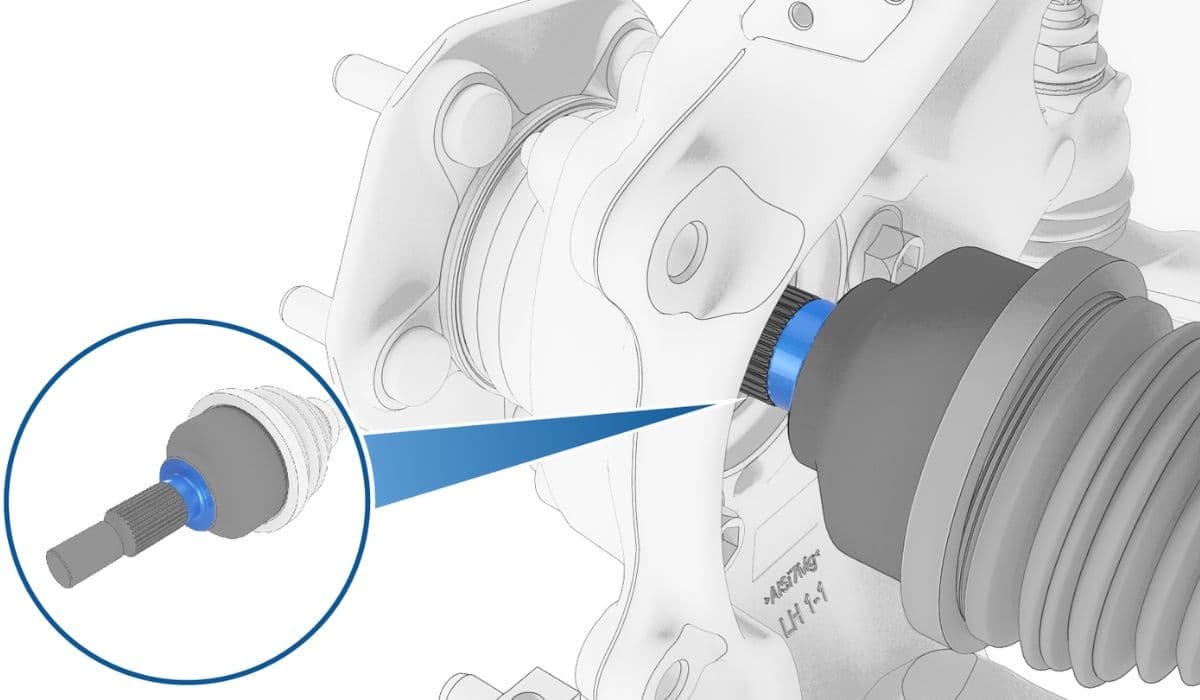
With the area prepped, focus on extraction. Start by fully removing the axle nut and discarding the old washer—Tesla recommends single-use for these. Detach the upper control arm, trailing arm, and lower control arm bolts using 17mm or 18mm tools, depending on the model; this frees the knuckle assembly. Gently pry the hub away from the shaft's outer end, using a separator tool if it's seized. For the inner joint, attach a slide hammer to the shaft's loops or use a dead blow hammer to tap it free from the drive unit—apply even force to avoid bending splines. In Model 3 and Y, the rear half-shaft may require disconnecting the electronic parking brake connector first. Pull the shaft straight out, catching any dripping gear oil in a pan. Inspect the snap-ring on the inner end; if it's missing or damaged, that's often the root of vibrations. Common challenges here include corroded bolts—apply penetrating oil 24 hours prior if anticipated. The process varies by side: left-hand (LH) and right-hand (RH) shafts are mirrored, so ensure you're working on the correct one. Removal usually takes 45-60 minutes per side, longer if rust is present.

Installing the New Half-Shaft

Installation reverses removal but with precision to ensure longevity. Verify the new half-shaft has a pre-installed snap-ring; if not, source one that does. Apply a thin layer of grease to the splines for smooth insertion. Align the inner joint with the drive unit and push firmly until the snap-ring clicks into place—use the axle nut temporarily with a ratchet to draw it in if needed. Reconnect the outer end to the hub, ensuring proper seating. Reattach suspension arms, torquing bolts to specs: control arms at 130-150 Nm, caliper bolts at 85 Nm. Install a new axle nut, tightening to 245 Nm with the wheel on the ground for accuracy. Refit the ABS sensor and brake components, bleeding the system if fluid was lost. For EV-specific steps, reconnect electrical harnesses and exit Service Mode. Test for play—aim for minimal, around 3/16 inch axial movement. In AWD models, balance both sides to prevent uneven torque distribution. Double-check all fasteners with a torque wrench to avoid looseness under load. This phase emphasizes alignment; misalignment can cause premature failure.

Front vs. Rear Half-Shaft Replacement Differences

Tesla's dual-motor setup means front and rear half-shafts face unique stresses. Front shafts in models like the Model 3 Performance endure higher torque during launches, leading to more frequent replacements. Access is tighter due to the forward drive unit, requiring partial steering knuckle disconnection. Rear shafts, common in RWD or AWD variants, benefit from more space but involve electronic parking brake handling—disconnect the EPB connector to avoid faults. Front procedures often include removing the front brake rotor for better access, while rears might need toe link adjustments to correct camber. Torque specs differ slightly: front axle nuts at 205 Nm versus 245 Nm rear. In refreshed Model S/X, second-generation drive units have improved seals, reducing leak risks. Always reference your vehicle's generation; early models may need shim kits for vibration damping. These variances highlight why model-specific research is key, ensuring compatibility and optimal performance post-repair.

Troubleshooting Common Issues During Replacement

Even with preparation, hurdles arise. If the shaft won't dislodge, heat the hub gently with a torch (avoiding electronics) or use stronger penetrating fluid. Vibrations after installation often stem from improper snap-ring seating—recheck with a mirror. Leaking grease post-repair indicates boot clamp failure; use high-quality clamps tightened to 7 Nm. Clicking noises persisting suggest CV joint damage—inspect boots for tears before final assembly. In high-mileage Teslas, worn hub bearings can mimic half-shaft problems; test by rotating the hub manually. Electrical faults like ABS warnings trace to damaged sensors—clean contacts and reseat. For shudder under acceleration, consider drive unit mounts; loose ones amplify issues. If torque specs aren't met, bolts can shear—always use a calibrated wrench. Addressing these promptly prevents cascading failures, like drive unit contamination from debris.

Post-Replacement Checks and Maintenance Tips

After lowering the vehicle, perform a road test in a safe area: accelerate gradually, turn sharply, and listen for anomalies. Monitor for leaks over the next few drives, tightening clamps if needed. Reset any suspension adaptations via the touchscreen. For longevity, maintain proper tire pressure and alignment—negative camber accelerates wear. Use Chill Mode for daily driving to reduce torque stress, switching to Standard for performance needs. Inspect boots quarterly for cracks, applying grease as preventive maintenance. In regions with harsh winters, apply anti-corrosion sprays to exposed splines. Schedule alignments every 12,000 miles to counter geometry-induced strain. These habits extend half-shaft life beyond 100,000 miles, enhancing your Tesla's efficiency and ride quality.

More from Tesla

Back to Tesla